Arctic cold front arrives in Fort Worth area with freezing rain, chance of snow to follow
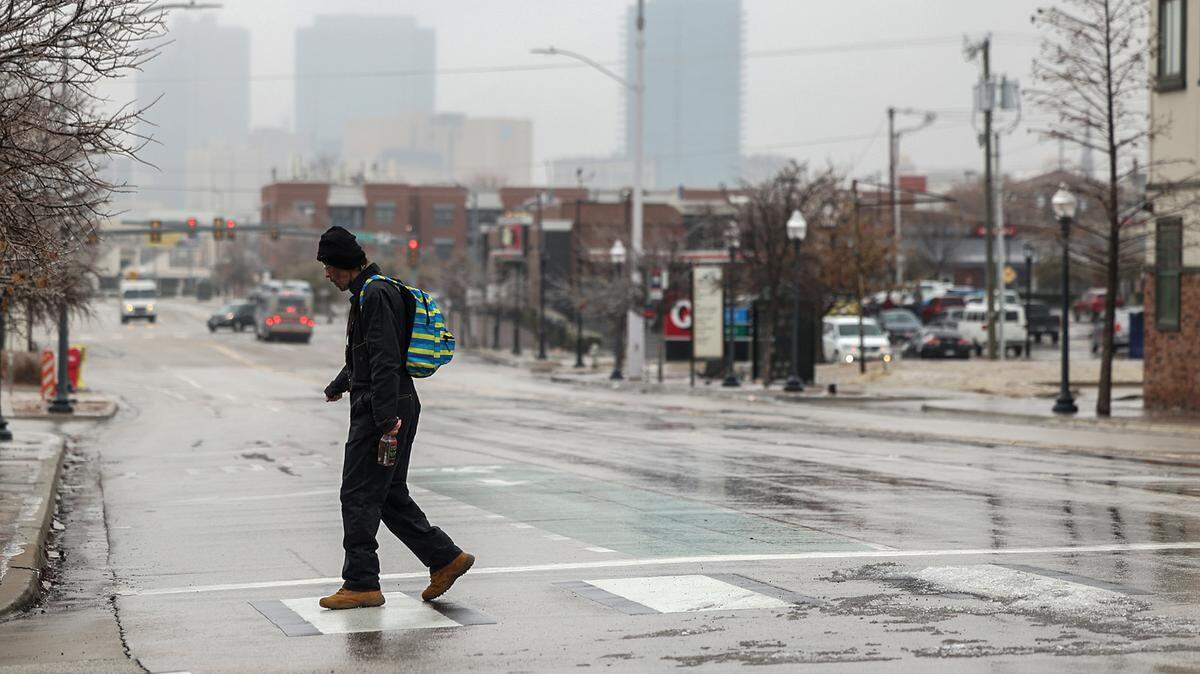
An Arctic cold front bringing frigid temperatures arrived in the Dallas-Fort Worth area Saturday afternoon, according to the National Weather Service in Fort Worth.
“It’s barreling down,” said NWS meteorologist Juan Hernandez said Saturday morning.
Temperatures, which were in the mid-50s around noon Saturday, began quickly plummeting when the cold front hit and a mix of wintry precipitation such as freezing rain, sleet and snow was expected to follow, according to Hernandez. By Saturday night, temperatures were expected to be drop below 32 degrees and will remain at or below freezing through Wednesday afternoon.
Hernandez encouraged residents to take care of their last-minute preparations for the cold Saturday morning before the front hit.
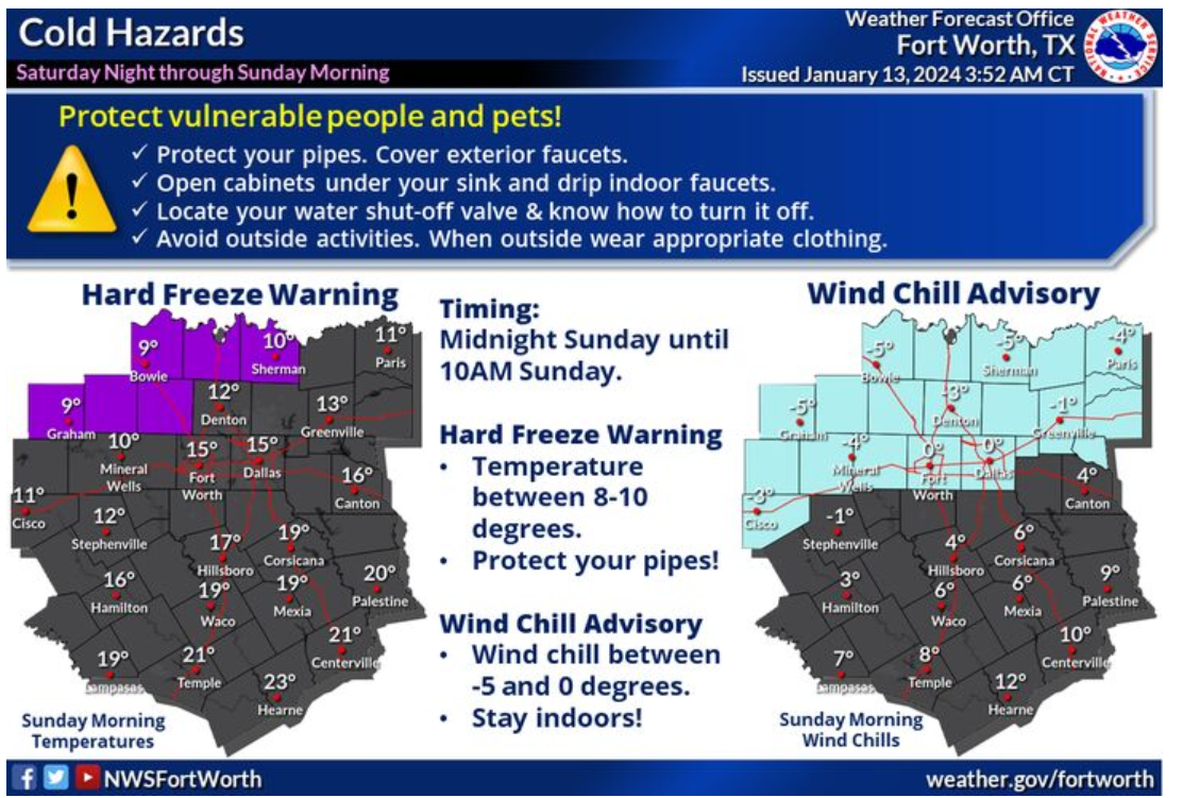
The National Weather Service has issued a wind chill advisory for North Texas, including Fort Worth and Dallas, from midnight through 10 a.m. Sunday. Wind chill is expected to be at or below zero for most areas along and north of I-20.
According to Hernandez, low temperatures in the teens will continue for the next few days, with the wind chill making it feel colder than the actual temperature. Overnight Sunday the wind chill is predicted to be around 2 degrees. Overnight Monday the wind chill could plummet to as low as 10 degrees below zero.
There is also a 40-50% chance of precipitation for the DFW Metroplex starting Sunday afternoon, but most of it will be a freezing drizzle, according to Hernandez. It could mix with some snow Sunday night into Monday morning, but no accumulation is expected in the Dallas-Fort Worth area.
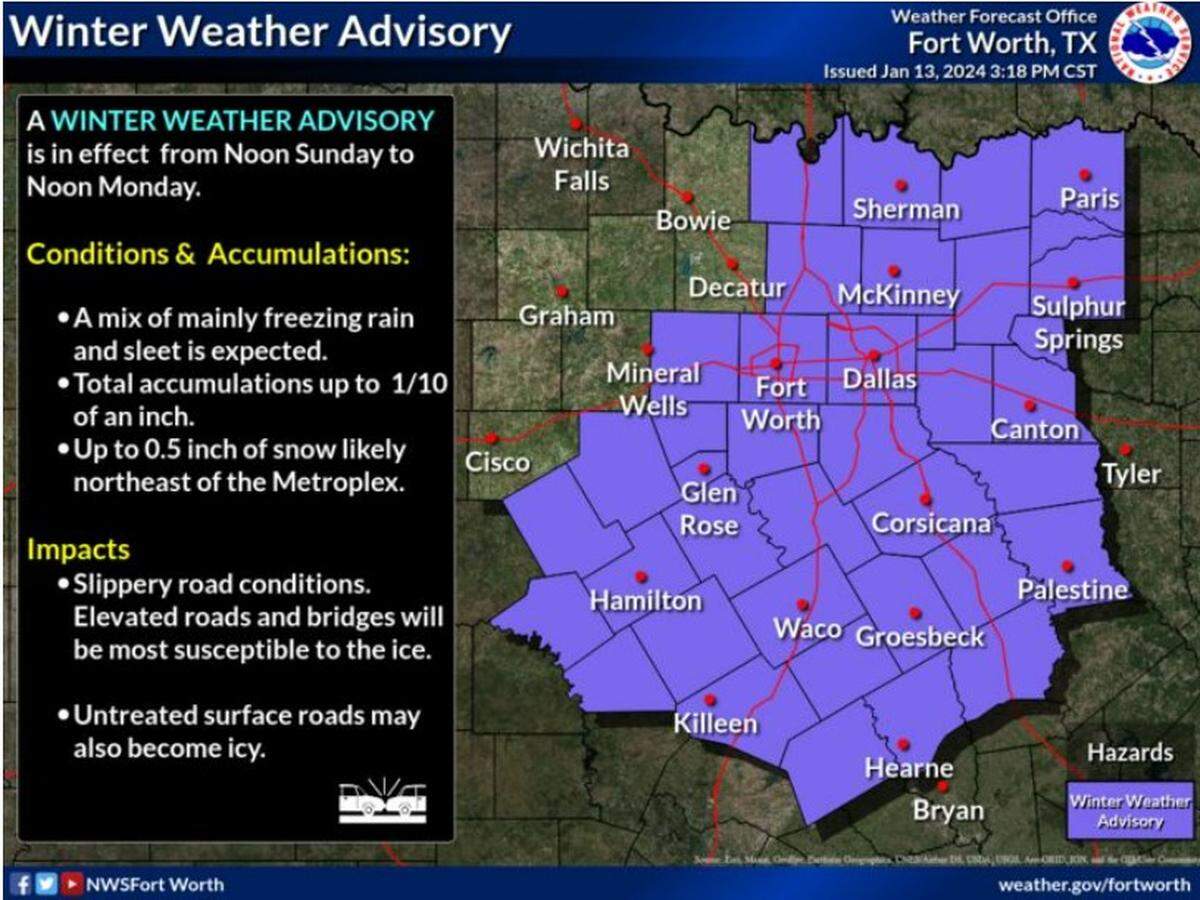
According to a NWS winter weather advisory in effect from noon Sunday to noon Monday for most of North and Central Texas, a mix of mainly freezing rain and sleet is expected in the advisory area.
Total ice accumulations of up to a tenth of inch are forecast. Additionally, up to half an inch of snow is likely in some areas northeast of the Metroplex.
Slippery road conditions are likely. While elevated roads and bridges will be the most susceptible to the ice, untreated surface roads may also become icy.
The National Weather Service urged residents to take steps to protect their pipes, including dripping indoor faucets and covering outdoor ones.
Outdoor activities should be avoided, and those who have to be outside should wear appropriate appropriate clothing.
This story was originally published January 13, 2024 at 9:07 AM.