
UPDATE: Thunderstorms with damaging winds and golf-ball-sized hail Thursday
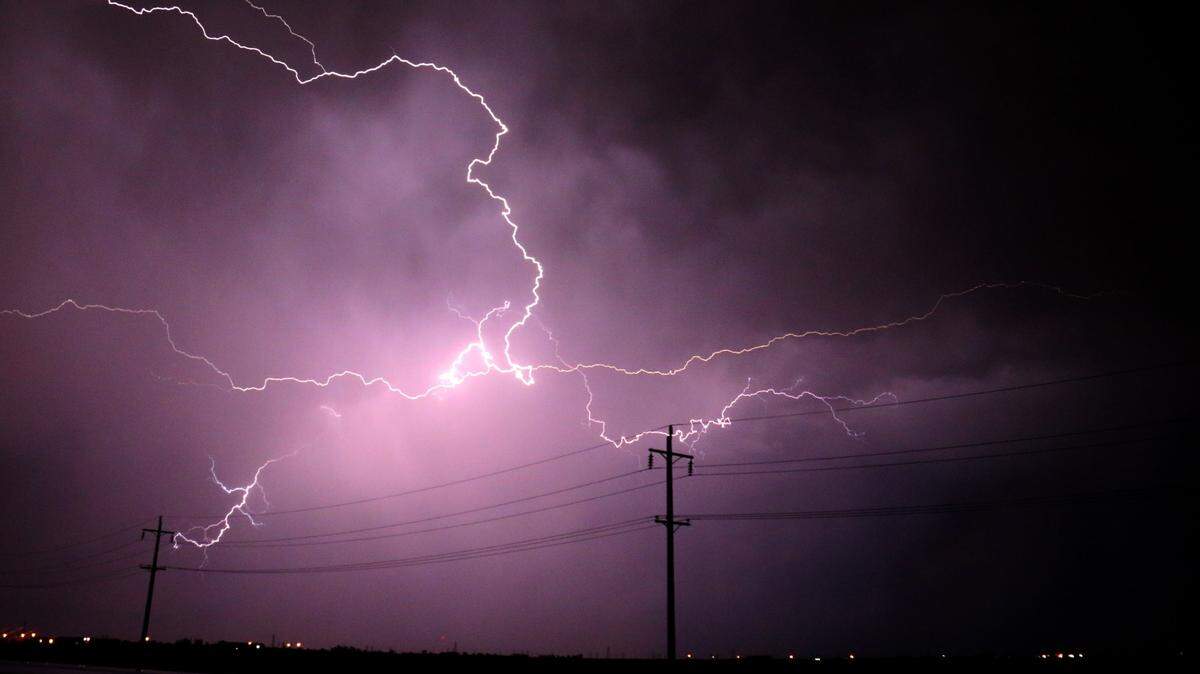
The NWS Fort Worth TX issued an updated severe thunderstorm warning Thursday at 6:22 p.m. for Denton county. The storms are expected to bring wind gusts of up to 60 mph and golf-ball-sized hail (1.75 inches).
"At 6:22 p.m., a severe thunderstorm was located over Krum, or near Denton, moving east at 10 mph," says the NWS. "People and animals outdoors will be injured. Expect hail damage to roofs, siding, windows, and vehicles. Expect wind damage to roofs, siding, and trees."
The warning is for Denton, Lewisville, Flower Mound, Corinth, Highland Village, Lake Dallas, Krum, Argyle, Hickory Creek, Shady Shores, Aubrey, Krugerville, Cross Roads, Copper Canyon, Oak Point, Lakewood Village, Lincoln Park, Lewisville Lake and Providence Village.
This warning is in effect until 6:45 p.m.
What to do as threat of lightning approaches?
Lightning strikes the United States about 25 million times a year. Most of the strikes occur in the summer, killing 20 people each year, according to the National Weather Service. Chance of lightning increases as a thunderstorm approaches and peaks when the storm is overhead. It diminishes as the storm moves away.
Here are recommendations for maintaining safety during a thunderstorm:
• To lower the risk of lightning strikes, when going outdoors, develop a plan to reach a safer spot.
• If the sky turns ominous and thunder can be heard, find a secure place for shelter.
• Once inside, abstain from touching corded phones, electrical devices, plumbing, and windows and doors.
• Wait for 30 minutes after the most recent lightning or thunder before venturing outside.
If finding indoor shelter is not an option:
• Avoid open fields, the top of a hill, or a ridge top.
• Stay away from tall, isolated trees or other tall objects. If you are in a forest, stay near a lower stand of trees.
• If you are in a group, disperse to prevent the current from passing between group members.
• If you are camping in an open area, set up camp in a valley, ravine, or other low area. Remember, a tent offers no protection from lighting.
• Do not approach water, wet objects, or metal items. Although water and metal do not attract lightning, they conduct electricity effectively.
What steps to follow when driving in the rain?
• Switch on headlights — Even during daylight hours, using headlights can enhance visibility and signal your presence to other drivers.
• On the road — Drive in the middle lanes and stay on high ground. Rainwater tends to stockpile on the edges of roads.
• Steer clear of puddles — Driving into puddles or low areas of rainwater can cause vehicles to hydroplane or skid out of control.
• Don't tail large vehicles closely — Trucks or buses can kick up a water spray that obstructs visibility.
• Avoid flooded zones — If you encounter a flooded road, make a U-turn and go back. The powerful currents of flash floods can carry drivers off the road. Driving through deep water can also damage a vehicle's mechanical and electrical systems.
What is hydroplaning?
Hydroplaning is when a vehicle starts uncontrollably sliding on wet roads.
This happens when water in front of the tire builds up faster than the vehicle’s weight can push water out of the way. The water pressure then causes the vehicle to rise and slide on a thin layer of water between the tires and the road, making the driver lose control. Hydroplaning is primarily caused by three factors:
1. Vehicle speed — When a vehicle’s speed increases, the tire-traction grip and ability to control the vehicle decreases. Drive at a reduced speed during wet weather.
2. Water depth — The deeper the water, the sooner a vehicle loses traction on the road. It doesn’t matter how deep the water is, even a thin layer can lead to hydroplaning.
3. Tire tread depth — Checking your tire tread before hitting the road is important, as low or no tread can lead to sliding.
In the event of your vehicle hydroplaning, here’s what to know:
• Ease off the accelerator — Step off the gas to slow down the vehicle until the tires find traction.
• Turn into the skid — Turning into the skid can help the vehicle’s tires realign to regain control.
• Make sure the tires reconnect with the road — During the skid, wait until the tires reconnect with the road and then gently straighten the wheels to regain control.
• Brake gently as needed — Brake normally if the vehicle has anti-lock brakes and pump brakes gently if in an older vehicle.
Source: The National Weather Service
This story was originally published September 21, 2023 at 6:26 PM.