
North Texans should expect to see a reprieve from sub-freezing temps on Christmas Day
North Texans will get a four hour reprieve from bitter freezing weather on Christmas Eve, with temperatures reaching a highs in he mid-30s. across the Dallas-Fort Woth Metroplex, according to the National Weather Service.
The National Weather Service in Fort Worth predicts below-freezing temps to return Christmas Eve night before the cold front that has swept across the nation moves out of the region on Christmas Day. Highs on Christmas will be in the mid- to upper-40s.
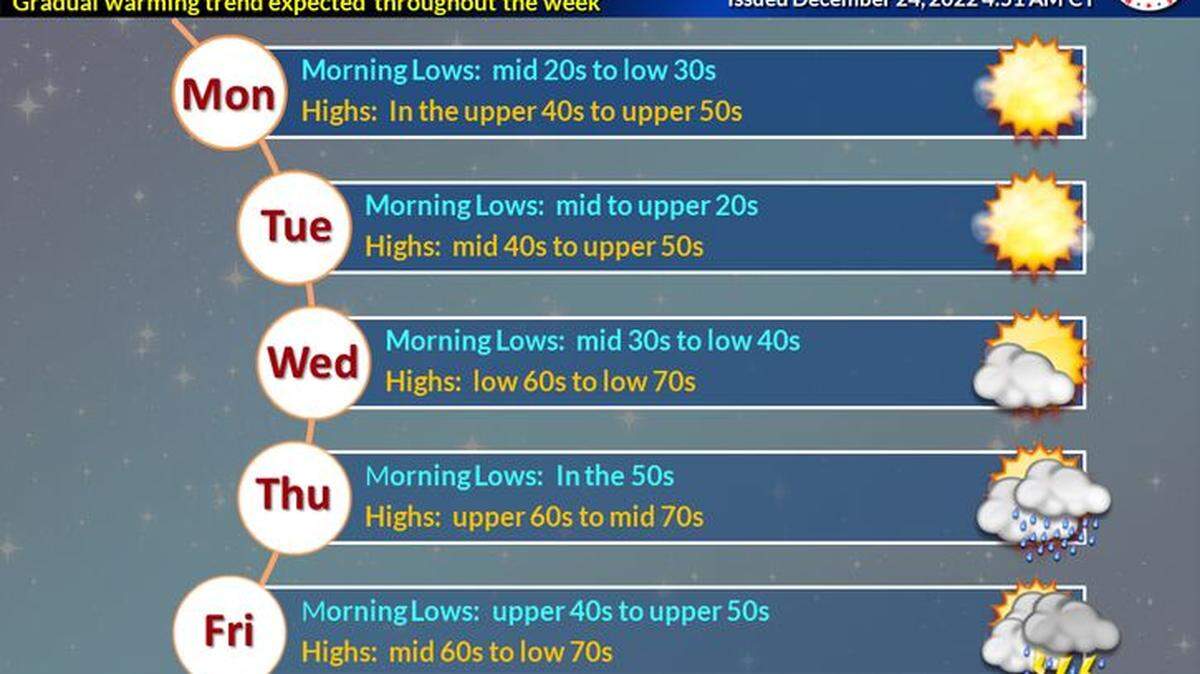
Heading into the next week, highs are expected to range from the 40s to the 70s, with temperatures gradually rising throughout the week.
Morning low temperatures aren’t expected to go above 30 on Monday and stay in the 20s on Tuesday before rising by about 10 degrees every day for the rest of the week, according to the weather service. Highs will enter the upper 60s to lower 70s on Wednesday and continue through Friday.
A hazardous weather outlook is still in place through Saturday night into Christmas morning, with freezing weather creating dangerous conditions conducive to hypothermia and frostbite, according to the National Weather Service.
As of Friday night, MedStar, which provides emergency medical services to Fort Worth and several suburbs, had responded to 42 calls about cold weather-related illness or injury, the company said. During the 2021 winter storm, MedStar responded to 44 calls from Feb. 14 to Feb. 16.
Sub-freezing weather like that being experienced across North Texas and most of the rest of the United States carries high risks of injury and illness such as hypothermia and frostbite. MedStar recommends seeking warm shelter, dressing in several layers when you have to be outside, keeping in mind that wind chill can contribute to loss of body heat and staying dry.
Don’t ignore shivering, because it can be the first sign of loss of body heat.
Be aware of the signs of hypothermia, including shivering that may stop as conditions worsen, slow and shallow breathing, confusion or memory loss, drowsiness, exhaustion, slurred or mumbled speech, loss of coordination, slow or weak pulse and, in severe cases, a person who seems to have no breathing or pulse.
If you have or see symptoms of hypothermia in someone else, get to warmth and call 911.