Will Texas have a white Christmas this year? What weather to expect this winter.
Cross a heavy coat off your Christmas wishlist.
While Texas is known for its mild winters, the upcoming season will likely bring even higher temperatures thanks to the Pacific Ocean being in a La Niña cycle.
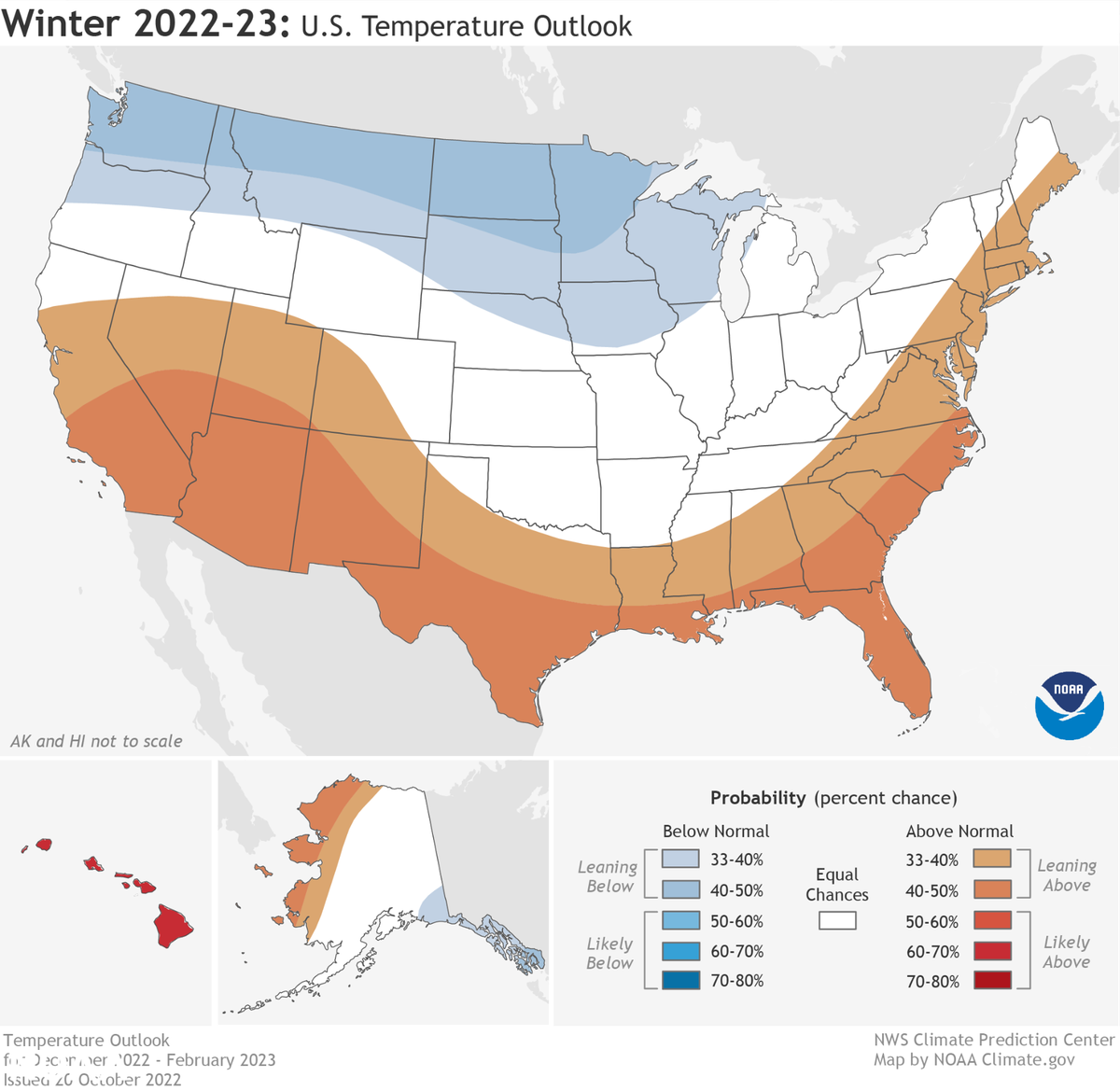
This year, La Niña returns for the third consecutive winter, driving warmer-than-average temperatures for the Southwest, according to the NOAA’s U.S. Winter Outlook released Oct. 20 by the Climate Prediction Center — a division of the National Weather Service. La Niña winters can be unpredictable; considering the 2021 Texas freeze happened during the first La Nina winter, climate experts say they expect highly variable temperatures.
“Focusing on the first La Nina we had, the La Nina impacts were pretty consistent focusing on temperature, but were generally consistent for the most part. What changed was a very cold February in 2021, and I think we all remember that the very strong cold air outbreak that moved down into Texas and caused some of the energy related issues and problems down in the South Central Plains,” said Jon Gottschalck, chief of the operational prediction branch of the NOAA’s Climate Prediction Center, at the NOAA 2022 U.S. Winter Outlook media teleconference. “And so there was actually a large area of near-normal when you average all the temperatures over the season. We do know during La Nina events there’s considerably more variability, some seasonal variability or week to week variability during La Nina events as opposed to, say, more moderate to strong El Nino events.”
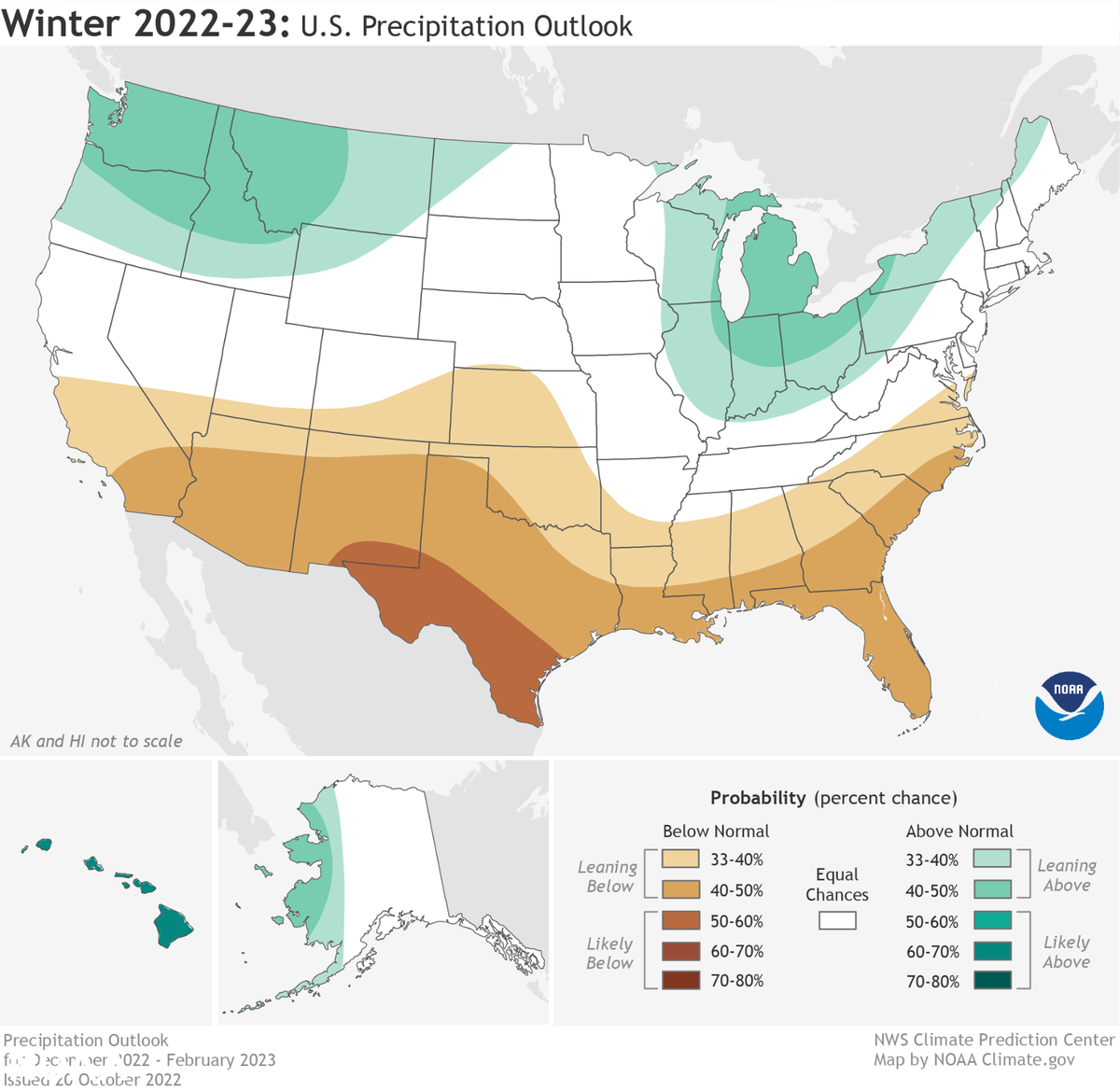
From December 2022 through February 2023, the NOAA predicts drier-than-average conditions across the South, also consistent with La Nina. The last times we’ve had triple La Nina winters were stretches from the 1973-74 winter through the 1975-76 winter and then the 1998 to 1999 winter through the 2000-2001 winter.
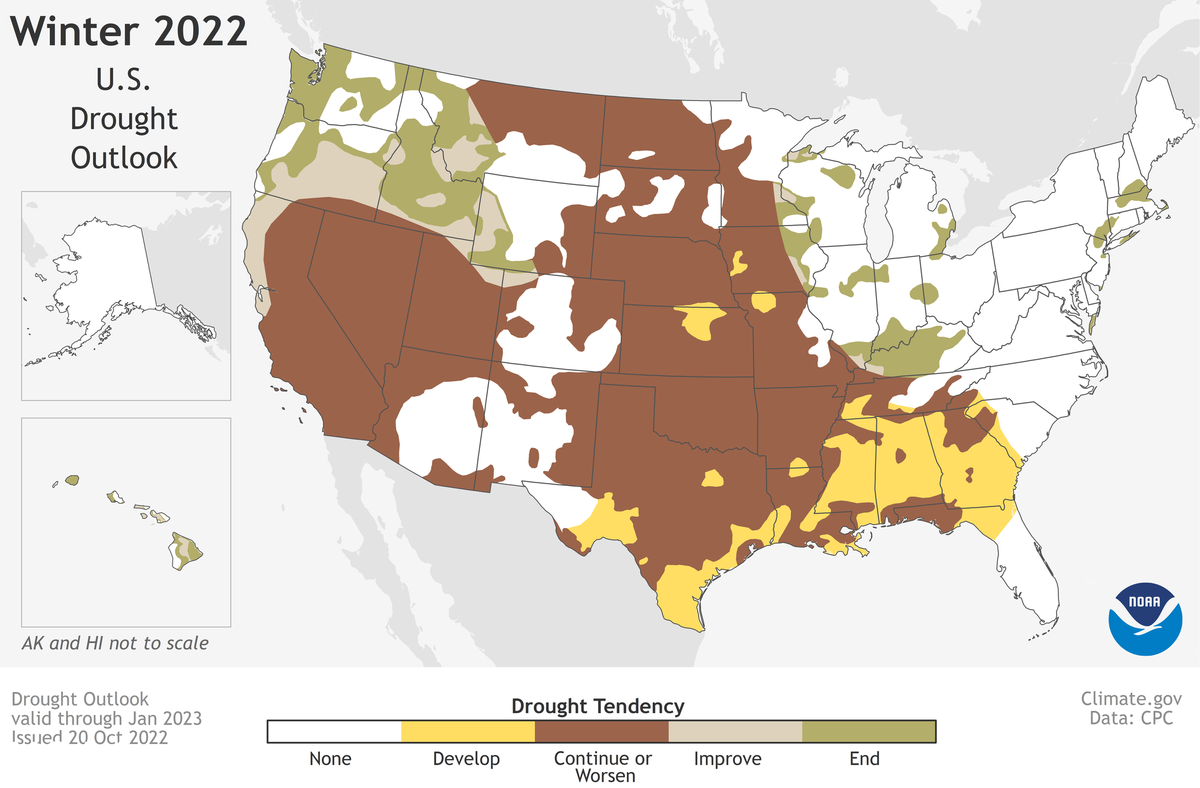
“Drought conditions are now present across approximately 59% of the country, but parts of the Western U.S and southern Great Plains will continue to be the hardest hit this winter,” Gottschalck said in a website release. “With the La Niña climate pattern still in place, drought conditions may also expand to the Gulf Coast.”
The Southwest through the Southern Plains has the greatest chance for warmer-than-average conditions. In North Texas, there’s a 33% to 40% chance of warmer-than-average conditions. And in the southern parts, there’s a 40% to 50% chance.
Drier-than-average conditions are likely, with a 33% to 60% chance of below normal precipitation. The greatest odds for below average precipitation are forecast for southern Texas. Drought conditions are expected to continue or worsen throughout much of the state this winter.
“One of the areas over the next couple of months that are likely to have enhanced wildfire danger will be the south central U.S.,” said the Climate Prediction Center’s Brad Pugh at the teleconference. “Oklahoma, Texas, Arkansas had very dry conditions there during the past 30 to 45 days, seen an increase in drought coverage and intensity. So with that and the seasonal dryness, that will be an area for high wildfire danger during the next couple of months.”
La Nina conditions are forecast to persist into Spring 2023. The winter outlook is consistent with typical La Nina impacts, which include a generally warmer and drier South.
This story was originally published November 7, 2022 at 5:30 AM.