
Here is how the heat index is calculated — that is how hot it feels outside
As the Texas heat beats down on Fort Worth, many wonder how hot it truly is. You’ve probably heard this lament: “It’s not the heat, it’s the humidity.”
Well, according to the National Weather Service, it’s actually both the heat and relative humidity.
So, what is the heat index?
“The heat index, also known as the apparent temperature, is what the temperature feels like to the human body when relative humidity is combined with the air temperature,” the weather service website reports. “When the body gets too hot, it begins to perspire or sweat to cool itself off.”
The human body cools itself by evaporating the sweat it produces. So, when there is a high level of moisture in the air, the body is unable to regulate its temperature because it is unable to dry itself.
“In other words, the human body feels warmer in humid conditions,” the weather service said.
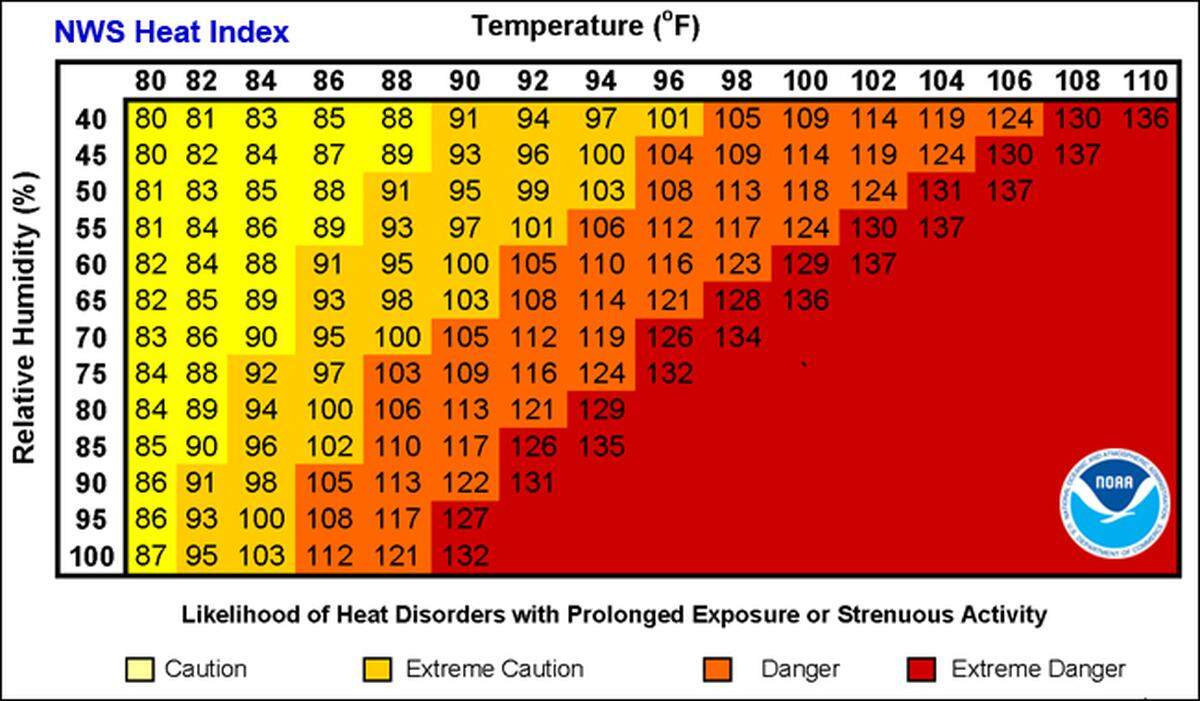
Calculating the heat index
The National Weather Service provides a heat index calculator.
The weather service points to two ways to determine the heat index: the first uses dew point temperature and the second uses relative humidity.
Dew point is the temperature the air needs to be cooled to achieve a relative humidity of 100%.
Relative humidity is the moisture content (water vapor) in the air, as a percentage of moisture the air retains at a given temperature and pressure without condensation, according to sciencedirect.com.