Can you speed to keep up with traffic in Texas? What the law says
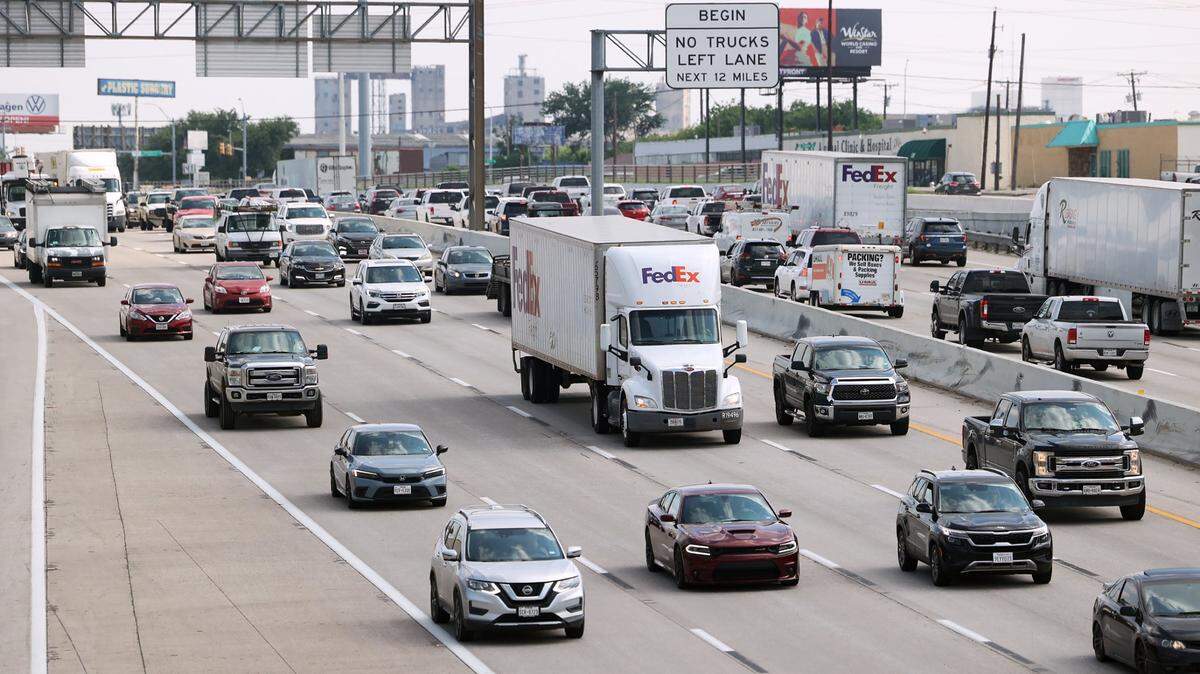
If you’ve ever driven on a Texas highway, you’ve probably noticed most people aren’t going the exact speed limit.
Cars zip by in the fast lane, and before long, you might find yourself speeding up just to keep with the flow.
It feels safer to match the pace of traffic than to risk being honked at or cut off, but is it actually allowed?
The answer isn’t as simple as most drivers think. Texas law leaves little room for interpretation when it comes to speed, but there are a few details that can make the difference between staying safe and getting a ticket.
Here’s what to know before pressing the gas.
What does Texas law say about speeding to keep up with traffic?
According to the Texas Transportation Code, it’s illegal to exceed the posted speed limit, even if you’re just trying to keep pace with other drivers.
The code goes on to say that driving above the speed limit is unlawful under any circumstance, regardless of traffic conditions or what surrounding cars are doing.
In other words, “everyone else was doing it” won’t hold up as a defense. The law expects drivers to maintain a speed that’s both reasonable and prudent for the conditions, but still within posted limits.
Drivers also can’t go too slow if it impedes the normal flow of traffic, according to the same code.
Law enforcement can cite drivers for traveling well under the limit without a valid reason, just as they can for speeding.
What does ‘reasonable and prudent’ mean?
Texas law uses what’s called the “reasonable and prudent” standard, found in Section 545.351 of the transportation code.
It means drivers must adjust their speed based on things like traffic, road conditions, curves, hills, weather, and visibility.
So even if the speed limit is 70 mph, you’re expected to slow down if it’s raining, foggy, or you’re approaching an intersection or hill.
The rule is about safety judgment, not just what the sign says.
What about speeding to pass another car?
Even though it’s common for drivers to accelerate when passing, Texas law doesn’t make an exception for temporarily speeding up to get around someone.
Ted Ligget of Liggett Law Group explained that while many people do it to reduce time in the left lane, that does not mean it is legal.
“While you may get away with going a few mph above the speed limit, it is illegal in any circumstance to drive above the posted limit,” Ligget said. “Violating the speed limit, even in the left lane, can result in expensive tickets, points on your license, and increased insurance rates.”
Under Title 7 of the transportation code, Texas’ left lane law restricts the left lane to passing only. Staying there too long or using it to speed can result in a fine of up to $200.
What are the penalties for speeding in Texas?
Speeding in Texas is usually treated as a Class C misdemeanor, and the cost depends on how fast you were going over the limit. Fines typically range from:
- 1–5 mph over the limit: $165
- 6–9 mph over the limit: $180
- 10–14 mph over the limit: $195
- 15–19 mph over the limit: $240
- 20–29 mph over the limit: $265
- 30 mph or more over: $300
You could also face points on your license, higher insurance rates and court costs for speeding.
Going 25 mph or more over the limit and attempting to evade police can even turn the offense into a felony.