Can you really see the Northern Lights from North Texas tonight? What to know
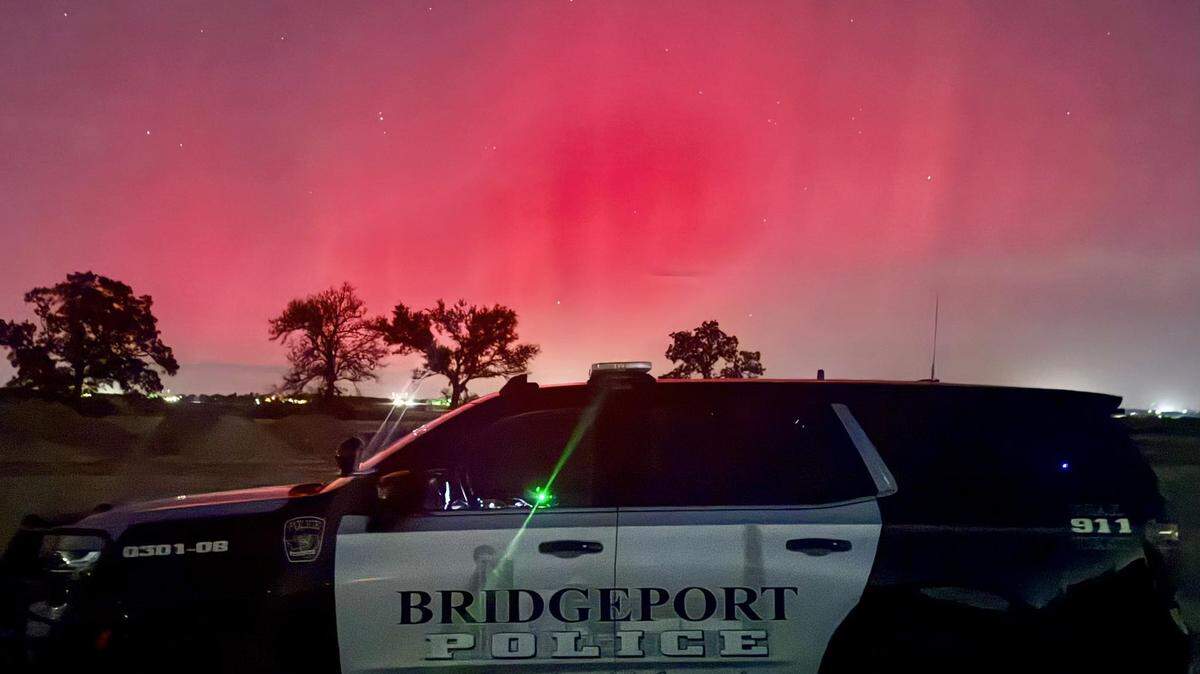
A rare solar storm is giving Texans another chance to catch the Northern Lights, right here at home.
The colorful display, also called the aurora borealis, was spotted across parts of North Texas earlier this week after a strong geomagnetic storm hit Earth.
According to the National Oceanic and Atmospheric Administration (NOAA), another round of activity is possible tonight as a G4 (severe) geomagnetic storm is expected.
That means there’s a small but real chance the sky could light up again over Texas, especially in darker, rural areas away from the city glow.
Some North Texans have already reported seeing pink and green hues out in the country, near Weatherford and in Wise County.
Here’s what to know about your chances of seeing them.
What causes the Northern Lights?
The aurora happens when charged particles from the sun hit Earth’s atmosphere and interact with gases like oxygen and nitrogen.
This reaction releases energy in the form of light, which appears as colorful waves in the night sky.
Usually, you’d have to travel near the Arctic Circle to see them. But when the sun releases a burst of energy, known as a solar flare or coronal mass ejection, it sends waves of charged particles toward Earth.
When those particles hit our atmosphere, they can make the Northern Lights visible much farther south, sometimes even as far as Texas.
Where and when can Texans see them?
If you’re hoping to catch a glimpse, your best chance will be late tonight, Nov. 12, into the early hours of Nov. 13. Experts recommend heading to a dark area away from city lights to improve your visibility. Past storms of this strength have made the Northern Lights visible in states as far south as Missouri and Oklahoma.
So while there’s no guarantee, there’s definitely a chance they’ll be visible across parts of North Texas again tonight.
What do they look like?
When visible, the Northern Lights may appear as pink, purple, green or even red glows that ripple across the sky.
Some North Texans who spotted them earlier this week described a faint pink haze stretching over the horizon.
Can solar storms cause other effects?
Yes. The same solar storms that make auroras possible can also cause temporary disruptions in satellite communications, GPS systems, or even power grids.
The NOAA says these effects are usually minor, but people who rely on those systems should stay alert for possible interruptions.
Have you seen them?
If you’ve spotted the Northern Lights in Texas, we’d love to see your photos! Email them to editors@star-telegram.com or tag us on social media to share your view.