
Listen up, Texas landowners: What you should know about ERCOT’s huge grid build-out
One of the first sessions at the Cattle Raisers Convention and Expo 2025, hosted at the Fort Worth Convention Center by the Texas and Southwestern Cattle Raisers Association, centered not on cattle but on the ongoing efforts to beef up the Texas electrical grid.
The presentation, given by land attorney Zach Brady from Lubbock- and Austin-based Brady & Hamilton LLP, provided an in-depth look at how the state’s multi-billion dollar energy expansion plans will affect rural landowners, from the big cattle operators down to the folks with a parcel of land for hunting and recreational use.
Much of the infrastructure build-out undertaken by the Electric Reliability Council of Texas, or ERCOT, the organization that operates Texas’s grid, is concerned with sending more energy to far West Texas for things like data centers and oil and gas production. But that doesn’t mean landowners around Fort Worth won’t see an impact.
What can landowners expect?
According to Brady’s figures, which he got from ERCOT, the state is considering two options. Option 1 would create an 850-mile path of 345-kilovolt power lines beginning around Granbury that would run down through San Angelo to an area just outside Pecos. Option 2 would create a similar pathway of 765-kilovolt power lines from the Granbury area to an area east of El Paso, along the southern border of New Mexico.
Depending on which plan ERCOT adopts, which will ultimately come down to the cost difference between running 345-kV lines versus 765-kV ones, the right of way needed for utility towers would vary dramatically.
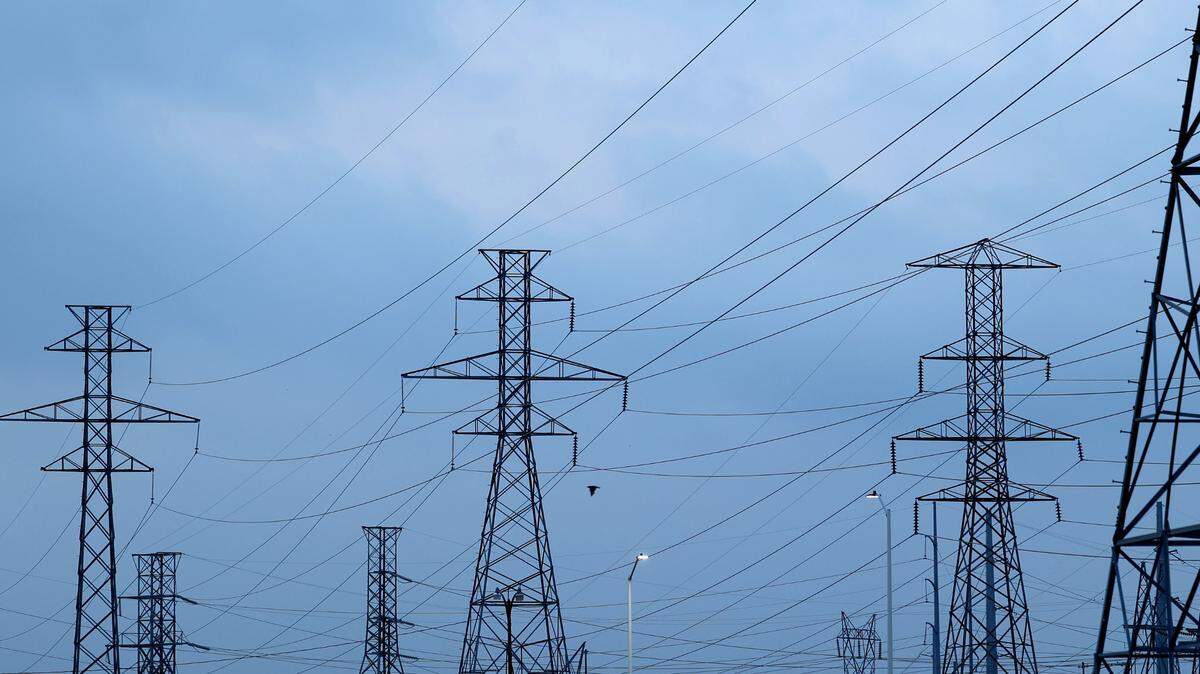
Each 345-kV double-circuit tower the state would use requires 100 feet or more of right of way, and you would have three of these towers in a horizontal line every 500 to 1,200 feet along that path from Granbury to West Texas. Those packs of three towers would eat up hundreds of feet of private land at each spot they’re placed.
The 765-kV single-circuit towers that would be used if that option is taken require around 200 feet of right of way, but you only need a single line of these towers, so it’s a much narrower corridor through people’s land.
When will this happen?
Brady said landowners who are impacted will start receiving notices from the Public Utility Commission of Texas in the next two to four years. Phase 1 of the ERCOT build-out is supposed to be complete by 2030, with a second phase extending into 2038.
Brady’s advice if you get one of these notices is to call a lawyer to negotiate the terms. Landowners will receive only a one-time payout from the state if ERCOT places utility towers on their property, and it’s important to maximize that payout in consideration of what the landowner loses, which is the ability to build permanent structures around the towers and beneath the power lines. There’s also concern that the lines will interfere with GPS signals that ranchers use in their day-to-day work, and the entire setup could potentially spook cattle.
Why is this happening?
In addition to providing power for data centers and oil and gas production, ERCOT has been working furiously on an emergency preparedness plan to ensure nothing like what happened during the big freeze of 2021 happens again. That event four years ago caused power outages for more than 4.5 million Texas homes leading to dozens of deaths and nearly $200 billion in property damage.
Taking that perspective, Brady said, ERCOT’s plans are, overall, good. Everyone wants a stable, reliable electrical grid, he said: lights that come on when you flip the switch and plenty of air conditioning in the summer. But that stability and reliability come with a cost to landowners, who bear the brunt of infrastructure build-outs for the rest of us.
This story was originally published April 11, 2025 at 1:31 PM.