Texas woman saw the Army as a feminist opportunity. Then they found out she was a lesbian
Freedom from society’s rules about what women could do is what drew Carolyn Dusty Pruitt to the military in the 1970’s.
It was a time when women were kept from pursuing profitable careers and made less money than men.
“My degree got me nowhere, except into a secretarial pool. My male friends got management positions,” Pruitt said in an interview with the Veteran’s History Project. “The Army looked like a pretty good place to have a nontraditional career without all the trappings, too much of the trappings of the sexist stuff that was going on at the time in Texas.”
As Texas eases into its Memorial Day weekend, we pause to recognize those who have made the ultimate sacrifice in service to the country. Although there are two federal holidays that recognize military service, Memorial Day and Veterans Day, there are significant differences between the two. The former honors those who died in service while the latter recognizes everyone who has put on the uniform.
What is clear is that many Americans have chosen to serve. Since 2010, the population of women veterans in the United States has increased by 81,000. While the total number of veterans and the number of men veterans is decreasing every year, the proportion of women veterans is increasing.
So, where do women veterans live? This map shows the number of veteran women per 1,000 women in each county in Texas.
Growing up in Texas where ‘notion of sin’ was relative
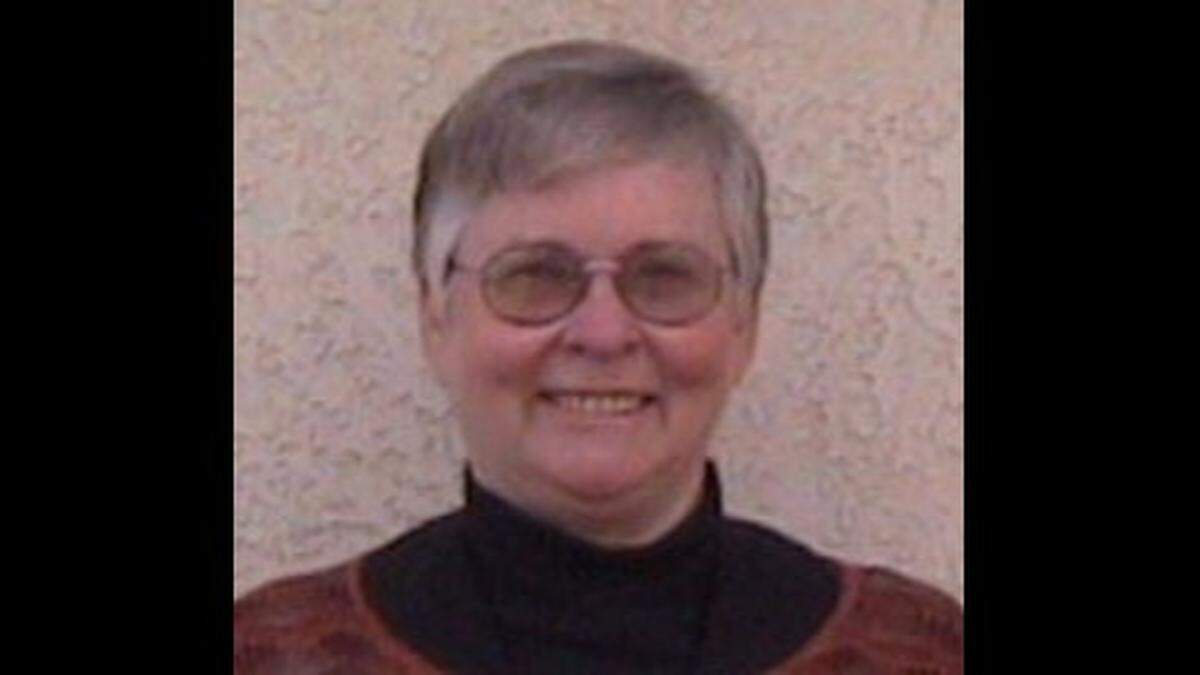
On July 19, 1946, Pruitt was born in Ballinger, a sleepy town in the Big Country proud of its railroading history. She was the oldest of three sisters and grew up in Bronte where her father owned a neighborhood grocery store.
Pruitt saw sexism in action at an early age in her hometown, a dusty cattle town sandwiched between Abilene to the north and San Angelo to the south. Her father was a minister for the Baptist Missionary Association, which meant moving around quite a bit for the Pruitt family.
“We would go to one place in West Texas and it’d be a sin to go swimming with the boys because that revealed too much of your body. But it was okay to smoke cigarettes,” she said. “I really learned how relative peoples’ notion of sin was as a kid.”
Pruitt attended 10 different high schools before graduating, then went on to earn an Associate of Arts from Jacksonville Baptist College. She graduated from Stephan F Austin State University in Nacogdoches with a Bachelor of Arts in English and Spanish with a minor in education.
Pruitt’s father was also a World War ll bomber crewman who flew on 35 missions over Germany. His legacy and encouragement is what pushed her to join the service.
“He gave me one sentence of advice that I’ve carried all my life, dig the first fox hole. What he meant by that is don’t ask somebody to do something you wouldn’t do yourself,” she said.
A direct commission in the Army, then selling feminism, equality
The Army enlisted Pruitt in 1971 as a second lieutenant via direct commission. She taught survival skills as a field trainer in the Women’s Army Corps (WAC) at Fort McClellan in Alabama. She was also a recruiter.
Pruitt’s mission as a recruiter focused mostly on women. They came to her expecting to work as nurses or secretaries but she gave them jobs that were nontraditional.
“I would say to them, ‘Maybe you might want to look into this heavy equipment operator job that we have here.’ I was thinking to myself, ‘Your job as a secretary is going to pay you, at that time, maybe $300 bucks a month, but if you go into this heavy equipment operator thing, you could make $800 bucks a month.’”
That was her pitch, she said. Feminism and equality.
“And, it worked; for the most part there were people who went into surveying, people who went into heavy equipment operations, the engineer corps, all kinds of things they would never have thought about if I hadn’t said “let’s look at this list of jobs that might be open,” she said.
[RELATED: Which state in the U.S. has the most women veterans?]
While serving, Pruitt came to the realization that she was gay. She had been married for a short time before graduating college but “that was just a matter of not knowing who I was,” she explained.
‘I might be a lesbian’: A struggle of being gay and a christian
She recalls it may have been her ex-husband who pointed out her sexuality.
“He was the first one, in fact, to mention I might be a lesbian,” she said. “ Other people would make comments about that and during my last year at Stephen F. Austin, I met some gay and lesbian people and was kind of asking questions.”
After accepting her newfound sexuality, Pruitt started to struggle with the idea of being gay and a christian.
Her ambivalence vanished when she was invited to service at Metropolitan Community Church (MCC) in Atlanta by a sergeant who described it as “a Christian Church with a primary outlet to gay men and lesbians.”
“I just immediately felt that I was in the right place and that I was home,” she said.
Pruitt then went on to work as a recruiter in Dallas until the disbanding of the WAC in 1978. While there, she became a charter member of Agape MCC in Fort Worth.
She later decided to go to seminary school and transferred from active duty to the Army Reserve. In 1980, she made history as the first openly gay or lesbian graduate at Iliff School of Theology in Denver, graduating with a Master of Divinity.
Army finds out she’s gay, then a 12-year legal fight ensues
Pruitt then relocated to Long Beach, California, where she taught chemical, biological, radiological and nuclear defense in the Reserves. She also worked as a pastor at MCC.
Then the Army found out she was gay. In a 1983 article in the Los Angeles Times, she had been asked about how she reconciled being a christian while gay.
“(The story) was about the MCC and how people reconcile gay and God and all that. She (the reporter) asked me what I’d done before and I said, ‘Well I was in the Army and I’m still in the Reserves, and I’m about to be promoted to Major,’” Pruitt said. “I kind of trailed off and then said, ‘Maybe you’d better not print that.’
And in the article, she said, this is how it appeared: “She paused, frowned and said ‘Maybe you better not print that.’”
The repercussion was swift shortly after the story came out. It seemed her sexuality was now out in the open. Her commanding officer in the Reserves opened an investigation questioning her morality. She was honorably discharged and her promotion to major was revoked as a result.
Following her discharge, Pruitt filed a lawsuit with the American Civil Liberties Union. She fought the Army’s action in court for 12 years. In 1995, she won her legal battle. She got her promotion and was reinstated. Pruitt retired from the Army Reserves that same year and continued working at MCC, retiring in 2001.
Pruitt currently lives in Santa Fe, New Mexico.
This story was originally published May 25, 2024 at 4:00 AM.