
Odd ‘flowers’ bloom in ‘beautiful’ — and short-lived — display. See the Texas video
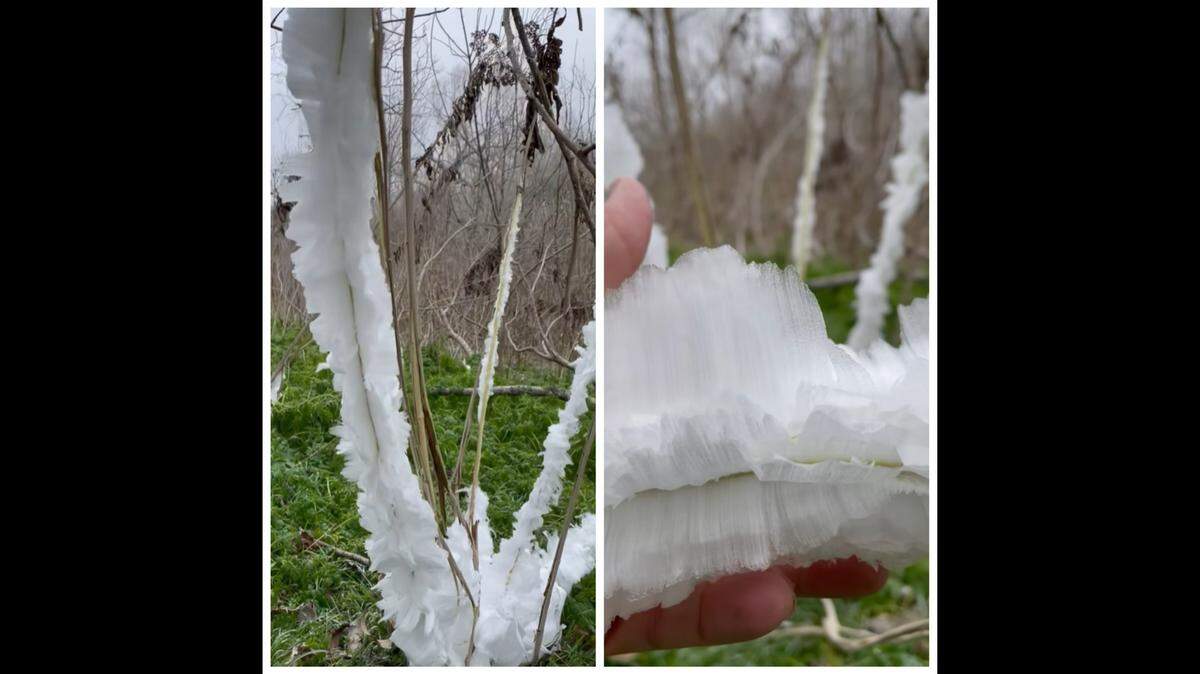
Winter robs nature of its luster, chilling trees and withering flowers, but one frigid plant recently caught a lot of attention when it suddenly bloomed, Texas video shows.
Standing in a forest of naked trees and brown leaves, brilliant white clusters appeared up and down the stems of the otherwise bare plant, the video shared Jan. 15 on Facebook by the Texas Parks and Wildlife Department shows.
The aptly named frostweed puts on this display not despite the cold, but because of it, TPWD’s Craig Hensley says in the video, which was taken near Boerne, in the Hill Country.
“These frosty formations occur when the weather gets well below 32 degrees,” Hensley said.
When it’s cold enough, water inside the stems turns to ice and “bursts” through the outer tissue, according to Hensley. This leaves the plant covered in crystalline ice that could be mistaken for buds or petals at first glance.
These formations are also sometimes called “frost flowers,” according to TPWD, adding that “only a few species of plants are capable of producing (them),” and frostweed is one.
Although frostweed is prevalent in Texas — and can be found as far north as Pennsylvania and as far east as Florida — many were surprised by the video, with one commenter saying, “I’ve never seen anything like it.”
“I’ve always heard of frostweed but I didn’t know it was so literal,” said another.
During warmer weather, frostweed is known for attracting butterflies and is “one of the best” in the state for doing so, Hensley said.
“Now of course on a day like today, not too many butterflies around, not too many flowers around, but we still have these beautiful formations of ice that you can enjoy for a very short period of time,” he said.
If you’re looking to find some frostweed the next time it freezes in Texas, TPWD says the plants “grow in dense patches in the moist, shaded soil of river or creek bottoms and form heavy undergrowths in the shade of large trees.”
Boerne is roughly 30 miles northwest of San Antonio.