Will Texas police chase to arrest carjackers? Here’s what the state’s pursuit law says
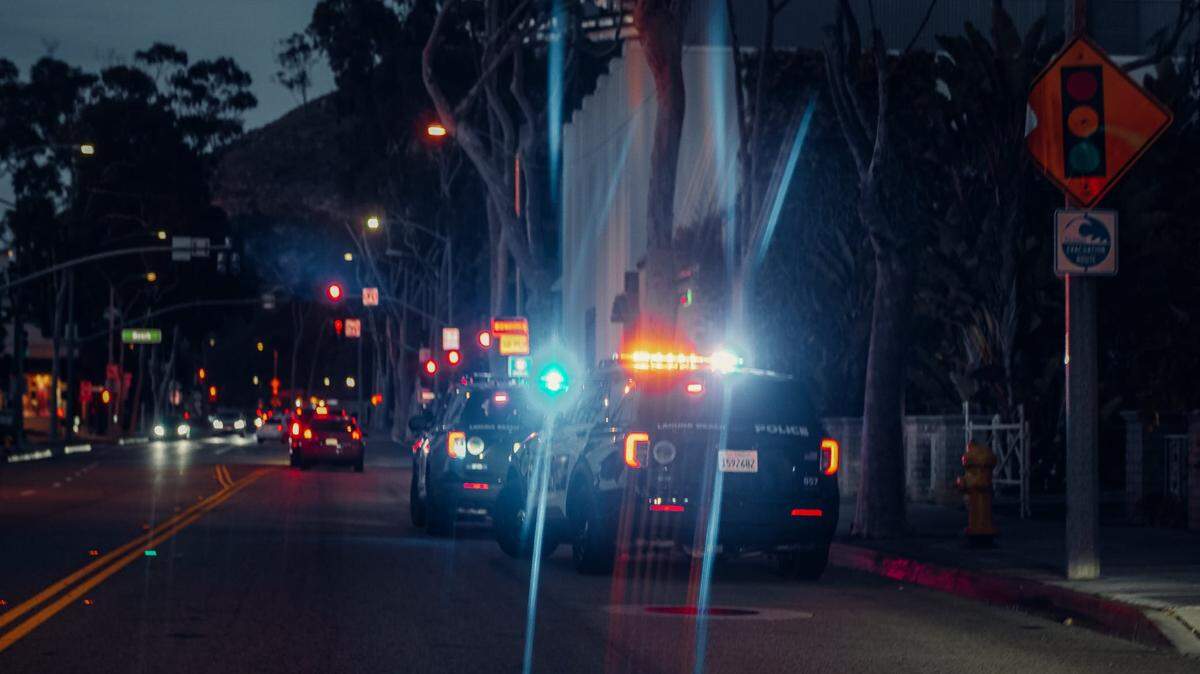
In Kerrville, an alleged carjacker died in a collision during a high-speed chase with police one Tuesday afternoon in October.
“Vehicular pursuit of fleeing suspects can present a danger to the lives of the public,officers, and suspects involved in the pursuit. Tactics used to stop a fleeing vehicle may be considered a use of force,” states the Texas Police Chiefs Association. “It is the policy of this law enforcement agency to regulate the manner in which vehicular pursuits are undertaken and performed.”
A vehicular pursuit is defined as a deliberate attempt by an officer in an authorized emergency vehicle to apprehend a fleeing suspect who is actively attempting to elude arrest.
Procedure for police pursuits in Texas
The model policy from the International Association of Chiefs of Police Law Enforcement Policy Center states the following about initiating pursuit:
Authorized only if the officer has reasonable belief that the suspect, if allowed to flee, would present a danger to human life or cause serious injury. Pursuits for minor violations are discouraged.
Must be based on the officer’s conclusion that the immediate danger to the officer and the public created by the pursuit is less than the immediate or potential danger to the public should the suspect remain at large.
A pursuit should not be undertaken if the subject can be identified with enough certainty that they can be apprehended at a later time, unless a greater danger would result.
Should not be initiated while providing transportation for any person, other than law enforcement officers.
The officer should take a number of factors into consideration in deciding whether to initiate pursuit, including offense seriousness, suspect information, road configuration, location and population, traffic, lighting and visibility, weather conditions, performance capabilities of the vehicle, officer training and experience, available equipment, suspect tactics, presence of others in vehicle or anything else that would create an unreasonable risk.
Officers should apply these standards during the pursuit:
Follow jurisdictional laws and related regulations.
Activate emergency lights, sirens and cameras.
Notify communications of the purpose, hazard information, location, direction and speed, vehicle description and description of occupants.
Continuously update communications on the pursuit conditions, location, weather and traffic.
Communications personnel notify an available supervisor of the pursuit, clear the radio channel of non-emergency traffic and relay necessary information to other officers and jurisdictions.
Secondary unit immediately notifies communications that it is joining the pursuit and assumes responsibility for relaying information to communications.
Should not be conducted in a direction against the lawful flow of traffic on a one-way street or lane of a divided highway.
Should consist of no more than two police vehicles — a primary and a secondary unit, unless circumstances necessitate otherwise. The primary unit becomes secondary when the fleeing vehicle comes under air surveillance or another unit has been assigned as the primary unit.
Pursuit-rated vehicles should be utilized.
Supervisors manage pursuits, including determining whether pursuit should continue; notifying communications that they are monitoring the pursuit; being responsible for monitoring information and coordinating and directing activities; and responding following a pursuit.
Texas city laws regarding police chases
Dallas
Per attorney Ben Crump, Dallas Police Department General Order 301.00 limits the circumstances under which a police officer can engage in a pursuit to the following:
- There’s probable cause to believe that a felony involving the use or threat of physical force or violence has been or is will be committed.
- They’re assisting another law enforcement agency that has initiated a pursuit under those circumstances.
- Another agency initiated a pursuit that has entered the City of Dallas and only one police vehicle is involved.
- The officer saw a suspect discharge or display a firearm in a threatening way in public.
- The officer reasonably believes that the need to apprehend the suspect outweighs the risk of collision, injury or death to any person.
The police officer must consider road and weather conditions, traffic, vehicle capabilities, offense seriousness, suspect’s age, other people in police car, suspect’s identity and whether officer can maintain control of police car.
Houston
The Houston Police Department policy on motor vehicle pursuits says it “places the highest value on the life and safety of its officers and the public at large.” When deciding whether to engage in pursuit, the department should evaluate the risk of injury against the need to immediately apprehend the suspect. Certain vehicle restrictions should be followed and the officer, dispatcher and supervisor are each responsible for taking steps during the pursuit.
Austin
“Vehicle pursuits expose innocent citizens, law enforcement officers, and fleeing violators to the risk of serious injury or death,” the city order says. The stated purpose of the order is to balance the safety of the public and the officers with law enforcement’s duty to apprehend violators of the law, as well as to minimize pursuit-related crashes. The only offenses that allow for pursuit are felonies, driving while intoxicated and any Class A or B Misdemeanor (unless suspect identity is known). On the other hand, officers should not engage in a pursuit if they committed any non-hazardous traffic violation, the officer has a non-police passenger who has not signed a liability release or if there are unsuitable road conditions (unless the violator has committed a felony involving violence).