
ERCOT emergency alert raises questions over Texas power grid’s design for summer heat
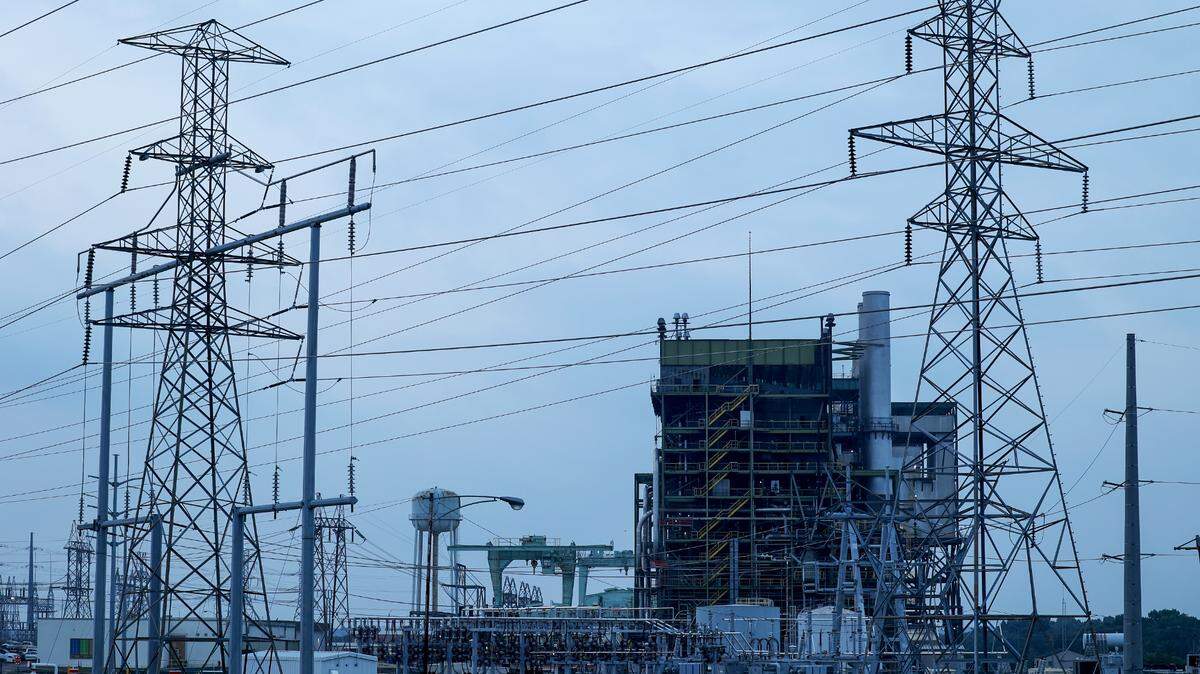
This summer’s record-breaking demands on the Texas power grid, including this week when a drop in reserves prompted an energy emergency alert, suggest that the system isn’t designed for what could be the new reality of intense heat, an expert says.
Michael Webber, an energy resources professor in mechanical engineering at the University of Texas, told the Star-Telegram that the prolonged heatwave is creating different scenarios than in previous summers. North Texas was expected to smash records once again Friday with highs around 108 degrees.
“My impression is that we designed our grid to manage peak demand from 4 to 6 p.m. during the summer. This made us vulnerable during the winter storm (of 2021) and it also makes us vulnerable at 8 p.m. because it’s still really hot out then,” he said.
Webber pointed out that it was still around 100 degrees in North Texas when the Electric Reliability Council of Texas issued the energy emergency Wednesday.
ERCOT said it set a new record Wednesday for September peak demand of 82,704 megawatts. This summer, ERCOT has set 10 all-time peak demand records, following last year’s 11 days of record demand.
The agency came close Wednesday to calling for rolling blackouts to stabilize the grid. On Thursday, Texans were once again asked to voluntarily conserve power during the early evening.
ERCOT said the tight grid conditions were caused by “a variety of factors including high temperatures, ongoing high demand, low wind power, no solar generation at the end of the day and issues involving power generation issues from south Texas that “restricted power generation to the rest of the grid.
Webber said heat builds up in the soil and on sidewalks, streets and other surfaces. Other experts say the extreme and exceptional drought conditions across 40% of Texas magnifies the heat.
“I’m concerned about the high low temperatures at night,” Webber said. “We have a new demand profile. We are not used to the V-shaped curve creating the demand at 8 p.m.”
Wind and solar generation dropped at night, but batteries made a “huge difference” in storing up electricity, he said.
Last month, ERCOT’s board of directors approved a project called CPS Energy-San Antonio South Reliability Regional Planning Group that will improve system conditions and congestion in south Texas.
ERCOT has issued numerous appeals this summer to voluntarily conserve energy during peak times. Major industries that require a lot of electricity have scaled back operations during those times.
Tony Bennett, president and CEO of the Texas Association of Manufacturers, issued a statement Wednesday that said “Industrial loads were called upon to shut down their operations and help stabilize the grid, and they responded. Many reduced their usage voluntarily, while others were retained by ERCOT in advance to address this type of unexpected situation.”
If energy supply and demand are not in balance, it could cause what is called a frequency drop on the power grid which could damage the grid if conditions don’t improve.
The grid frequency must be balanced at a frequency between 60.1 hertz per second and 59.9 hertz per second on the entire grid. On Wednesday, the frequency level dropped to 59.77 hertz.
Webber said Texas “obsesses over the electricity supply, but more can be done on demand response in terms of turning down thermostats before 4 p.m. to cool down homes and buildings and then raising the temperature after 4 p.m. when peak demand sets in.
He also encouraged more use of wind and solar which can be built faster than a power plant fueled by natural gas.
“Wind and solar is the one thing that we can build fast enough to keep up with the demand,” he said.