Can dried springs come back? What to know as iconic Texas swimming hole dries up
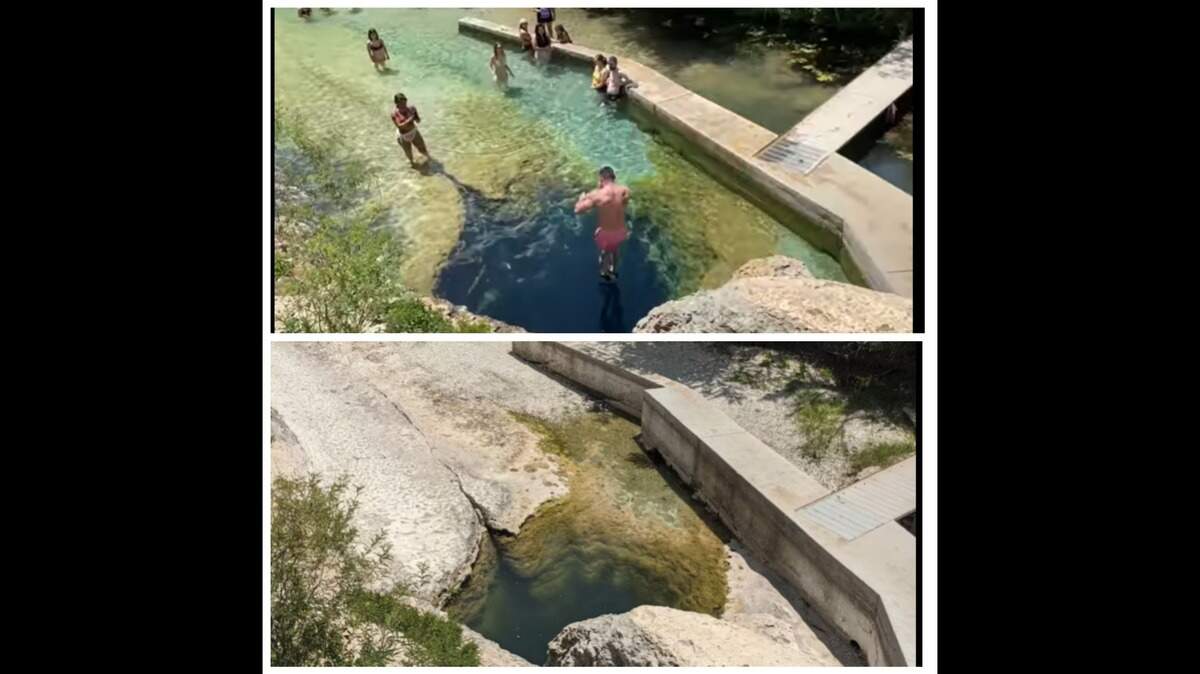
The iconic Texas swimming hole Jacob’s Well, which once flowed four million gallons a day, is now at zero, making park officials skeptical about its future outlook.
Long-term drought conditions paired with excessive groundwater pumping have reduced the once ideal photo-op and swimming travel destination to a watery cavern surrounded by dry rock and earth.
Jacob’s Well, which is actually a spring that is usually filled with 68 degree, crystal clear water, has been closed since June 2022.
_fitted.png "Screenshot (3387)_fitted.png")
Can dried springs come back?
When a spring runs dry, it doesn’t guarantee that water will never flow again.
Two springs in Oklahoma — the Antelope and Buffalo Springs — dried up more than twenty times since the area was first protected in 1902, according to the National Park Service. Antelope Springs dried up for the 24th time last year due to prolonged drought.
Other springs, seemingly impacted by man-made influences, returned during the winter when irrigation pumps went idle, like the Comanche Springs in Texas.
Excessive groundwater pumping to “accommodate rapid population growth” is one of the factors impacting Jacob’s Well.
With the Texas population expected to double by 2050, pressure on groundwater supply will increase in order to meet the demands of growing urban areas, the Texas Living Waters Project reports.