Get ready to spring forward and lose an hour of sleep. Daylight saving time starts soon
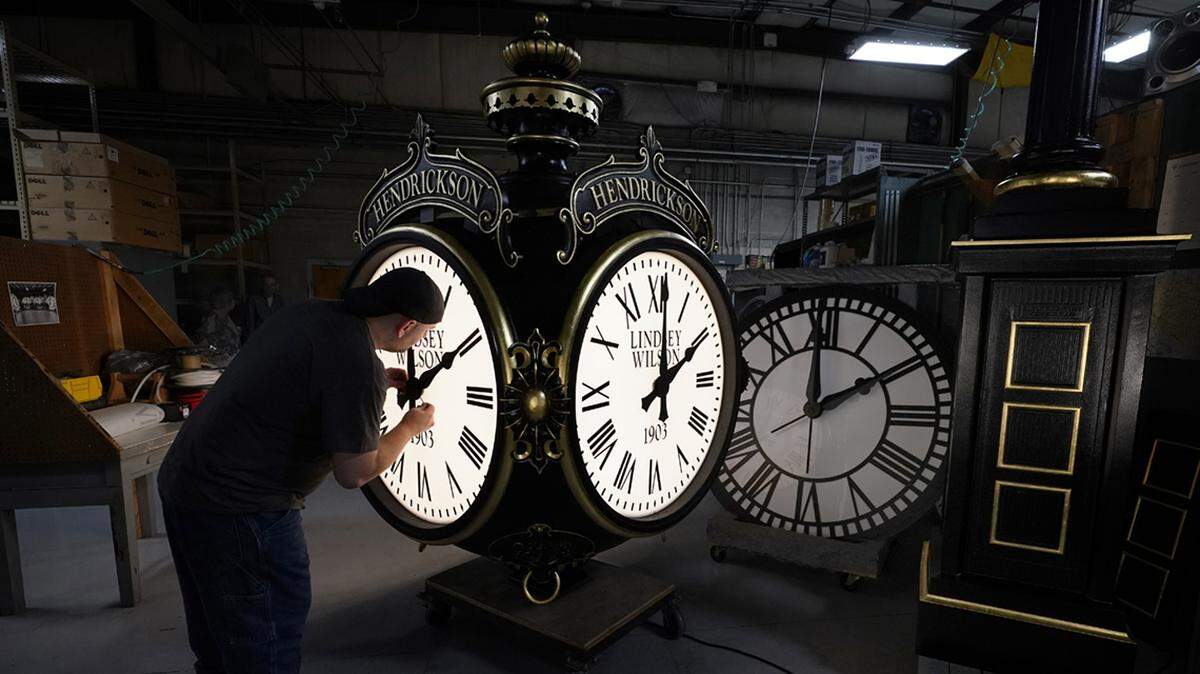
The days are about to get longer.
Daylight saving time starts 2 a.m. March 12, meaning you’ll lose an hour of sleep as clocks are set an hour later.
While there has been a push to end daylight saving time in the United States, there is no nationwide law in place as of this spring.
Find out who observes the time change and why it started in this breakdown:
WHAT IS DAYLIGHT SAVING TIME?
Commonly spoken as “daylight savings,” the time change happens annually on the second Sunday in March. At 2 a.m. local time, clocks spring forward one hour until the first Sunday in November — if you feel like you lost an hour of sleep this weekend, it’s because you have.
WHY WAS DAYLIGHT SAVING STARTED?
The concept was created during World War I to make better use of sunlight during the day. According to the Bureau of Transportation Statistics, it was initially introduced by Germany, which extended daylight hours to conserve fuel and power, and the United States soon followed.
WHY DO WE STILL PARTICIPATE IN THE DAYLIGHT SAVING TIME CHANGE?
Over a hundred years since World War I, the U.S. still uses daylight saving time annually. According to the U.S. Department of Transportation, the change reduces the need to use electricity at night or early in the morning, which saves energy.
Daylight saving time also prevents traffic injuries, as more people are driving during the daylight, and reduces crime, according to the department.
WHO OBSERVES DAYLIGHT SAVING TIME?
Hawaii and most of Arizona are the only states that do not participate in the time change. According to the Arizona Republic, if the sunny state of Arizona changed clocks an hour ahead, sunlight would last until 9 p.m. The Navajo Nation in Arizona does participate in daylight saving time, according to the National Institute of Standards and Technology.
There are 19 states that have enacted legislation in favor of year-round daylight saving time, pending congressional approval. Texas is not among the list. But if Congress passed the Sunshine Protection Act, a year-round daylight saving time would apply to all states.
U.S. territories that do not observe the time change include American Samoa, Guam, Puerto Rico and the Virgin Islands.
The United States is not the only country to use daylight saving time, although less than 40 percent of countries in the world use it, according to Time and Date.
WHAT IS THE SUNSHINE PROTECTION ACT?
The Sunshine Protection Act of 2021 is a bill that, if passed, would mean Americans no longer have to change their clocks twice a year. The Sunshine Protection Act was passed by the Senate on March 16, 2022. As of Feb. 28, the bill is held by the House and is not law.
WHAT STATES WANT DAYLIGHT SAVING TIME ALL YEAR ROUND?
There has been movement from 19 states to make daylight saving time full time in the last five years. The states are: Alabama, Georgia, Minnesota, Mississippi, Montana, Idaho, Louisiana, Ohio, South Carolina, Utah, Wyoming, Delaware, Maine, Oregon, Tennessee, Washington, Florida, California and Colorado.
According to the National Conference of State Legislatures, Massachusetts and Maine have commissioned studies on a full-time daylight saving time.
Congress would have to approve the time changes before any states could use daylight saving time yearlong.
This story was originally published February 28, 2023 at 10:34 AM.