
In Texas, it’s so hot that the sun itself is igniting fires. Here’s how it happened
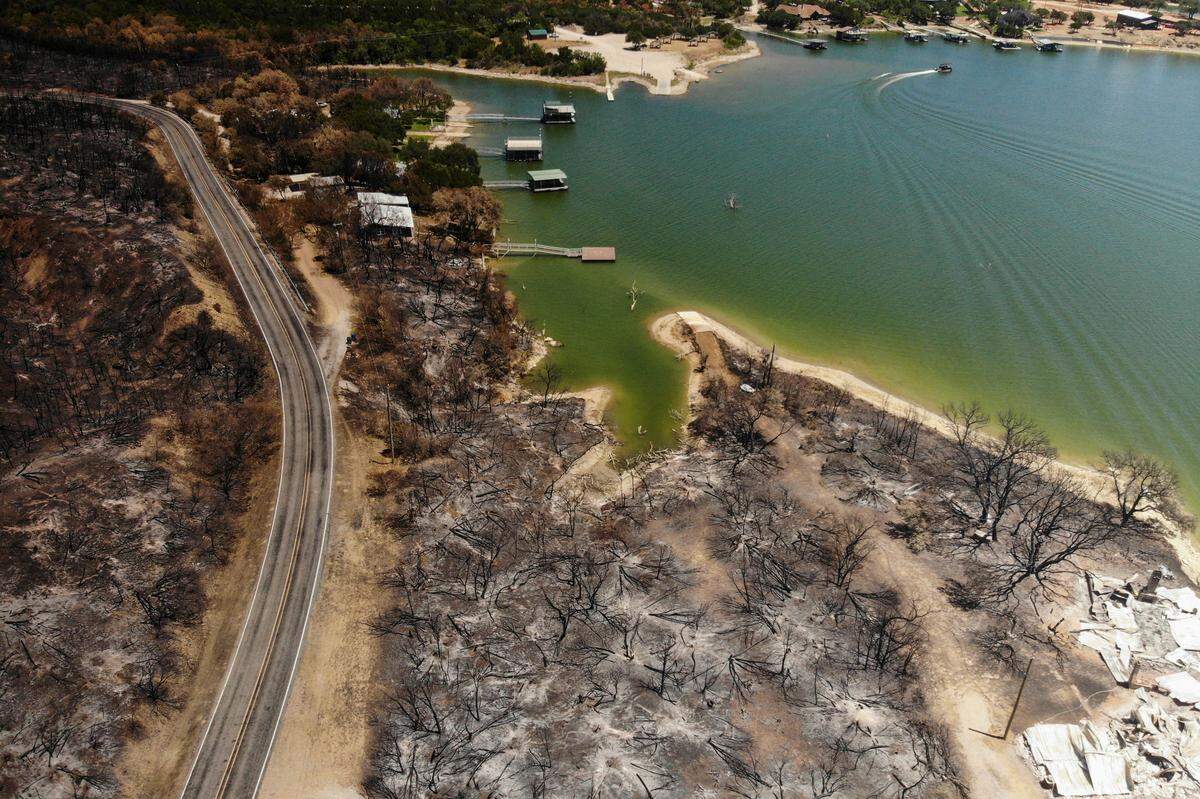
Nearly 460 acres of land were burned in Palo Pinto County last week, and experts are calling the cause of the fire unusual and downright strange.
The Texas sun was so hot on July 18 that when a trash can with glass bottles, paper and food waste was blown open, rays of sunlight hit the bottles and, like a kid using a magnifying glass to burn a hole in something for science class, ignited the paper inside.
The blaze near Possum Kingdom Lake, dubbed by the Texas A&M Forest Service the “1148 Fire,” destroyed five homes.
Heather Gonzales, a program specialist with the forest service, said that while such a cause is possible, she’d never seen it before.
“A wildfire caused by that is definitely very rare,” she told the Star-Telegram. “But one spark is enough to cause these wildfire conditions. ... With the weather conditions, low fuel moisture conditions, we have been seeing some critical fire weather conditions taking place, and that makes any fuels more susceptible to ignitions.”
Christopher Dicus, a professor of wildland fires and fuel management at California Polytechnic State University, who has worked toward preventing and fighting wildfires across the U.S. and internationally, said it was a new one for him, too.
“The circumstances can be right, much like with a magnifying glass, if you have the right sun hitting with the right temperature hitting the right fuel, it can hit that ignition temperature,” Dicus said.
It’s not the first time wildfires have been said to be started by sunlight hitting some sort of fire fuel after being magnified by a glass bottle.
For nearly a generation, Australians were told that glass bottles left or thrown out on the roadside could start brush fires in the same way. A paper in 2006 from University of Melbourne professor John Schauble outlined the “rather ‘dodgy’ science” behind that after researchers had found the risks were relatively non-existent.
But when conditions are right and the fuel is plentiful, Dicus said, this kind of fire starter is definitely possible.
Almost every county in Texas is currently under a burn ban, according to the Texas A&M Forest Service. In Tarrant County, Fire Marshal Randy Renois said the drought index has almost reached its maximum.
A Tarrant County burn ban was put into effect in June when the drought index, which measures in increasing values the severity of drought, was at 735.
“We’re getting close to 800, and after 800 I don’t know,” Renois said. “It only goes to 800.”
And while these conditions make it advisable to keep glass away from potential fire fuel and keep things like paper out of direct sunlight, this sort of cause still isn’t likely.
Most Texas wildfires have been started by intentionally burning debris like trash and vegetation or even controlled burns that got out of hand, according to Gonzales. And the forest service has seen an increase in the number of fires started on roadsides.
Gonzales, Dicus and Renois all said things like cars driving over tall grass, chains dragging behind trailers or between the trailers and the trucks towing them and sparks spat by overheated catalytic converters have been starting more fires recently.
Dicus said even he and a fire chief in California accidentally almost risked starting a fire by driving their truck over tall grass when they were out investigating the cause of one that burned around 50,000 acres and was already extinguished.
“We sat there for a few seconds and then thought, ‘Oh wow, we’re idiots. We could have just started another fire,’ ” Dicus said.
In that case, they got the truck off the grass before anything ignited. But, he said, in extreme drought conditions it doesn’t take long for grass to ignite because of something like that.
Gonzales said Texas drivers have likely seen an increase in large black patches of grass along roadways, and that’s why. Firefighters across Texas, including Tarrant County, have been getting more calls about highway grass fires than usual.
And anybody can help prevent the start and spread of wildfires, she said.
If you see fire or smell smoke, call 911 and don’t assume someone else has already reported it. Be mindful of where you drive and make sure anything metal on your vehicle won’t scrape or hit the roadway and cause sparks.
Make sure equipment doesn’t overheat, don’t throw lit cigarettes or cigarette butts on the ground and don’t burn anything outdoors.
“Really just, be situationally aware of any spark that can happen,” Gonzales said. “Even equipment overheating is something we’ve seen a lot of. It’s already hot outside — it’s easy for equipment to overheat. Just look around and see what could potentially overheat and what could potentially cause a fire.”