Staffing crisis squeezes nursing homes as they try to care for some of Texas’ most vulnerable
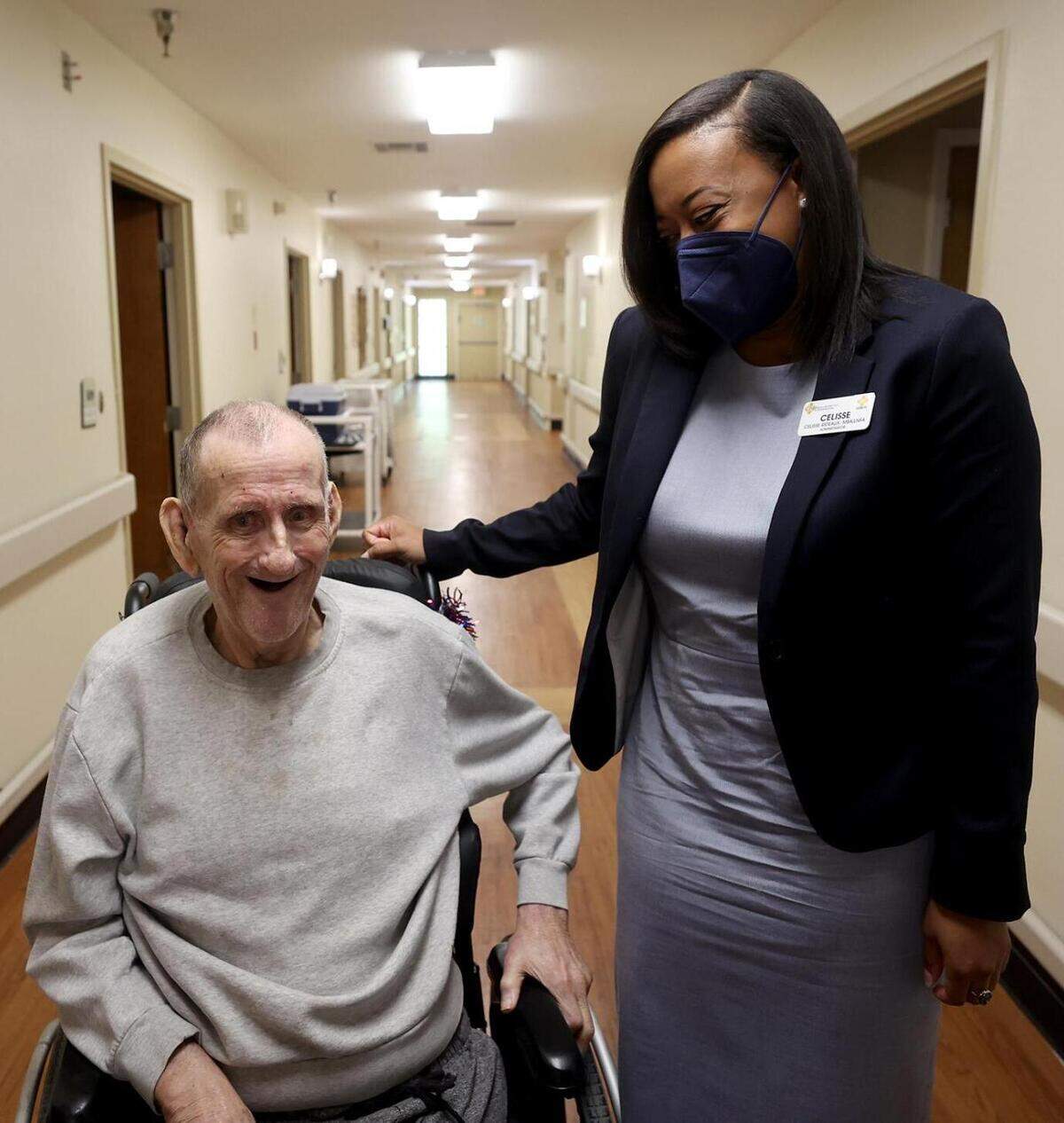
Trying to shore up a depleted staff at the nursing home she runs, Celisse Rideaux tried signing bonuses: $6,000 for nurses and $3,000 for nurse’s aids.
She also offered the staff bonuses for referrals.
It’s not helping.
“We’re just not even getting anybody to apply,” she said.
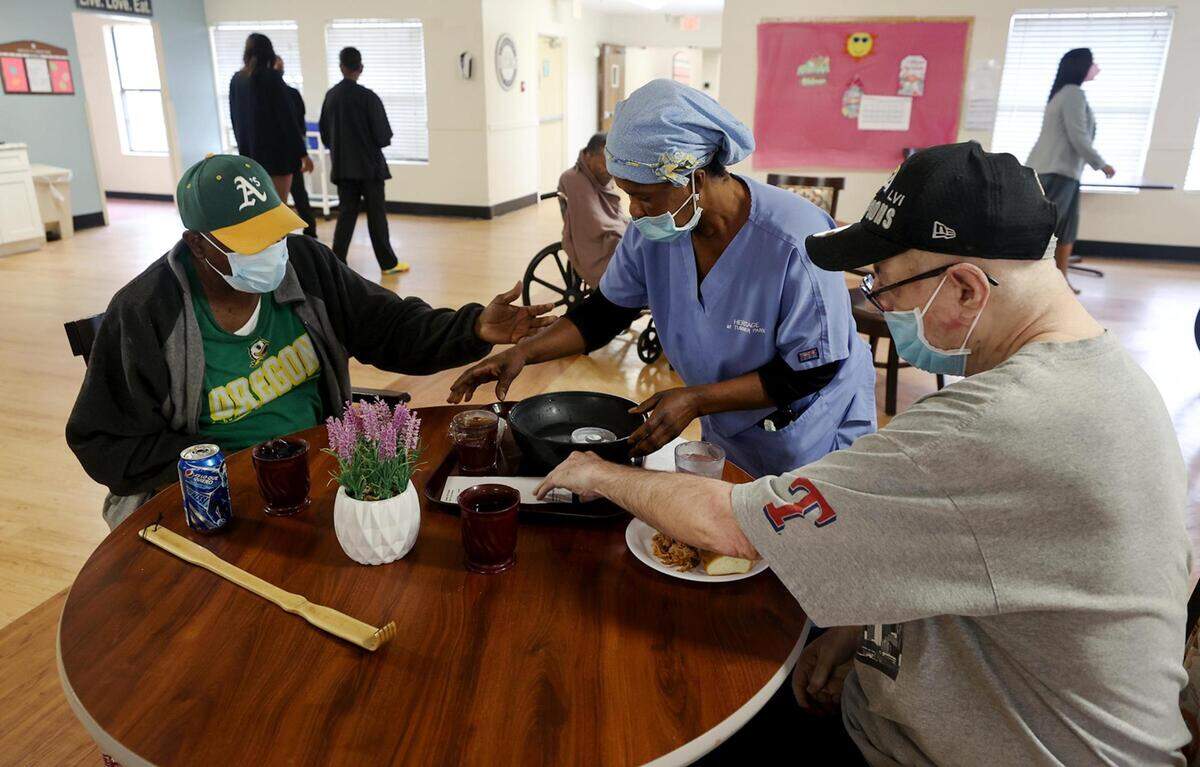
Rideaux is an administrator at Heritage at Turner Park Healthcare and Rehabilitation in Grand Prairie. Like other North Texas nursing homes and long-term care facilities, it is struggling to get enough nurses and nursing assistants to care for some of the state’s most vulnerable residents.
A growing number of nurses and certified nursing assistants who handle the bulk of care are joining agencies that offer flexible hours and better pay. Others left the field in the past two years, burned out from the long hours and health risks they faced during the COVID-19 pandemic.
All employers are struggling to fill open positions. There were 11.4 million advertised openings in April, down slightly from the record 11.9 million in March, the Labor Department reported Wednesday.
At long term care facilities, the staffing problems were exacerbated by COVID-19.
For Rideaux, the staffing challenges have dragged on longer than she ever expected. But amid the stress, she has worked to stay focused and remember why she loves her job: the residents, who benefit from consistent care.
“I’m praying for a light at the end of the tunnel,” she said.
The Texas Legislature addressed the staffing challenges affecting the health care industry by sending them millions in COVID-19 relief dollars. But long-term care professionals say more help is needed to ensure adequate staffing in a state where the number of adults requiring long-term care is expected to double by 2050.
‘There’s just not enough nurses’
A 2019 report by the Texas Center for Nursing Workforce Studies found that 64% of long-term care facilities surveyed said they would need more nursing assistants in the next two years. Sixty percent said they’d need more registered nurses over the next two years and 61% said they’d need the same number of licensed vocational nurses.
Exactly how bad things are compared to before the pandemic is hard to say. The state is expected to release new figures later this year, said Jack Frazee, the director of governmental affairs for the Texas Nurses Association.
But anecdotally, nursing homes — and all health care settings — are struggling to meet staffing demands.
“The general consensus is that there’s just not enough nurses, and they’re having a really hard time filling positions,” Frazee said.
There were 41,716 job postings for nursing assistants, vocational nurses and registered nurses in April and May, according to the Texas Workforce Commission. That’s up from 22,443 postings during the same period in 2019.
Across the country, nursing homes have lost 15.2% of their workforce, according to the American Health Care Association and the National Center for Assisted Living.
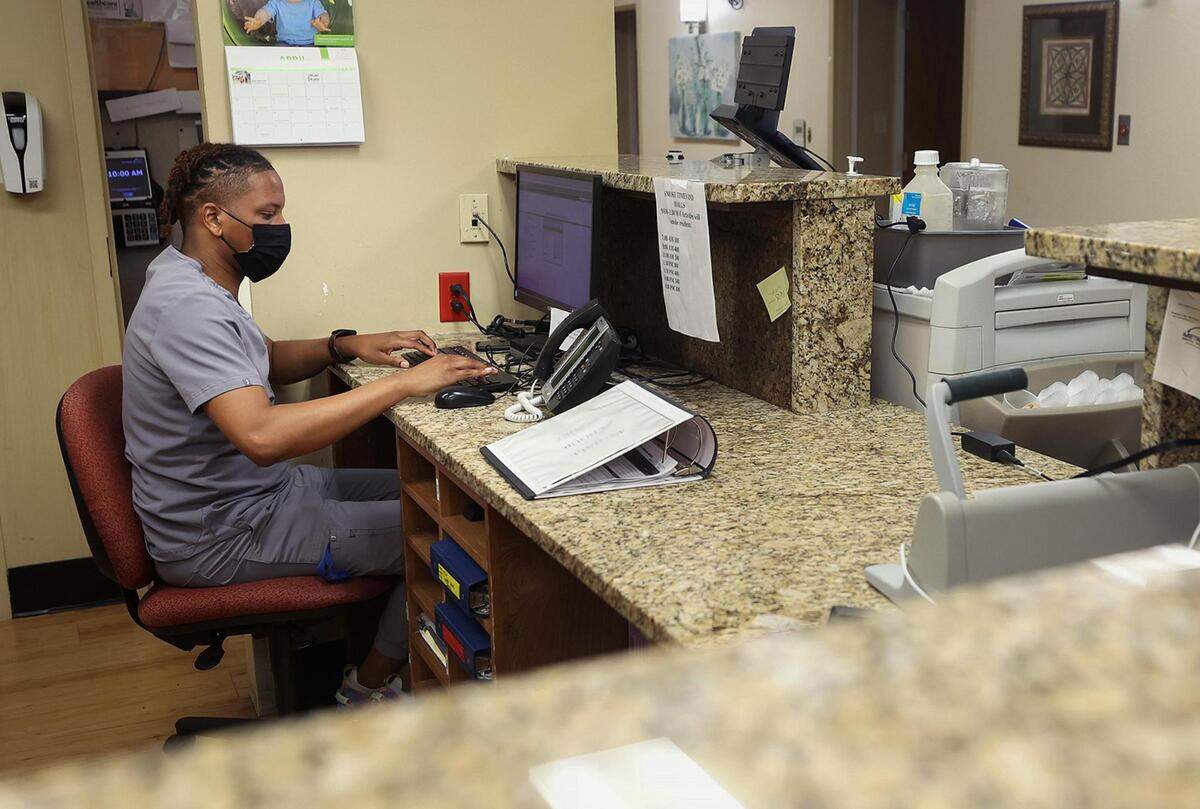
“For the heroes and the folks that continue to be there day in and day out, it puts more stress and more pressure upon them,” said Kevin Warren, the president and chief executive officer of the Texas Health Care Association.
‘You have to have a heart for it’
After making the heart-wrenching decision to move her mom into a nursing home, Laura Crain of Houston was concerned about the level of care her mother was receiving at a League City nursing home after she moved into long- term care in December 2021. She described a staffing shortage that was fixed with a “bandaid” — agency nurses.
Crain would like to see nursing aides get paid more.
“It’s not an easy job,” she said. “You have to have a heart for it.”
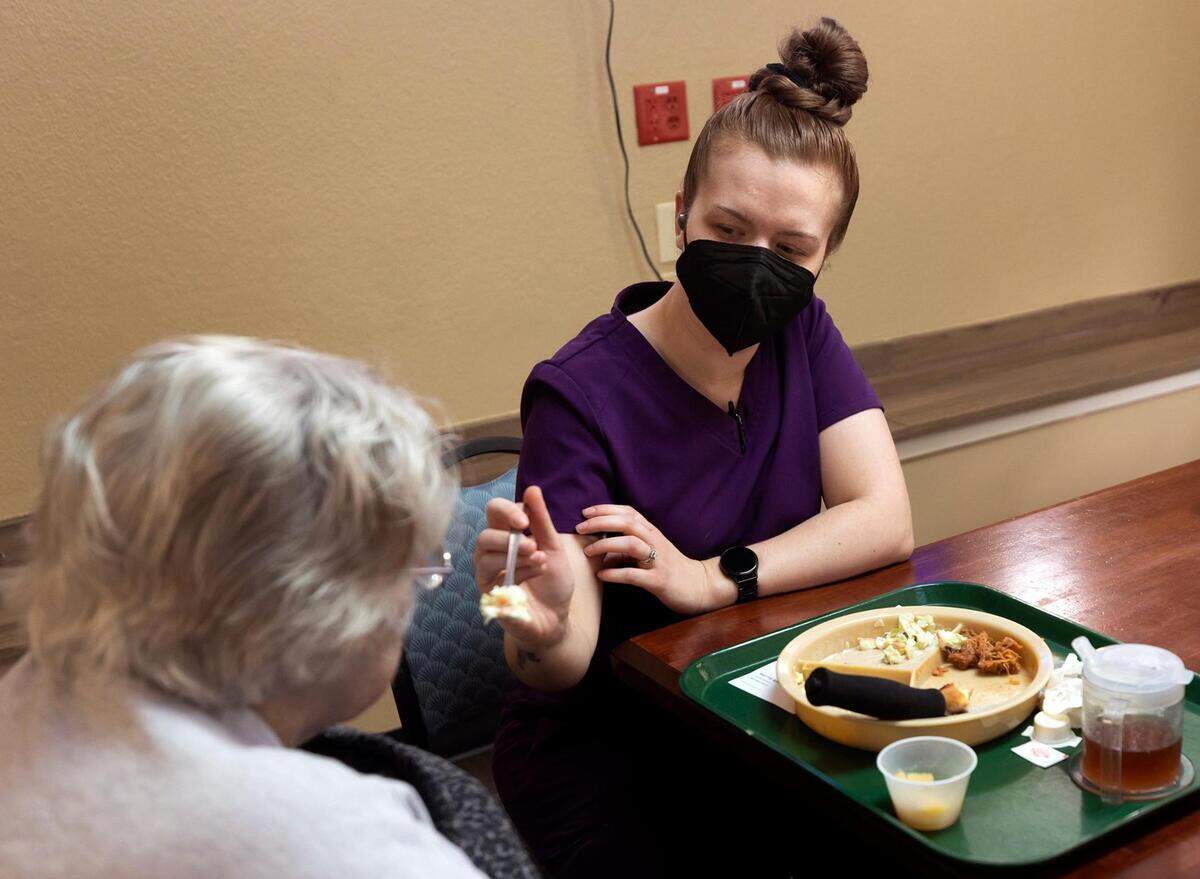
Nursing aids and vocational nurses provide the bulk of care in long-term care settings, said Kristine Morris, a nurse who is an associate clinical professor at Texas Woman’s University.
“A lot of the shortages that we saw across the nursing health care workforce spectrum that we saw in 2020 that were pandemic related have started to reverse themselves, but long-term care is not reversing itself,” she said. “And I think a lot of that has to do with the people that you’re trying to attract to work in long-term care.”
Nursing aides were paid an average $29,000 in 2020, a wage comparable to delivering food or working in retail.
“You can work in another service delivery profession for a whole lot less stress and have a lot more schedule flexibility,” Morris said. “And so a lot of people are simply going to do that.”
Deniese Itz of Granbury, whose mom is in a long-term care facility in Fredricksburg, said there needs to be enough staff to handle things like changing soiled clothing and the other tasks that come with caring for someone’s physical needs.
But there are also the mental needs— talking to residents, listening to their stories, telling jokes.
“Staffing was a challenge before COVID and COVID made it so much worse,” Itz said.
Ultimately, the patients pay the price for the shortage, Morris said.
“The fewer people there are to render care, the less care time they get every day,” she said. “So in practical terms, what that means is ... a patient could go hours without seeing somebody that can attend to their needs.”
Leaving patients alone for extended stretches of time also has consequences for staff, Morris said.
“There’s also the moral injury to the folks who are trying to care for them, who know that they want to be getting back to that person faster and they can’t get there because they’re ... working a double shift, caring for extra patients because there’s not enough staff,” she said.
Texas facilities struggle to get staff
There were many unknowns at the beginning of the pandemic, said Amanda Sharp, the executive director of Colonial Gardens of Fort Worth, which provides memory care.
Employees feared getting COVID-19 and left. Other workers left because they didn’t want the vaccine, Sharp said. Colonial Gardens has been utilizing agency nurses fill in gaps, something Sharp said they hadn’t done before the pandemic.
“Many of them left and didn’t go back to health care,” she said.
Before the pandemic, Rideaux said it wasn’t uncommon to have people walk-in for interviews. That’s no longer the case.
Jonathan Quigley is among those opting to work with a staffing agency. He compares it to being a substitute teacher.
“We come in when they need us,” said Quigley, who works at Heritage at Turner Park often as a licensed vocational nurse. He previously worked as a nurses assistant for 15 years.
Melissa Maturino, a licensed vocational nurse, is in her first agency job. After working in management, she decided to help places in need of nurses during the pandemic. The position allows her to create her own schedule. She too spends much of her time at Heritage at Turner Park.
But Sharp and Rideaux described drawbacks with agency nurses, including an inability to discipline the workers and a lack of familiarity of patients.
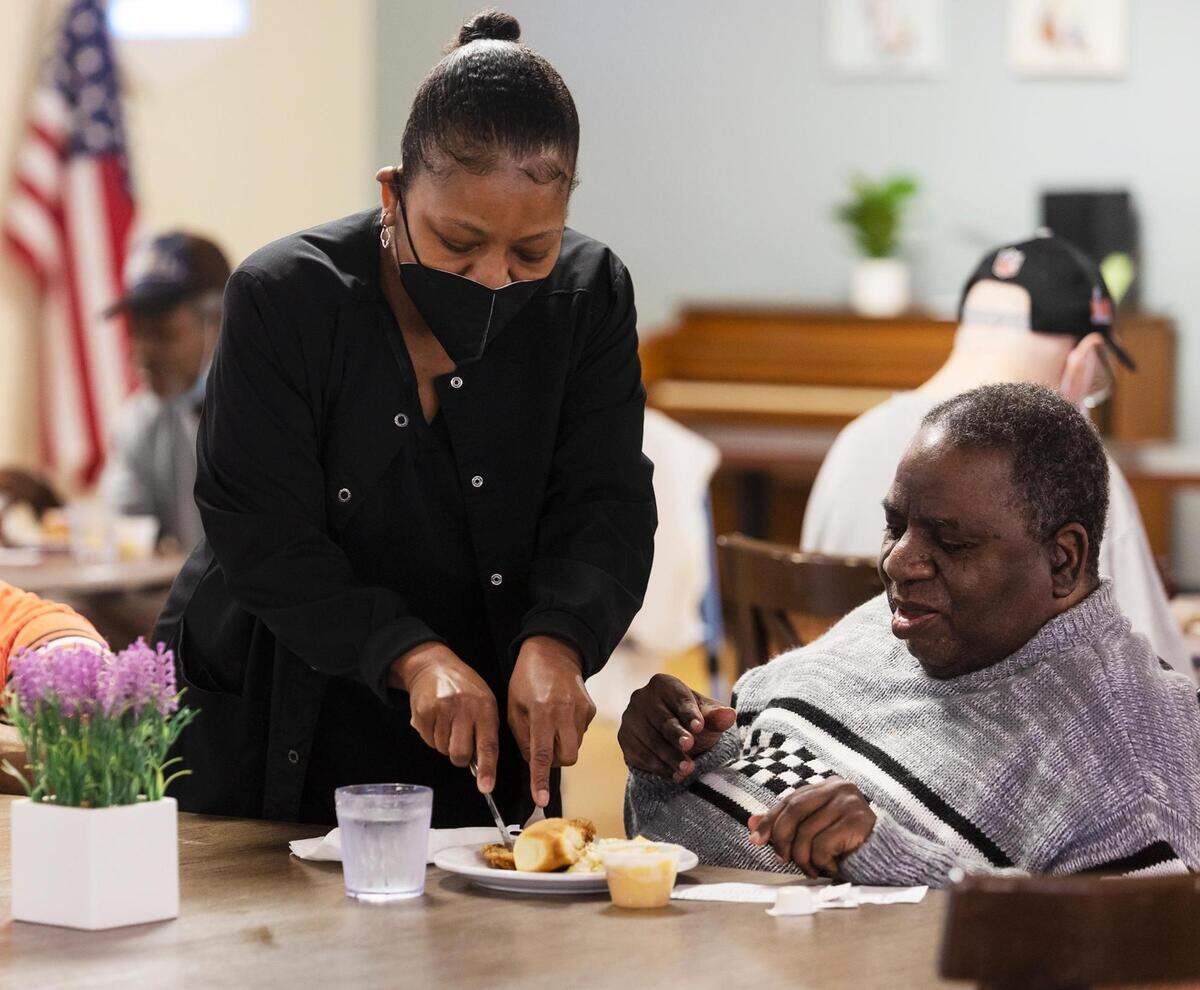
Nurses and aides who are around residents often learn their needs and personalities and build trust. That is important for residents who need memory services, Sharp said.
“They may not remember our names in there, but they do recognize faces and voices and somebody that they’re comfortable with,” Sharp said.
An obvious solution would be to increase salaries for nurses and nursing assistants. But Rideaux and others in the industry say it’s not so simple.
Nursing homes make their money from patients. Without enough revenue coming in from them, budgets are tight.
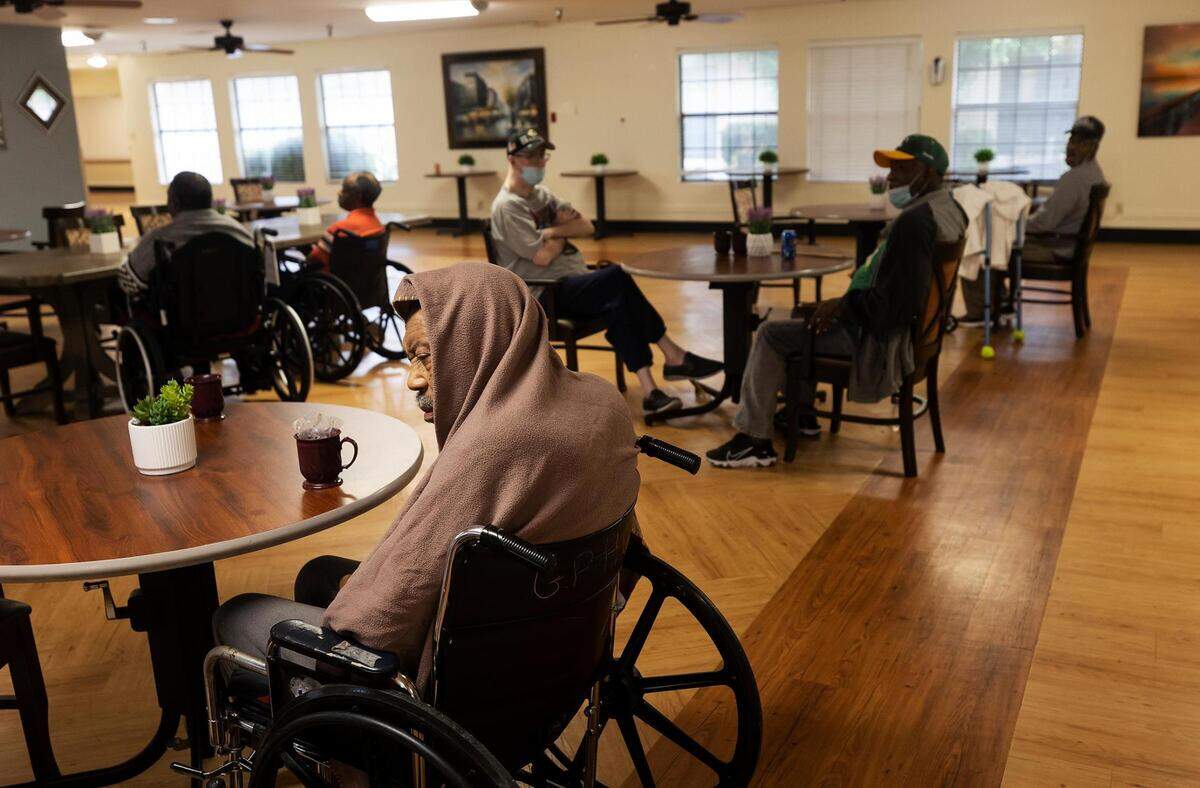
Rideaux recalled having to turn away a patient recently — a man with serious wounds — because she didn’t feel confident he’d get the level of care he needed.
She didn’t have enough full time caregivers and wasn’t sure who would be brought in to fill in the gaps.
“I don’t want that resident to get here and not receive the care that he deserves,” Rideaux said.
Most nursing home patients pay through Medicaid and the state determines how much health care providers will receive through the program, said Warren, of the Texas Health Care Association.
Texas’ reimbursement rate ranks 49th, costing providers an average of $32.49 for each Medicaid resident each day, according to the Texas Health Care Association. Long-term care facilities get about $20 extra per day per resident while there’s still a federal public health emergency, according to a spokesperson for the association.
“Sure if we had the money, we would love to match those wages, but unfortunately we don’t,” Rideaux said.
Unlike the Grand Prairie nursing home, Colonial Gardens of Fort Worth does not accept insurance, Medicaid or Medicare.
But even then, Sharp says they’re limited. Rates for residents at the assisted living facility can’t be increased to a point where they can’t afford to stay in order to increase pay for staff, she said.
“Haven’t found that balance just yet,” Sharp said.
As nursing homes struggle, how will lawmakers help?
The Texas Health Care Association proposes that the Legislature increase the state’s Medicaid base rate for reimbursement.
Facilities can’t increase those rates, even if the cost of care is going up, said Warren, of the Texas Health Care Association. Increasing the rates would let providers compete in a competitive workforce marketplace to try and recruit and retain staff, he said.
Rep. Chris Turner, a Democrat from Grand Prairie, supports the proposal. Lawmakers are expected to have a generous surplus of revenue to work with during the next session which begins in January.
“It’s in line with the values of our state to see that facilities that care for our senior citizens and some of our most vulnerable have adequate resources with which to do their job,” said Turner who chairs the House Democratic Caucus. “So I hope that Republican leaders, leaders who control the state budget process will, in fact, make those Texans a priority.”
Texas Sen. Lois Kolkhorst, a Brenham Republican who chairs the Senate’s Health and Human Services Committee, said in a statement that the Legislature allocated billions to help with health care staffing during the last session. Senate Bill 8 passed in October during a special session provided $200 million for nursing facilities and $178.3 million for assisted living facilities, she said. The legislation was funded with American Rescue Plan Act dollars.
“Given what the cost of staffing is right now, these providers — as appreciated as they are — they’re going to go through that pretty quickly,” Warren said.
The committee plans to study ways to “increase the pipeline of qualified health care staff.” A hearing will be held summer, Kolkhorst said.
Kolkhorst expects the Legislature to examine ways to “re-tool” higher education programs to address nursing shortages. Bolstering the pipeline of nurses through higher education is another solution proposed by Warren.
But even as long term care facilities struggle to meet staffing needs, the nursing programs graduated 27,000 people in the 2021-2022 academic year. Texas saw an increase in the number of licensed registered nurses and a decrease in the number of licensed vocational nurses, according to a 2021 report from the Texas Board of Nursing.
While there’s been an increase in nursing graduates, it’s still not enough to meet the need, Frazee said. Part of that is due to population growth, he said.
House Higher Education Chair Jim Murphy, a Houston Republican who didn’t seek reelection, thinks one area to look at is cultivating faculty to teach nursing students. Qualified students are getting turned away because there aren’t enough faculty to teach them, he said.
This could be done through loan forgiveness, he said. Texas currently has a Nursing Faculty Loan Repayment Assistance Program where qualifying students can get up to $7,000 repaid for a maximum period of five years.
“When people say, ‘Oh, we need more people to go into nursing’, true, but they want to go there,” Murphy said. “One of the things that we need is to look at PhDs, mostly, some master’s degree and faculty because they’re getting hired away at higher wages.”
As lawmakers consider solutions, those on the ground like Sharp and those with loved ones in long-term care continue to deal with the day-to-day effects of staffing gaps.
“I wish there was a silver bullet ... but there isn’t one solution that’s going to fix it all,” said Morris, the TWU professor. “We just got to chip away at it.”
May 17 offered some hope for Sharp. She had a new hire orientation where she welcomed three nurse aids and an employee to help with activities.
“To have that many at one time — haven’t been able to do that in awhile,” she said. “It’s encouraging.”
This story was originally published June 5, 2022 at 5:00 AM.