If Roe v. Wade is overruled, Texas will ban most abortions. Here’s a look at the law
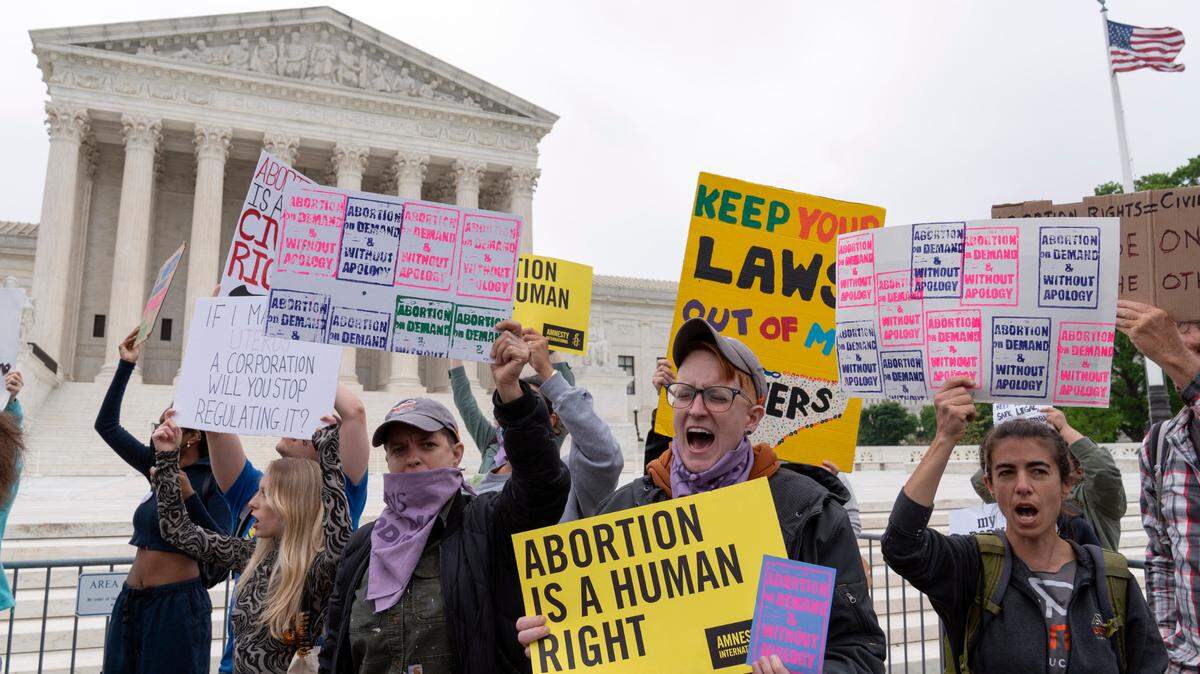
If Roe v. Wade is overturned as a leaked draft of a Supreme Court opinion suggests, most abortions in Texas would be banned.
The draft opinion reported by Politico may not reflect the court’s ultimate ruling in a Mississippi abortion case. Texas’ abortion laws are still in place, including an effective ban on abortions after about six weeks of pregnancy that is enforced through a civil mechanism.
But if the the draft opinion authored by Justice Samuel Alito holds, Texas has a so-called “trigger law” on the books that would further restrict abortion access.
“If the opinion goes into effect as drafted now and the court overrules Roe, that means that the trigger will be pulled and that an abortion ban would go into effect in Texas in 30 days after the decision comes down,” said SMU law professor Dale Carpenter.
If Roe is overturned “wholly or partly,” a person who performs, induces, or attempts an abortion could face up to 20 years in prison if the abortion is unsuccessful and up to life if it is successful.
The bill also includes a potential civil penalty: A person who performs an abortion could face a fine of at least $100,000 for each violation.
The bill states that criminal and civil penalties should not be construed as applying to a “pregnant female on whom an abortion is performed, induced, or attempted.” Bill author Giovanni Capriglione, a Southlake Republican, said penalties would not apply to a woman whose abortion was self-induced.
It offers an exception for abortions performed on a patient in a “life-threatening physical condition” or if the pregnancy puts a patient at “poses a serious risk of substantial impairment of a major bodily function.”
Capriglione said he’s excited by the potential ruling but stressed that the opinion is a draft and could change.
That said, “it would allow for the trigger bill to do what it intends to do, but more importantly what it does is it now gives this authority back to the states,” he said.
Alito wrote in the opinion that Roe and Planned Parenthood v. Casey, a case that affirmed Roe, “must be overruled, and the authority to regulate abortion must be returned to the people and their elected representatives.”
Texas is one of 13 states with “trigger” laws, according to the Guttmacher Institute, a research and policy group that supports advancing reproductive rights.
“If the final decision takes this form, it is a total over and formal overruling of Roe v. Wade, and so the raft of anti-abortion laws that are currently unconstitutional under Supreme Court doctrine would go into effect,” said UT-Austin law professor Elizabeth Sepper.
Carpenter predicted the opinion, which was circulated Feb. 10 and labeled as first draft, will be revised to at least address responses to possible dissenting or concurring opinions.
“I would expect at least to see an exchange like that, if not something more,” he said. “So, it will change. I doubt that the ultimate outcome will change, in that it seems likely the court will actually overrule Roe and Casey. It’s not certain. But I think that it seems likely at this point.”
Abortion providers with clinics in Texas stressed that abortion is still legal as the country on Tuesday navigated the potential effects of the draft opinion were it to mach the official opinion.
The “trigger” law is distinct from Senate Bill 8, which was also passed by the state legislature last year. The law, which has been subject to court challenges, prohibits abortions after cardiac activity is detected and is enforced through civil litigation. Those being sued could face damages of at least $10,000.
This story was originally published May 3, 2022 at 3:05 PM.