Texas just raised this gauge of wildfire threats to Level 4. What does that mean?
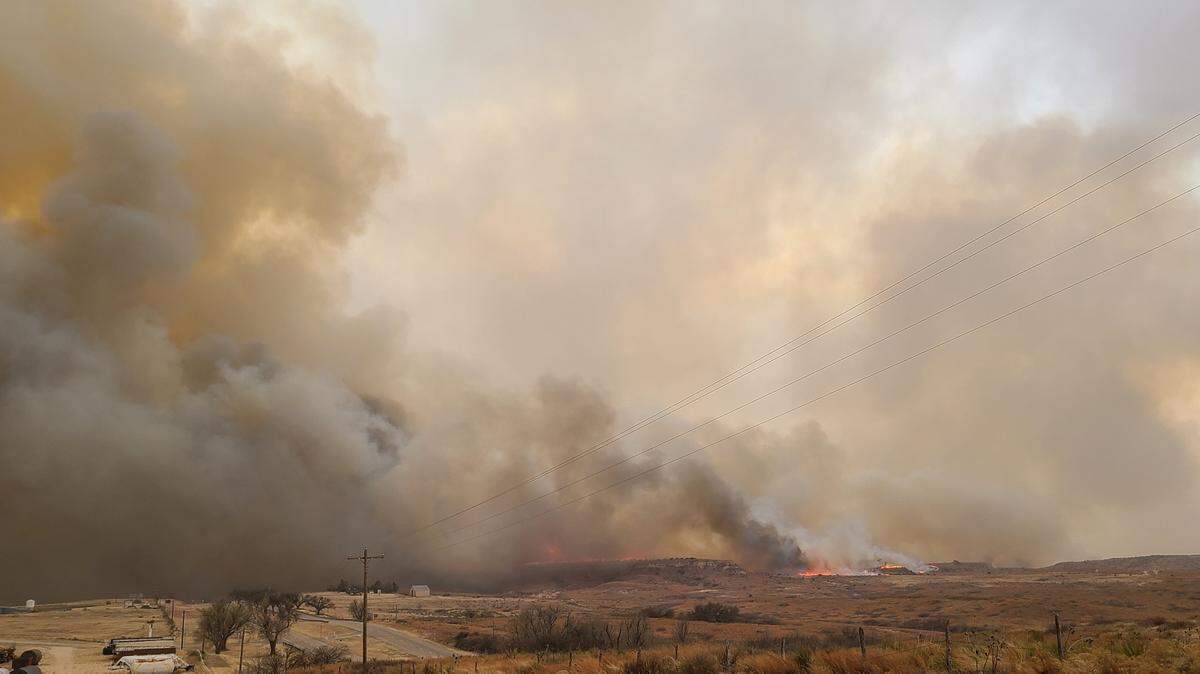
Texas A&M Forest Service on Thursday increased the State Wildfire Preparedness Level to 4, only one level from the highest, because of a significant increase in wildfire activity, a potential for large fires and an increased commitment of state and local resources to fighting the blazes.
The last time Texas was at Preparedness Level 4 was April 2018.
“The decision to move to a Preparedness Level 4 indicates that the complexity of wildfires across Texas is increasing to where they require more time, personnel and equipment to contain,” said Wes Moorehead, Texas A&M Forest Service fire chief, in a news release. TAMFS is the lead firefighting agency in the state.
Across Texas this week, weather conditions and extremely dry grass contributed to several large wildfires. State, federal and local fire resources responded to 192 wildfires that burned 173,559 acres.
Gov. Greg Abbott recently issued a disaster declaration for 16 counties affected by wildfires, which remains in place.
What do State Wildfire Preparedness Levels mean?
The tiers are determined by fuel and weather conditions, fire activity and fire suppression resource availability.
Level 5 is the highest level of wildfire activity and indicates heavy resource commitment to fires locally.
What resources are being deployed?
“The State of Texas has been working closely with local officials to respond to dangerous conditions created by wildfires,” Abbott said in a press release March 29.
There are currently 19 state agencies involved in the state’s wildfire response. The Texas Division of Emergency Management has continued to activate resources and the State Operations Center remains at Level II: Escalated Response.
More than 900 local and state firefighters have been mobilized in current firefighting efforts. That includes more than 300 firefighters from Texas A&M Forest Service, more than 200 Texas Intrastate Fire Mutual Aid System firefighters from 70 local fire departments, and approximately 400 firefighters from 28 states positioned across Texas to respond to wildfire threats.
Resources include 65 fire trucks and 35 aviation assets.
“We want to ensure that the state has adequate resources to protect Texas’ citizens and natural resources from wildfire,” Moorehead said. “We are working with other states to mobilize additional fire resources to Texas for assistance.”
What fires are currently active in Texas?
Significant portions of Texas faced extreme fire weather conditions this week due to high wind gusts, dry fuels and low humidity. Fires in South Texas and the Panhandle are still active.
Firefighters are working to contain 10 active wildfires across the state, including the Borrega Fire in Kleberg County, the Canadian River Bottom Fire in Roberts/Hemphill counties and the Los Angeles Fire in La Salle County.
The Borrega Fire in Kleberg County, across an estimated 46,000 acres, is 20% contained. The wildfire ignited on the afternoon of March 30 and spread quickly due to wind and dry conditions. On Wednesday night, the county implemented voluntary evacuations for residents in the Ricardo and Riviera communities. In addition to local first-responders, 42 state and federal personnel are assigned to the fire. Three bulldozers, 16 fire engines and eight aircraft have been deployed.
The Los Angeles Fire in La Salle County, across an estimated 3,500 acres, is 30% contained. The wildfire sparked on March 30, burning in grass and brush. Residents were evacuated from Fowlerton on Wednesday night, but the community is not immediately threatened. Additional resources, including aircraft, were arriving Thursday.
The Canadian River Bottom Fire in Roberts and Hemphill counties spans 39,568 acres and is 40% contained. The wildfire happened on March 29 off Highway 60 between Miami and Canadian. The fire initially spread rapidly. It moved northeast, crossing Highways 83 and 33, but stayed south of the town of Canadian. Forward progression of the wildfire has been stopped, and fire resources are patrolling the area and improving containment lines around the perimeter of the fire.
What happens now?
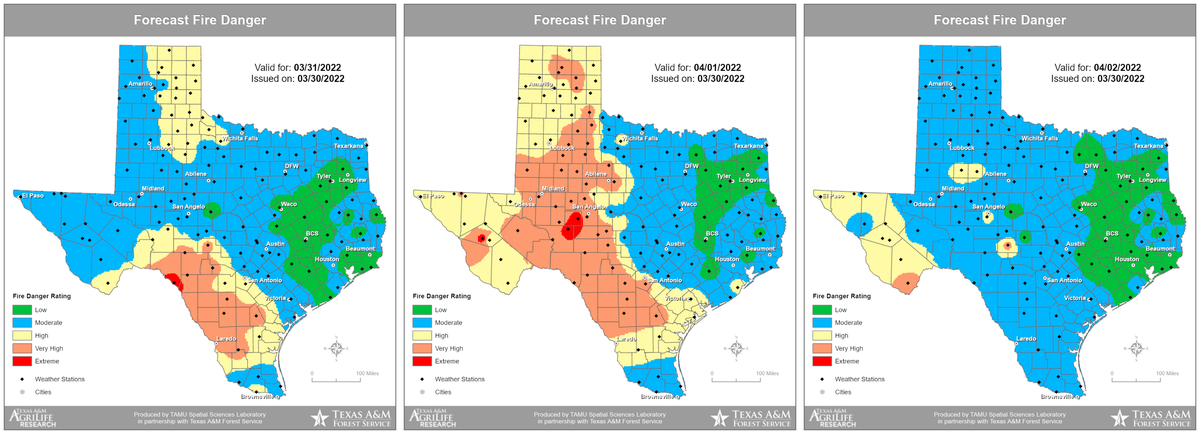
Because of the above-normal wildfire activity levels and elevated fire conditions across Texas, all prescribed fires conducted and led by Texas A&M Forest Service have been postponed until conditions improve.
For the next three days, DFW is under moderate risk of fire danger. That means that fires can start from most accidental causes, but the number of fire starts is usually pretty low. If a fire does start in an open, dry grassland, it will burn and spread quickly on windy days. Most wood fires will spread slowly to moderately.
Dallas-Fort Worth is also not close to Texas areas with high to extreme fire danger.
How can you stay safe from wildfires?
Abbott on Tuesday encouraged Texans to remain vigilant and informed as fire danger threatens the state. It’s important that Texans monitor local weather reports, heed guidance from local officials, and take proper measures to protect life and property, Abbott said.
Stay wildfire aware, TAMFS says. If you spot a wildfire, immediately contact local authorities, as a quick response can help save lives and property.
Never approach or touch downed power lines, report downed lines or outages to local authorities and local utility officials, the Public Utility Commission of Texas says.
For current conditions and wildfire outlook, read the Texas Fire Potential Outlook.
For tips and information on how to prepare for severe weather and threat of wildfires visit: Ready.gov/severe-weather and tdem.texas.gov/disasters/2022-march-wildfires.
This story was originally published March 31, 2022 at 5:02 PM.