Notice flooding issues in your neighborhood? North Texas planners need your help now
As North Texas develops its first-ever regional flood plan, members of the planning group are on a tight schedule as they seek public input to identify areas most vulnerable to flood damage.
The first-ever Trinity Regional Flood Planning Group, part of a statewide effort to address infrastructure issues and flood mitigation after Hurricane Harvey devastated the Gulf Coast, has just over a year to develop an initial draft and submit it to the Texas Water Development Board.
The final draft must be completed by early 2023, after which the board will compile all 15 regional plans into a giant statewide blueprint to be released in September 2024.
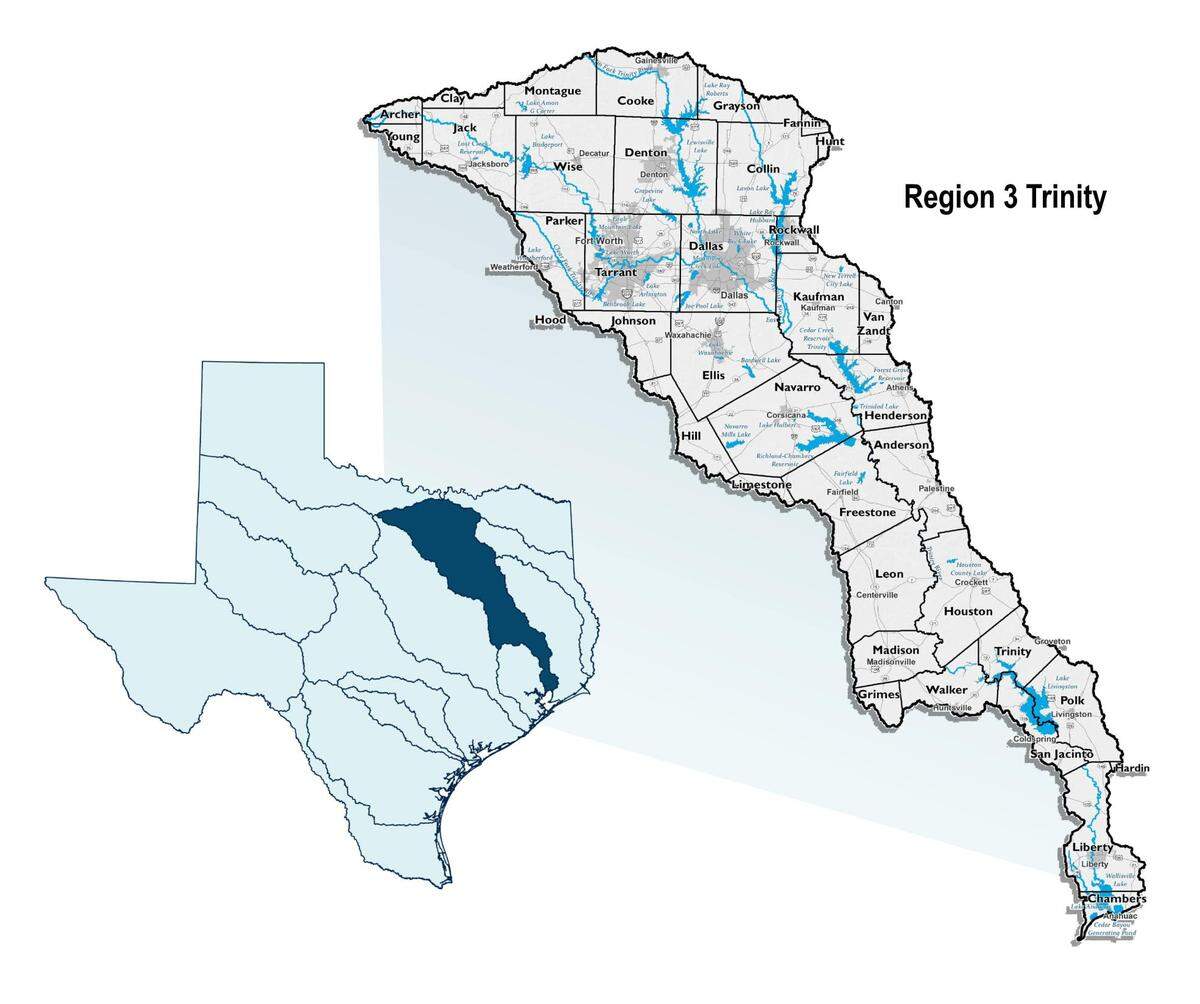
That means the Trinity group has to move quickly to collect technical data from local governments as well as from members of the public, according to Glenn Clingenpeel, the chair of the planning committee and an executive manager at the Trinity River Authority. Their planning zone contains 18,000 square miles of river basin, stretching all the way from North Texas to the greater Houston area, including Liberty and Chambers counties.
There’s only a few days left for North Texans to use an interactive online map to pinpoint flooding concerns in their communities. The deadline for that data collection is Saturday, July 24 — just nine days after the flood planning group publicly announced the tool.
“This is a great use of the technology that we have, and it enables people to let us know about flooding that may not otherwise be known,” Clingenpeel said. “It could be just a street in a neighborhood that gets flooded that isn’t very well known, or it could be out in a rural setting that just hasn’t come to light.”
To access the map, visitors can head to www.trinity.halff.com and look for the “Member of the Public” area on the right side of the page. After entering a name, home address and email address, users should be able to see a map of the Trinity region and use location pins to flag where they’ve noticed flooding issues in their neighborhoods.
While the mapping tool is only available for a short time, there will be future opportunities for members of the public to shape the Trinity’s flood plan, Clingenpeel said. His group will host an in-person public meeting on Aug. 19, though the time and date have not yet been determined.
There is also no deadline for public comments submitted through www.trinityrfpg.org, the planning group’s website, Clingenpeel said. Texans can also ask questions or submit comments on flooding issues to info@trinityrfpg.org, or sign up for email updates on the group’s progress on its website.
First, planning group members will look at current flood risk and then project how it might change in the future due to urbanization, climate patterns and more, Clingenpeel said.
“Then we’re going to determine strategies to reduce that risk,” he said. “I think those priorities will be developed organically as we go through this process.”
Texas water officials are accustomed to long-term planning to ensure that cities have adequate water supply, but this new flood planning process is “absolutely unprecedented” in terms of its scale, scope and comprehensiveness, Clingenpeel said.
“Typically, flooding is something that’s done at a very parochial level: It’s municipality by municipality, county by county,” he said. “There’s not a whole lot of integration that has happened before. I think that this is a great step forward.”