A man with Huntington’s called police for a safe ride home. He ended up in a hospital
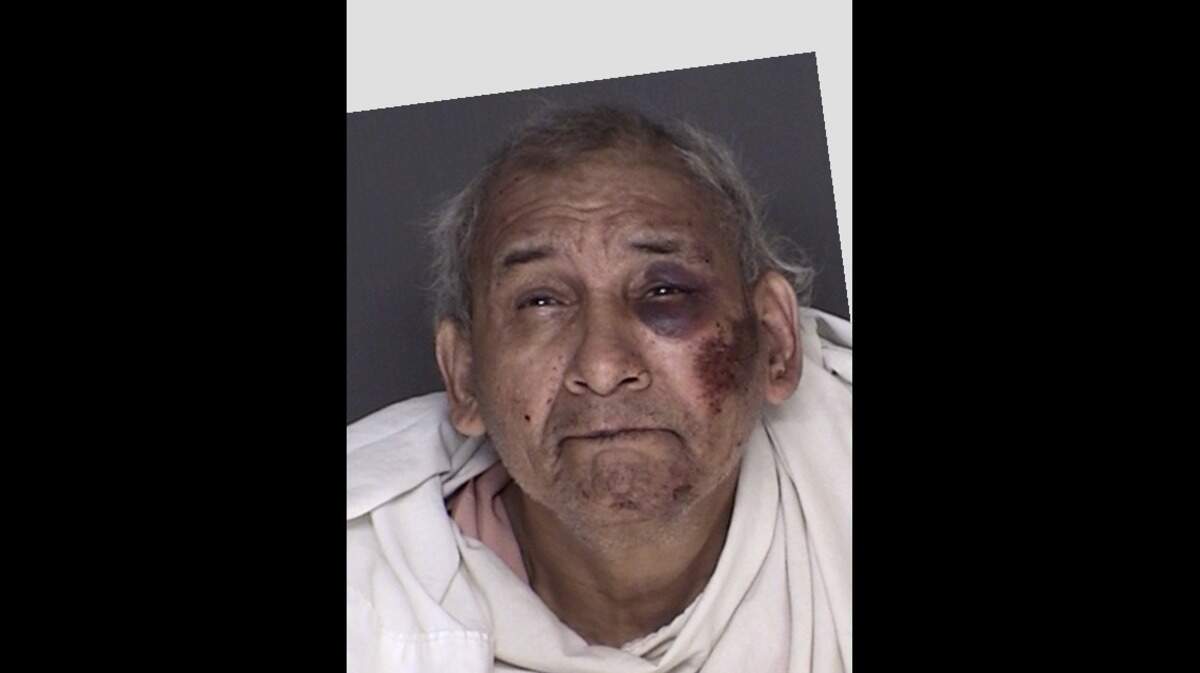
When 67-year-old Ruben Solis called the Ellis County Sheriff’s Department in March, he was expecting a safe ride home like he had received before. Instead, he ended up in the hospital and then spending the night in jail, he says.
According to a lawsuit filed in the Northern District of Texas on Thursday, Solis was assaulted and wrongly arrested by two deputies in Ellis County.
The Sheriff’s Department said in a news release they are not commenting on the suit.
Solis has Huntington’s disease, a degenerative, terminal condition that causes uncontrollable movements in the hands, feet, legs and other parts of the body. Symptoms can worsen when someone is under stress or anxious, according to experts.
Solis cannot drive due to the disease. Instead, Solis sometimes calls the Ellis County Sheriff’s Department for a safe ride home, according to the suit.
On March 23, Solis called deputies for a ride home from his daughter’s in Waxahachie. After calling, he decided to take a short walk along his daughter’s street.
Ellis County deputies Dustin Saulter and Robert Nichols, who were dispatched to pick him up, pulled up behind Solis and asked to see his identification.
“As Mr. Solis struggled to retrieve his identification from his pocket with hands that spasm, he told the (deputies) that he suffers from Huntington’s disease. It was obvious to them that (Solis) did not have good control over his hands as he attempted to reach into his pocket,” the suit states.
Solis’s lawyer, Wayne Krause Yang, said the deputies reacted with anger to Solis’s symptoms and his disability.
Solis says in the suit the officers started to question him antagonistically, argued with him and ignored his explanation of his disease. Solis started to walk away and “attempted to get a little space from the (deputies).”
As Solis turned away, Nichols grabbed him and threw him to the ground, according to the lawsuit. The deputies jumped on him and “manhandled Mr. Solis while his limbs jerked spasmodically out of his control,” the suit says.
They then handcuffed him and dragged him to his knees, leaving him next to their patrol car bumper unattended where he “predictably toppled over when they left him unassisted and alone,” the suit says.
Solis smashed his face into the bumper of the car and then onto the ground, according to the suit. His face started bleeding and swelling as bruises spread around his ribs.
The suit says that instead of taking Solis to the hospital due to his injuries, the deputies took him to the Ellis County jail. The booking officer saw Solis’s injuries and had him taken to the Baylor Medical Center, according to the suit.
At the hospital, Solis was treated for severe bruising to his face, chest and ribs, lacerations to his face, and trauma to the tendons and joints in his neck and hands.
After being treated at the hospital, Solis was charged with felony assault on a public servant. He was taken back to jail and forced to go through an arraignment and post a $10,000 bond, the suit says.
“In writing the charging document, the Defendant’s deputy swore under oath that he smelled alcohol on the breath of Mr. Solis and that he had assaulted him,” the suit states.
The hospital had also run a blood alcohol test on Solis, which showed up clear, the suit says.
Solis’s charges were dismissed a few days later, the suit states.
While the charge disappeared, Yang said the emotional trauma Solis endured has stayed with him.
“This really rocked his world. This is a man who takes such great pride on being able to live independently,” Yang said. “This really changed his perspective on how things work. The Ellis County Sheriff’s Department really emotionally damaged him with the actions they took.”
Yang said the biggest problem is Ellis County Sheriff’s Department does not have training or preparation for officers on how to interact with or accommodate people with disabilities.
The Sheriff’s Department did not respond to an email asking about whether this kind of training is required for officers.
This story was originally published November 30, 2018 at 4:00 PM.