
Tongue-tied Texas boy finally able to speak — after a trip to the dentist for a cavity
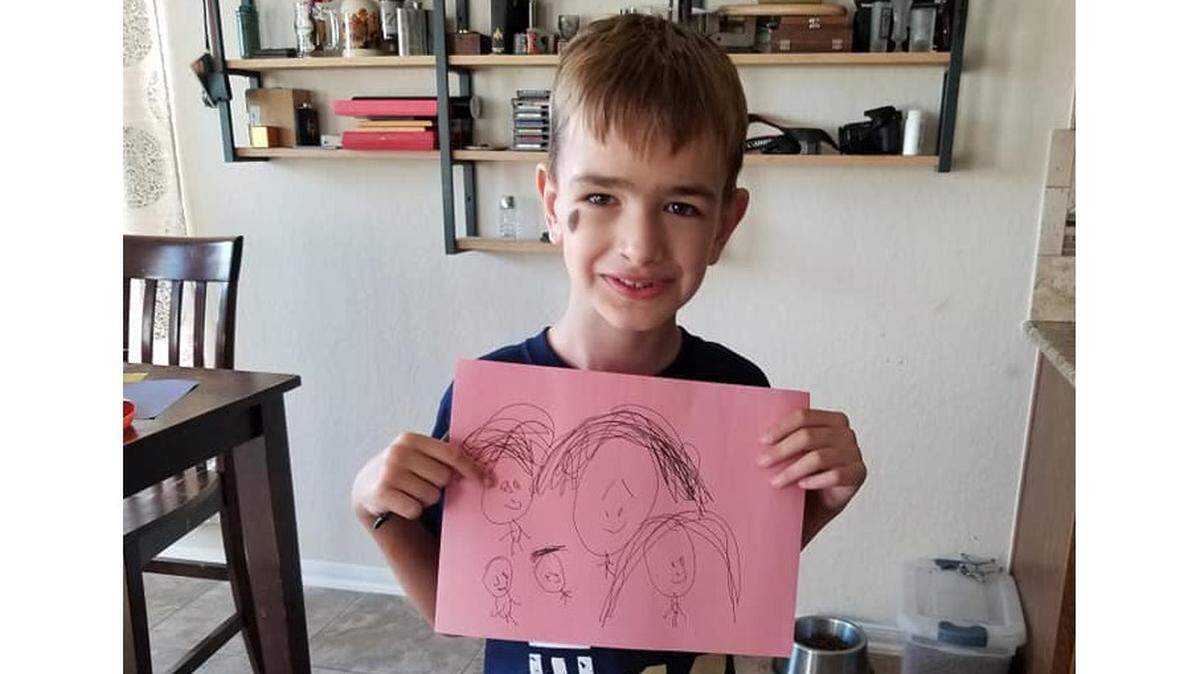
A simple trip to the dentist late last year changed Mason Motz’ life forever, his parents say.
“It was an 180-degree turnaround for him,” his dad, Dalan Motz, told McClatchy. “And it happened so fast. He’s been a completely different, a happier boy, able to do more of things that boys do, since then.”
Mason hadn’t uttered a word to that point, through the first 5-plus years of his life.
Some doctors had told Dalan and his wife Meredith that it was somehow related to Mason being diagnosed at birth with Sotos syndrome, which causes overgrowth in childhood, a distinctive facial appearance and learning disabilities, according to the National Institute of Health.
Since part of Mason’s diagnosis meant that his cognitive skills could be delayed in developing, Dalan and Meredith took his inability to form words and phrases as part of the hardship in life his condition had dealt him.
“Pediatricians could never give us answers,” Dalan told McClatchy. “As soon as we could, we started him on speech therapy.”
But even into his school-age years, nothing. Mason could make sounds, but he wasn’t forming words with those sounds.
“In Pre-K, their answer to it was to find alternative methods of communication between Mason and his teacher, Mason and other kids,” Dalan said. “We did the same at home. We had boards all over the house with different objects on them so he could point to what he wanted or needed at the time.”
Mason also exhibited signs of sleep apnea, which then led to trouble sleeping. His parents attributed these troubles to the overgrowth as a toddler, but the couple would only later come to find out that most of Mason’s physical troubles actually started in the same place — his mouth.

Both Dalan and Meredith left the Army when Mason was 1 year old, and the family settled in Katy, Texas. One of the tougher things to arrange for Mason when they got there was finding the right dentist, Dalan said.
The one they found would eventually change Mason’s young life. Dr. Amy Luedemann-Lazar saw Mason when he came in with several cavities in early November 2017.
While Mason was sedated, according to CBS Houston, “Dr. Amy,” found what no other doctor or speech therapist had noticed about Mason before. In addition to Sotos syndrome, he also had something called ankyloglossia — which means that his tongue was literally tied town to the floor of his mouth by “an unusually short, thick or tight band of tissue” called the lingual frenulum, according to the Mayo Clinic.
Even in medical communities, the condition is referred to as a tongue-tie. Dr. Amy, as the family knows her, used a Waterlase soft-tissue laser to surgically loosen the grip Mason’s lingual frenulum had on the bottom of his mouth.
“When you’re developing (in utero), your tongue is part of the floor of your mouth,” Luedemann-Lazar told Inside Edition. “A tongue-tie is an incomplete separation.”
That night, after the sedatives wore off, Dalan told McClatchy, “Mason had a phrase.”
“Mama, I’m hungry,” Mason told Meredith, something he used to have to point at a picture of food to indicate. His parents’ jaws dropped.
“We wanted to jump up and down and give him cake and everything like that because we were so proud of him in that moment,” Dalan said. “But at the same time we wanted to try to maintain as much ‘normal’ as we could, and make sure that what we were hearing was really real.”
Ungluing his tongue from the floor of his mouth immediately gave Mason the ability to speak. Now, Dalan says, he can count to 100 out loud and recite the alphabet, but he’s also honed his ability to tell his parents and his little brother “no.”
“So there’s that,” Dalan said. “He always had the words inside him. It wasn’t an inability to learn the words or form the words. It was this physical inability to make them come out of his mouth.”
It really kicked in, though, for Dalan and Meredith, when they looked at the bedroom cam they set up to monitor Mason’s sleep.
“We didn’t hear anything, which scared us half to death until we got really close to him,” Dalan said. “That quietness was Mason breathing normally. That was him finally getting a deep, full, comfortable night’s sleep. It was unlike anything we’d ever heard before.”
This story was originally published September 27, 2018 at 3:01 PM.