‘The elephant in the room:’ Is there a divide among conservatives?
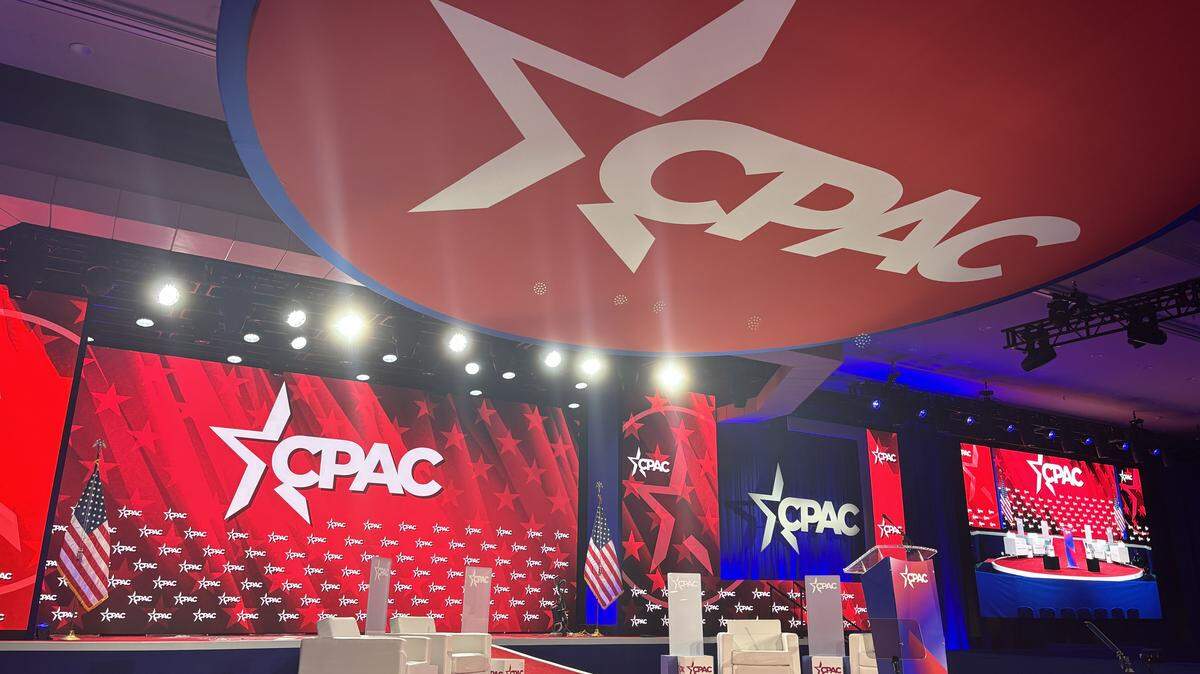
The charge for unity came early at the 2026 Conservative Political Action Conference.
“We cannot divide from within,” said CPAC Senior Fellow Mercedes Schlapp, taking the main stage Thursday to convene what’s billed as the “largest and most influential gathering of conservatives in the world.”
It’s not fellow conservatives who are the enemy, she said.
“It’s the communist,” Schlapp said. “It’s the socialist. It’s the Marxist. It’s [New York City Mayor] Zohran Mamdani. It’s AOC. It’s Chuck Schumer. So let’s get in line. Let’s fight together. Let’s stay united.”
The message of unity was a common theme among speakers at CPAC, which was held in Grapevine at the Gaylord Resort and Conference Center. Person after person portrayed Democrats as the enemy trying to drive a wedge between conservatives in an election year, where Republicans want to keep control of Congress and win races up and down the ballot.
Calls for unity imply that there’s a divide, but attendees had varying views on its scope and cause.
Lost unifier in Charlie Kirk
Christian Matsumoto returned to CPAC from California as a TikTok influencer with Log Cabin Republicans, an LGBT organization. To him, division within the Republican Party became prominent after conservative activist and Turning Point founder Charlie Kirk was shot dead on a college campus in Utah last September.
“The elephant in the room is that we’re not unified right now,” Matsumoto said. “And I think it’s something we need to talk about. We need to form a basis, you know, a cornerstone of what our values are and what our principles are, and where we’re not going to be able to deviate.”
With Kirk’s death, a vacuum was left in the conservative movement, Matsumoto said.
“He was able to bring the far right and the moderates together into a little unified sect,” Matsumoto said. “And without him, we haven’t really had a good replacement.”
Tennessean Pam Roehl agreed that Kirk was the glue among conservatives, and CPAC lacks a designated space for conversation. Roehl said the conference should learn from AmericaFest, which is run by Turning Point USA, where each panel ends with a question and answer session.
Online personalities a source of division
Though widely regarded at the conference as separate from Republicans, the conservative movement is predominantly united, Plano resident Bruce Dunn said.
According to Dunn, the small amount of division comes from online personalities such as Tucker Carlson, Matt Gaetz and Steve Bannon. Dunn pointed to when Bannon tried to rally the crowd on the main stage at CPAC around the war in Iran, but was met with a lackluster response.
Ariel Kohane, a “modern” Orthodox Jewish supporter of Trump from New York who has regularly attended CPAC since the 1990s, also sees attendees as largely aligned in their values.
“I know, of course, there’s the schism between Tucker Carlson, Megyn Kelly, Candace Owens and Ben Shapiro and Sean Hannity and Mark Levin,” Kohane, sporting a yarmulke bearing an image of President Donald Trump, said Friday. (“I’m on Ben Shapiro’s side,” he noted.) “But I would say, probably at CPAC, we are all unified or mostly united.”
As someone who views main stage discussions as “echo chamber-y,” Matsumoto said that CPAC should include discussion of internal division, such as the recent rise of the Groypers, a far-right group of people who are supporters of white nationalist and America First livestreamer Nick Fuentes. Ohio gubernatorial candidate Vivek Ramaswamy and the California Republican Party have been among the few to denounce the online group.
Fuentes was removed from CPAC in 2023 and has not been seen at the 2026 event, though about a half-dozen Groypers were.
Attendee Marie-Christine Gage of San Antonio sees an “old guard vs. new guard” within the party. The “old guard” is more resistant to fully discussing controversial issues, whereas the younger generation is more open to having conversations about topics such as Israel and Fuentes, Gage said.
Splits among Republicans over the war in Iran have grabbed headlines, including as to how it relates to CPAC.
The war and its direction are concerns for attendee Soren Powell of Maryland, but he said he sees discussion, not divides, on the issue.
“War is worthy of important discussions,” he said.
Focus on backing Trump
Meghan Jones, who traveled to Texas from North Carolina, described the difference this way: “Republican is Reagan. Conservative is MAGA.”
There are Republicans who say they support Trump, then vote against important bills, she said. Still, Jones noted that while she loves Trump, he doesn’t own the Republican Party.
“Even though we try to come together, we are different,” Jones said.
She said she has found conservatives to be more welcoming than traditional Republicans or Democrats noting that CPAC has brought together people from across the world.
“The conservatives can bring people together,” she said. “The other two cannot.”
Media personality Michael Knowles said on the main stage that he’s been coming to CPAC for years because it’s a “wacky” and “vivacious” place for conservatives to argue about various topics. But what needs to happen, he said, is to come to conclusions.
“You’ve got to do the one thing that Republicans and conservatives never want to do, which is actually get together and move in the same direction toward a goal,” Knowles said.
That goal, attendee Martha Flores Gibson of California said, is to rally around the president as conservatives head to the polls for midterms.
Collaboration is the key, Flores Gibson said.
“Look at how effective now things are under the Trump administration,” she said. “Because everybody is communicating, everybody is in unity in that sense, and they’re able to do things that haven’t been done maybe ever.”
This story was originally published March 28, 2026 at 3:44 PM.