How would Senate District 9 candidates tackle housing and growth in North Texas?
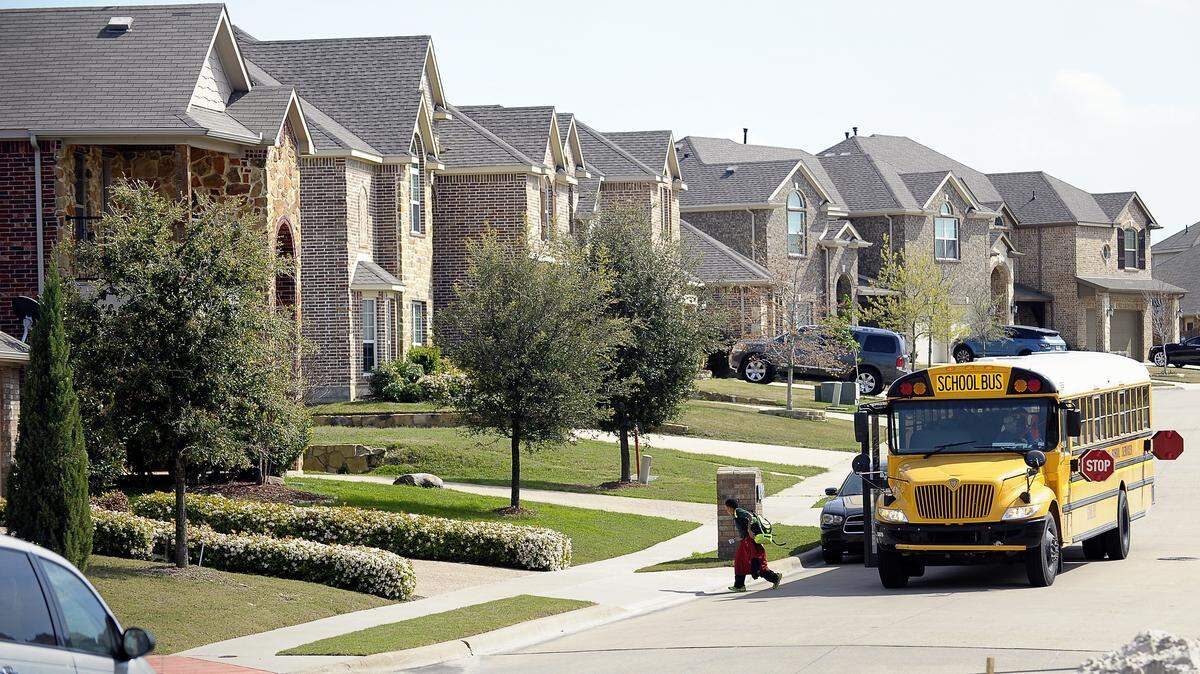
Fort Worth and Tarrant County are growing and a big chunk of the area will soon have a new state senator for the first time in about a decade.
Three candidates are running in a special election to fill the seat vacated by former Sen. Kelly Hancock, who now serves as the state’s acting comptroller: Democrat Taylor Rehmet and Republicans Leigh Wambsganss and John Huffman. Early voting started Oct. 20 and runs through Oct. 31, and Election Day is Nov. 4.
The district covers Northwest Tarrant County, including much of Fort Worth, as well as suburban communities like Southlake, Keller and North Richland Hills.
Population increases come with challenges related to housing accessibility and infrastructure like roads, water and power — issues that the district’s next lawmakers will have a role in addressing from Austin for the state and Fort Worth area. So what do the candidates propose?
Here’s what the Senate District 9 candidates have said about housing and growth in North Texas.
Taylor Rehmet
Rehmet, an aircraft mechanic and union leader from Fort Worth, thinks the Texas Legislature should take a long-term approach to infrastructure planning, keeping pace with communities’ needs as they grow.
“That means investing in strong public transportation networks, upgrading roads and utilities, and supporting smart city planning that avoids sprawl and traffic gridlock,” he said in his Star-Telegram candidate questionnaire. “We also need to make sure growth serves everyone by ensuring that every neighborhood has access to grocery stores, healthcare, schools, and other essentials.”
One way to address home costs is by reducing homeowners’ property tax bill. Each of the special election candidates has said tax relief is needed for communities in the North Texas district.
The Texas Legislature in recent years has primarily focused on two ways of lowering school district property taxes, which typically make up the largest portion of homeowners’ tax bills.
Local taxing units set tax rates, but to help drive rates down, lawmakers have relied on what’s often referred to as “compression” or a “buy down.” Under this method, state money is injected into schools that is then used to drive down rates.
State legislators have also increased the homestead exemption in recent years, lowering the home value used to calculate school district property taxes. Texas voters are currently weighing a constitutional amendment ballot measure that would increase the exemption from $100,000 to $140,000. Supplemental funding for schools is baked into the proposal.
Rehmet pointed to more school funding as a way to ultimately drive down property taxes.
“We must reduce over-reliance on local property taxes by raising the state’s share of school funding so districts can keep rates down year after year,” Rehmet said in his questionnaire. “When the state steps up, homeowners and renters feel it. We need a lasting commitment to school-tax compression tied to sustainable state revenue so families aren’t punished every budget cycle.”
The “relief should be targeted to cap property taxes as a share of income and offer equivalent credits to renters, who pay property taxes through rent,” he said.
Rehmet doesn’t see appraisal caps as a solution for home affordability.
“Stop gimmicks like hard appraisal caps that just shift the burden to others and drive up housing costs,” he said.
Rehmet also supports streamlining permitting and infrastructure processes to build homes near jobs and transit.
“Back it up with tenant-stability tools like right-to-counsel pilots and eviction-prevention programs,” Rehmet said. “We can lower tax bills, keep teachers teaching, fund our first responders, and protect the roof over every Texan’s head without shifting costs to the next family in line.”
Leigh Wambsganss
The legislature has made progress when it comes to increasing the homestead exemption and cutting property tax rates, but can do more, said Wambsganss, when asked about reining in property taxes and housing costs in her candidate questionnaire.
“I support getting that homestead exemption even higher and getting the school property tax compression even lower to where we squish that percentage down for the rest of homeowners,” she said in an interview. “And that doesn’t hurt public schools, by the way. That is reimbursed by the surplus in our state budget.”
Wambsganss, who is from Southlake, owns a real estate business and is the chief communications officer for Patriot Mobile, a Christian conservative cellphone provider.
Asked what the Texas Legislature should do to respond to and prepare for population growth in North Texas, Wambsganss proposed the following:
“Take positive steps to ensure we have the robust infrastructure to accommodate the growth, including; a reliable electric grid, mobility solutions to carry people and commerce, water for residential, commercial and agricultural use, and keeping SD9 communities safe by ensuring our southern border is secure and first responders have the tools they need,” Wambsganss said in her questionnaire.
In her interview with the Star-Telegram’s editorial board, Wambsganss said North Texas should get more funding from the Texas Department of Transportation to help pay for transportation infrastructure.
“I hear all the time from businesses that ‘I can’t hire because people have to buy so far out, and it takes them an hour to get here,’” Wambsganss said.
She also stressed that Texas needs reliable energy, supporting an “all of the above” approach for getting power.
“I support energy infrastructure that includes this new clean nuclear that’s so much safer these days,” Wambsganss said. “I’m a huge fan of oil and gas. It’s a real cornerstone of our economic development in the state of Texas, and I support logical renewables that do not include massive subsidies.”
John Huffman
It’s a blessing and a challenge that North Texas is one of the fastest-growing regions in the country, said Huffman, a construction company owner and Southlake’s former mayor, in his candidate questionnaire.
“The Legislature needs to ensure our infrastructure keeps pace so that families and businesses can continue to thrive here,” Huffman said. “That means strengthening the power grid with forward-looking solutions like nuclear energy, making significant investments in future water supplies, and prioritizing smart transportation improvements that ease congestion.”
Huffman, who is from Southlake, said property taxes must be reduced to ensure “Texans aren’t priced out of their homes as growth accelerates.” He proposes a $500,000 homestead exemption.
“To fund this responsibly, Texas should continue shifting toward sales taxes, which spread the burden more fairly and grow with the economy,” Huffman said.
Out-of-state investment companies must be stopped from buying up entire single-family neighborhoods, Huffman said.
“One way to do that is by assessing higher property taxes on bulk investors while protecting local homeowners,” he said.
Huffman added that “good development” should be incentivized in the state.
“Development that focuses on middle-class homeownership instead of arbitrary lot-size requirements that make homes unaffordable,” Huffman said. “And we must do this while maintaining local control, so communities—not bureaucrats—shape how they grow.”
Huffman supported a package of bills during the legislative session that aim to bolster affordable housing and housing supply. The bills included Senate Bill 15, a priority of Lt. Gov. Dan Patrick that makes it easier to build small homes in large cities, and Senate Bill 840, which deals with permitting mixed-use and residential development on commercial properties in large cities. Both proposals garnered opposition from some House Republicans.
The bills apply to cities with 150,000 people or more that are located in large counties. Earlier versions would have affected smaller communities, but the threshold was increased during the legislative process.
“I strongly support these efforts to encourage development of missing middle housing, because this crisis of lack of supply of such housing, in my opinion, really threatens the future of the state in a very fundamental way,” Huffman said during a March 10 committee hearing, where he testified in favor of the proposals.
The bills were also supported by Texans for Reasonable Solutions, which advocates for more housing access. Its political action committee has donated $15,000 to Huffman’s campaign.
While being considered in the Legislature, some raised concerns that the proposals impede local control. During an interview with the Star-Telegram’s editorial board, Huffman said the bills aren’t perfect. Some tweaks could be made to ensure “we’re not usurping local control,” he said.
“Local control is important, but the states and the locals need to make sure that they are working hand in hand to tackle this housing crisis,” Huffman said.