Flooding, STAAR, taxes, THC: What passed, what didn’t as TX special session ends
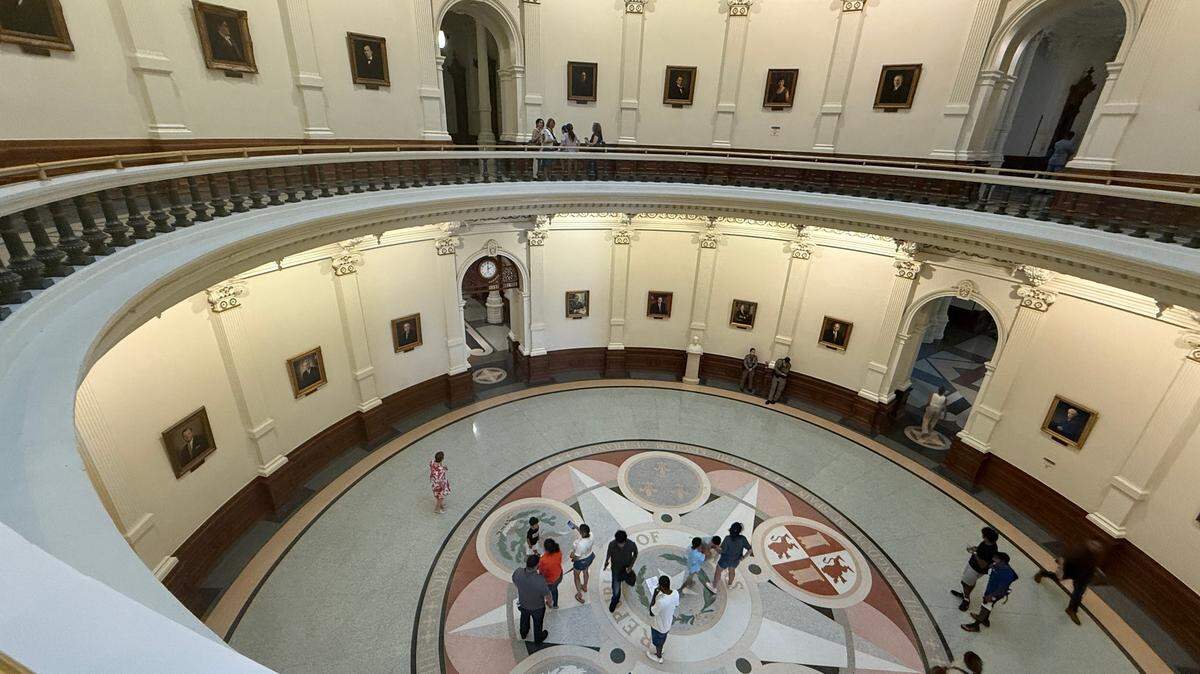
Texas lawmakers have wrapped up their second special session, advancing a new congressional map, doing away with the STAAR test, and approving abortion restrictions and over-the-counter ivermectin, among other policies.
Other proposals, like a ban on consumable THC products and a property tax bill blasted by North Texas cities, didn’t make it to Gov. Greg Abbott’s desk.
The House gaveled out late Wednesday night, and the Senate followed at about 1 a.m.
Here are some of the key bills that passed, and others that didn’t.
Congressional redistricting
The early days of the fast-paced special session were largely focused on mid-decade congressional redistricting. Despite opposition from Democrats — including a quorum break that derailed an earlier special session — Republican lawmakers successfully ushered in a new congressional map that positions Republicans to pick up five seats in Congress.
The map has been signed into law by Abbott ahead of the 2026 midterm elections, but is also the subject of lawsuits challenging the new bounderies.
Among the changes to North Texas is a reconfiguring of Congressional District 33, held by Rep. Marc Veasey, a Fort Worth Democrat. The district has spanned parts of Dallas and Tarrant counties, but under the new boundaries falls entirely within Dallas County.
Replacing the STAAR Test
House Bill 8 begins a transition away from the embattled STAAR test to a new system where public school students would take multiple tests throughout the course of the school year. The legislation is headed to Abbott’s desk.
The new assessments would be in place for the start of the 2027-2028 school year.
“House Bill 8 ends the high stakes and high stress nature of one test, one day,” said Rep. Brad Buckley, a Salado Republican who authored the bill.
Rep. Gina Hinojosa, an Austin Democrat who opposed the bill, said the legislation expands the amount of testing rather than reducing it.
“No parent wants this,” Hinojosa said.
Medication access, restrictions
If signed into law by Abbott, Texas would join a handful of other states that allow the over-the-counter sale of ivermectin.
The medication used to treat some parasites has also been used to treat COVID-19. It hasn’t been approved by the FDA for that purpose and hasn’t been shown to be effective.
House Bill 25, which would let Texans buy the drug without a prescription, received support from U.S. Health and Human Services Secretary Robert F. Kennedy Jr. during a recent visit to the state. It’s currently on Abbott’s desk for approval.
Also headed to the governor is House Bill 7, which restricts access to “abortion-inducing” drugs by allowing a person to sue someone who manufactures or distributes the medication in Texas, including by mail.
There are some exceptions to the law, such as medical emergency. A lawsuit also couldn’t be brought against a pregnant woman seeking abortion drugs for herself.
Abortions are already nearly banned in Texas, following the overturning of Roe v. Wade.
Central Texas flood response
While in Austin for the second special session, the Texas Legislature considered several bills responding to the Central Texas flooding in July, which resulted in more than 130 deaths, including 27 campers and counselors at Camp Mystic.
Bills that advanced to Abbott include Senate Bill 1 and House Bill 1, both of which outlines summer camp safety measures; Senate Bill 5, allocating funds for disaster relief; and Senate Bill 3, which requires outdoor warning sirens in flash flood-prone areas and creates a grant program for emergency sirens.
Property tax relief
A property tax bill opposed by several North Texas cities stalled during the second special session, after a conference committee version of the legislation stripped out several House amendments.
Senate Bill 10 as filed would have required that cities and counties go to voters to increase property taxes by more than 2.5% in communities with more than 75,000 people.
The House version lowered that threshold to 1% and expanded it to all cities and counties, as well as Municipal Utility Districts.
Lawmakers on both sides of the aisles had raised concerns about the bills, as had the city of Fort Worth.
Some Republicans said it doesn’t go far enough to offer property tax relief, with Rep. Mitch Little of Lewisville describing it as essentially a coffee-run’s worth of savings.
A majority of House lawmakers rejected a conference committee version of the bill.
Bathroom regulations for government buildings
Texas Lawmakers approved legislation regulating which bathrooms people use in government buildings, sending the bill to Abbott.
Under Senate Bill 8, multiple-occupancy private spaces like bathrooms and lockers rooms must be designated “for use only by individuals of one sex.” Local governments and state agencies must “take every reasonable step to ensure an individual whose sex is opposite to the sex designated for a multiple-occupancy private space... does not enter the private space.” That means transgender Texans would not be allowed to use the bathroom aligning with their gender identity.
Cities, counties and state agencies that don’t comply could be fined $25,000 for violating the law. The fine increases to $125,000 for each subsequent violation.
Opponents of the policy say it’s unnecessary, discriminatory and would endanger transgender Texans, while supporters say it’s needed to protect the safety of women’s private spaces like bathrooms and locker rooms, according to a summary by the House Research Organization.
A push for a similar “bathroom bill” in 2017 fizzled amid pushback from transgender Texans and members of Texas’ business community.
Consumable THC ban
The push for restrictions on consumable hemp products has stalled.
Conversations were reportedly bubbling on Sept. 3 after little movement in recent weeks, but House and Senate lawmakers ultimately adjourned without passing a bill regulating Texas’ hemp industry.
In his special session call, Abbott instructed lawmakers to pass legislation making it a crime to give hemp-derived products to people under 21.
He also said lawmakers should pass legislation to “comprehensively regulate hemp-derived products, including limiting potency, restricting synthetically modified compounds, and establishing enforcement mechanisms, all without banning lawful hemp-derived products.”
Lt. Gov. Dan Patrick has made a ban on consumable THC products a top priority. The Legislature passed a ban, as championed by Patrick, during the regular session but it was vetoed by Abbott, who said the bill was “well-intentioned” but would have faced legal challenges.
“After long discussions last night between the Governor, Speaker, and me on THC, and continued hours of discussion today, we were not able to come to a resolution,” Patrick said in a social media post Wednesday night.
Patrick thanked Abbott and House Speaker Dustin Burrows, a Lubbock Republican, for making an effort “to find a solution,” but said his “position remains unchanged.”
“The Senate and I are for a total THC ban,” Patrick said.
This story was originally published September 3, 2025 at 11:27 PM.