
Tarrant County College will abolish its faculty councils on Sept. 1. Here’s why
Tarrant County College, one of the largest higher education institutions in Texas, will lose its faculty associations Sept. 1 under a new state law that ushers in sweeping changes to how public colleges are governed.
The measure that will require TCC to disband its faculty associations was part of Texas legislation adopted this year that shifts authority toward the state over things like curriculum and faculty discipline. Proponents say it aims to curb what they see as liberal bias at colleges and universities. Critics say the legislation stifles academic freedoms, strips faculty of due process rights and injects politics into curriculum decisions, possibly threatening programs such as those teaching issues around race and equality.
The legislation also establishes a governor-appointed ombudsman with powers to investigate universities to ensure they comply with the new rules.
The law, Senate Bill 37, doesn’t explicitly ban faculty associations and senates. But it changed the makeup of those organizations, including reducing their sizes, which required colleges and universities to scramble to revise their constitutions and bylaws in order to comply. Some institutions have done that this summer; TCC did not.
Chancellor Elva LeBlanc said Thursday that although faculty associations at TCC’s six campuses will be abolished Sept. 1, faculty will still have a voice and be included in decision-making processes. A TCC statement said that a “replacement governance model” could be formed “through a deliberate and comprehensive process” after Sept. 1.
LeBlanc said that most of the TCC cabinet started as faculty, and they understand their importance.
“Faculty will continue to have numerous meaningful opportunities to provide input and engage in institutional decision making,” LeBlanc said.
She said the college will still operate 50 districtwide committees with faculty representing more than half of all participants. These committees are actively involved in academic planning, curriculum review, policy review and professional development.
“We are committed to meaningful and legally compliant work with the faculty,” Leblanc said at a TCC board work session Thursday. “Any model that we bring to the board will be compliant with Senate Bill 37 and designed to meet the long-term needs of Tarrant County College.”
In a statement, TCC said that it started communications with faculty in March that made clear how the current governance structure would dissolve Sept. 1 under the new law.
How Senate Bill 37 changes faculty councils
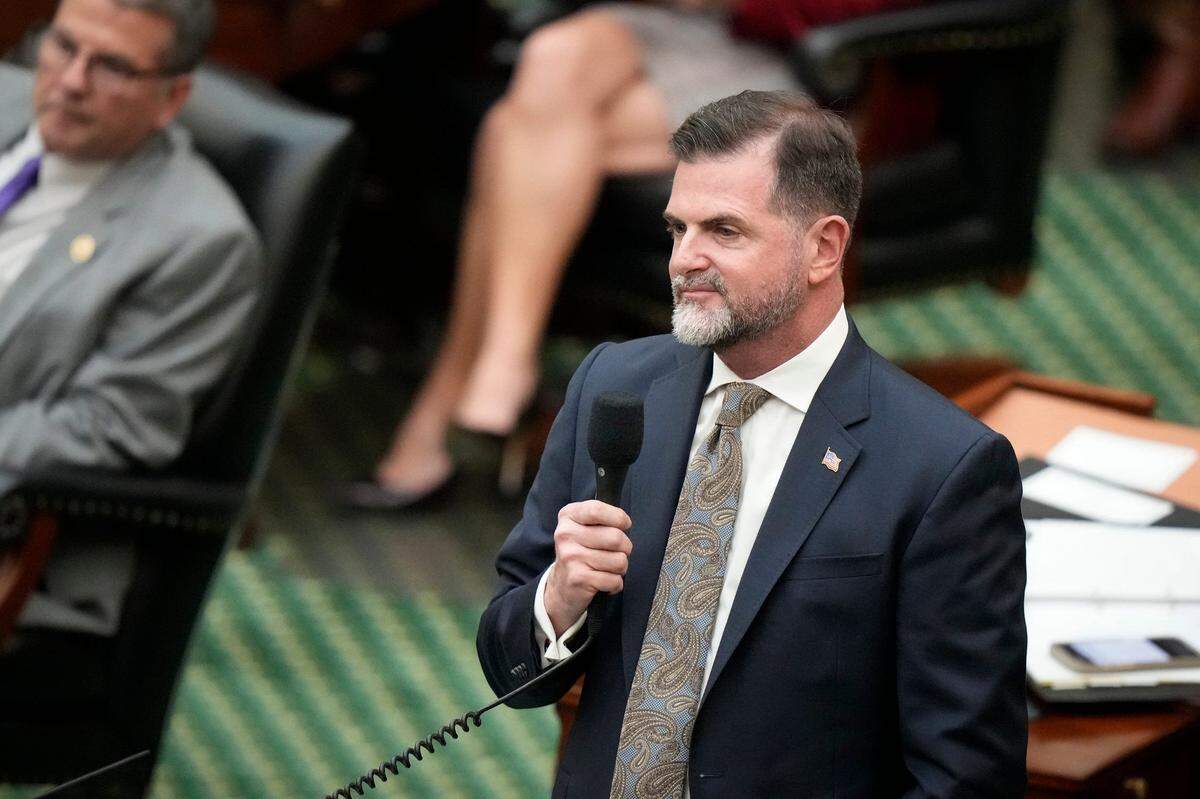
Senate Bill 37 was authored by Republican Sen. Brandon Creighton of District 4 near Houston. Among the changes in the law:
- Faculty associations will have a limit of 60 members with new term limits of two years.
- The chancellor or president of institutions will pick some members of the faculty board.
- Faculty will lose some power to address discipline and final decision-making on hiring.
- Colleges and their boards will regularly review core classes and eliminate those that fail to meet certain benchmarks.
- A newly established governor-appointed ombudsman at the Texas Higher Education Coordinating Board Office will function as a complaint department for anyone who has ideological disagreements with the college.
Debra Frances is a retired TCC English professor who served as a faculty senate leader in the early 2000s. She spoke at a TCC board meeting Thursday and said she had hoped the college would have taken steps to keep its faculty associations.
“Faculty are right next to the students,” she said. “If we do not have a voice, the students are harmed. I don’t know if you believe that or not, but it’s really important that we continue to exist on every campus.”
Frances emphasized the importance of the faculty association's continued existence on every campus, noting that other Texas colleges have already revised their constitutions and have them in place.
‘Their voice seems to be lost’
Chancellor Brent Wallace of North Central Texas College, based in Gainesville with six campuses in North Texas, said his administration took steps this summer to comply with Senate Bill 37 and preserve faculty councils.
Wallace said if the associations are abolished, it creates a loss of representation for the faculty.
“When that’s lost, their voice seems to be lost as their own entity,” Wallace said.
Shared governance is critical to the functioning of a college or university, said Teresa Klein, vice president of the American Association of University Professors in Texas. The AAUP says faculty must have an authoritative voice in academics and how their colleagues are disciplined.
“(Senate Bill 37) rewrites the definition of shared governance,” Klein said. “We have an over 100-year-old standard if you want to call it, the three-legged stool, the three elements — the administration, the boards and the faculty, who are holding the students up. This completely rewrites it.”
Klein described an example at her school, Del Mar College in Corpus Christi. An older building had classroom doors that couldn’t be locked from the inside.
“So, in the case of an active shooter, we found that to be problematic,” Klein said. “We used our voice through the faculty council to advocate for the safety issue to the administration. Without having a faculty council, we could have shouted it from the rooftops, but no one would have heard it. So, this is why it’s important.”
Houston Community College takes different approach from TCC
Nathan Smith, Houston Community College faculty senate president-elect, said that HCC started the process of drafting a revision to the bylaws shortly after the governor signed the bill.
He said the chancellor created a taskforce to look at the issue, and the faculty senate created a task force to develop alternatives to the bylaws. The board met in an emergency meeting on July 10.
By July 18, the HCC faculty senate adopted revisions to the bylaws to comply with SB 37.
The revision addressed some of the new rules stipulated in the bylaws, including lowering the number of faculty senate members from 89 to 60. Of those 60 members, 10 will be appointed by the chancellor.
HCC will conduct a new election for the faculty senate to account for the change.
On Aug. 6, the changes went before the board and the changes were approved. The changes are set to be finalized on Aug 20.
This story was originally published August 15, 2025 at 3:26 PM.