
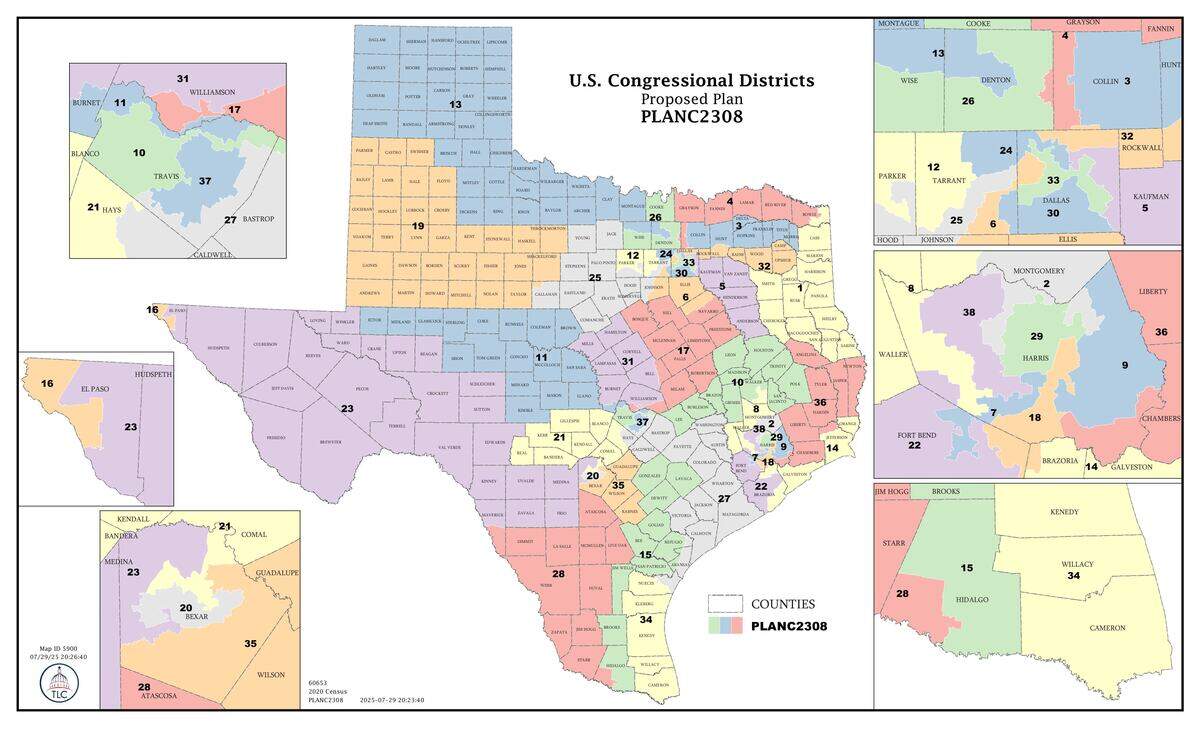
First Texas congressional redistricting map has been released. Here it is.
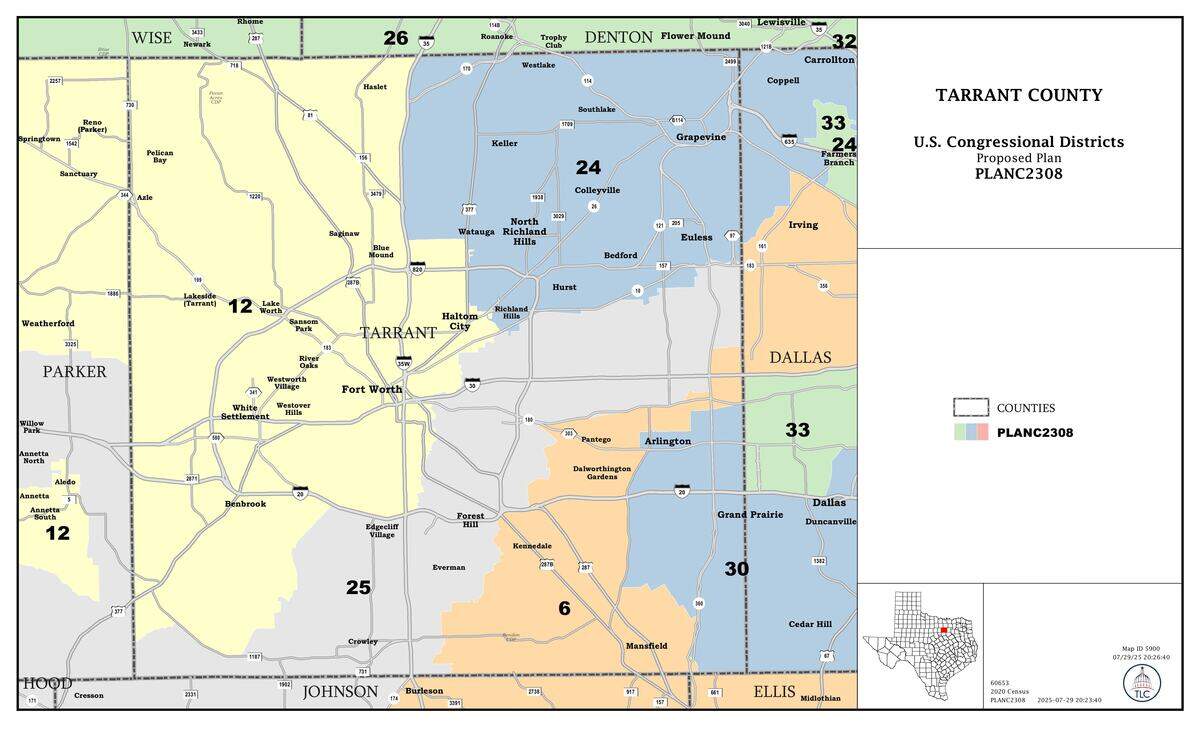
A new redistricting proposal would slice Tarrant County out of a North Texas congressional district represented by U.S. Rep. Marc Veasey.
The map was submitted by redistricting committee member Rep. Todd Hunter, a Corpus Christi Republican, as Texas lawmakers weigh mid-decade redistricting in a special session called by Gov. Greg Abbott.
President Donald Trump wants the state to pick up five congressional seats as he faces slim margins in the U.S. House, and the possible boundaries would increase the odds. The Texas House is scheduled to take public testimony on the map on Friday, Aug. 1. Testimony will be capped at 10 hours, according to a meeting notice.
Under the proposed map, Trump would have won three congressional districts that he lost in 2024. Two districts that leaned Republican but were won by Democrats – House District 28 Rep. Henry Cuellar of Laredo and House District 34 Rep. Vicente Gonzalez of McAllen – would have slightly wider margins favoring Trump.
As drawn, there are seven districts where no incumbent currently resides, though U.S. representatives do not have to live in the district they represent. Among them is House District 32 in North Texas, currently represented by Rep. Julie Johnson, a Farmers Branch Democrat.
The map moves District 33, represented by Democrat Rep. Marc Veasey of Fort Worth, to Dallas County. The district is currently split across Tarrant and Dallas counties.
“Let’s be clear — this map is racist, it’s illegal, and it’s part of a long, ugly tradition of trying to keep Black and Brown Texas from having a voice,” Veasey said on X minutes after the map was submitted. “What Donald Trump and Greg Abbott are doing isn’t about democracy — it’s about consolidating power.”
Hunter, who serves as chair of the House’s Calendars Committee, declined to comment as he waits to discuss the map with his House colleagues. Hunter also didn’t say who drew the map when asked by the Star-Telegram Wednesday on the House floor.
The longtime representative was first elected to the House in 1988. After serving four terms, he was again elected to the House in 2008 and has served in the chamber since.
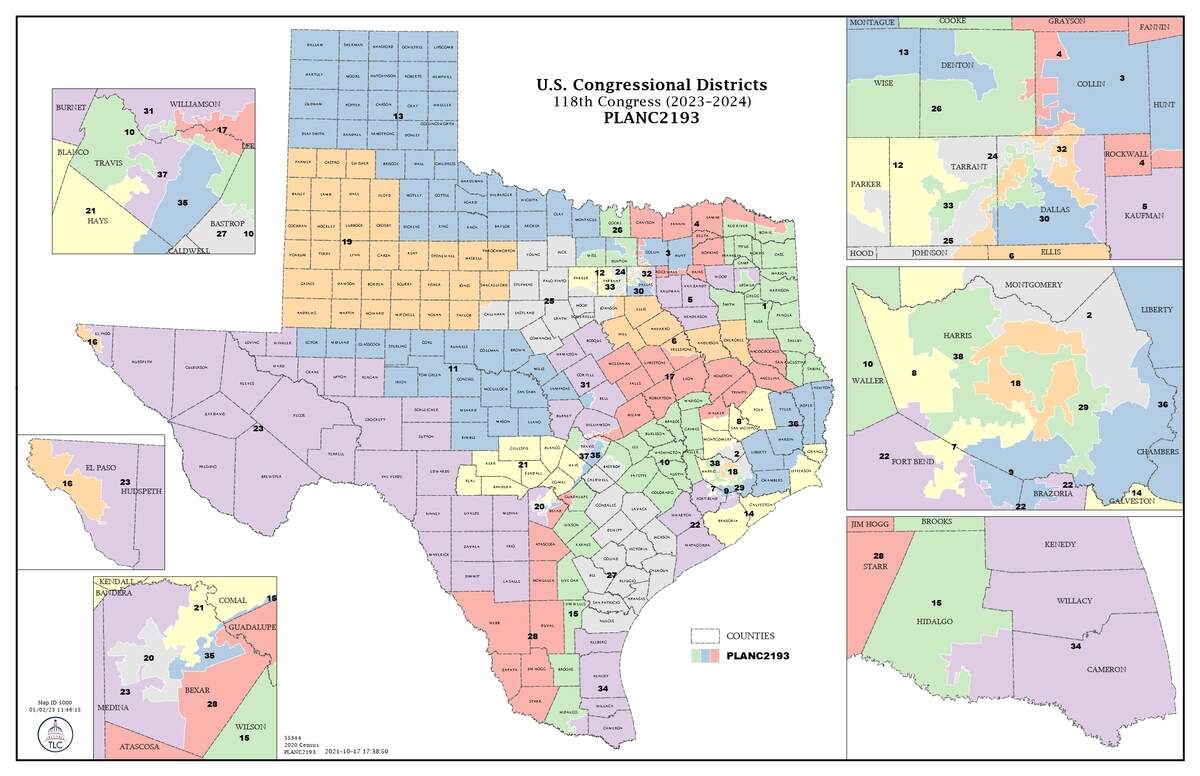
Veasey’s district, as it stands now, is 86.8% non-white. In the proposed map, 77.5% of the district is non-white. It was one of four districts specifically mentioned in a letter from the Justice Department as “unconstitutional ‘coalition districts.’”
A coalition district is one that is predominantly made up of minority voters who tend to vote together. The letter, sent to Gov. Greg Abbott and Attorney Gen. Ken Paxton, called out Veasey’s Fort Worth district and three Houston area districts.
Under the proposed new lines, Veasey’s district still would have gone for former Vice President Kamala Harris in the 2024 presidential election, according to the Texas Legislative Council analysis.
After receiving the letter on July 9, Abbott announced a special session agenda that included the redistricting, THC and legislation relating to the Hill Country flooding. Several constituents and lawmakers have been outspoken about this redistricting coming just weeks after hundreds of Texans died in a catastrophic natural disaster.
A mid-decade redistricting is unusual due to the lack of updated census data but has been done in Texas before.
In the map proposed by Hunter, Tarrant County would be represented in Congress by Republican Beth Van Duyne in District 24, Republican Craig Goldman in District 12, Republican Roger Williams in District 25, Republican Jake Ellzey in District 6 and Democrat Jasmine Crockett in District 30.
District 9, represented by Democrat Al Green of Houston, is moved from the southern part of Harris County and parts of Fort Bend and Brazoria counties to encompass east Harris County in the proposed map.
District 18, which has been vacant since Democrat Sylvester Turner died in March, is C-shaped reaching north from Downtown Houston. In the proposed map, District 18 sits in South Houston and stretches into Fort Bend and Brazoria Counties.
District 29, represented by Democrat Sylvia Garcia, is shaped like a backward C and is the inverse of District 18. It moves from surrounding the north, east and south of Downtown Houston to only encompassing north Houston in the proposed map.
The map was released days after the final of three House redistricting committee public hearings took place in Arlington. Held at the UT-Arlington campus, representatives heard from hundreds of North Texans who were overwhelmingly opposed to the redistricting.
“Republicans have the power to stop this racist mid-decade redistricting that spits in the face of the Voting Rights Act,” Veasey said in a statement after the hearing. “Know this—that Trump will not stop in Texas. He will go after minority voters across the nation. But Democrats will use every tool in our arsenal. We will fight to stop this rig-districting and protect the voices of millions.”
Staff Writer Eleanor Dearman contributed to this report.
This story was originally published July 30, 2025 at 10:54 AM.