Was Keller ISD split racially motivated? A ‘backroom’ deal’? Trustees respond
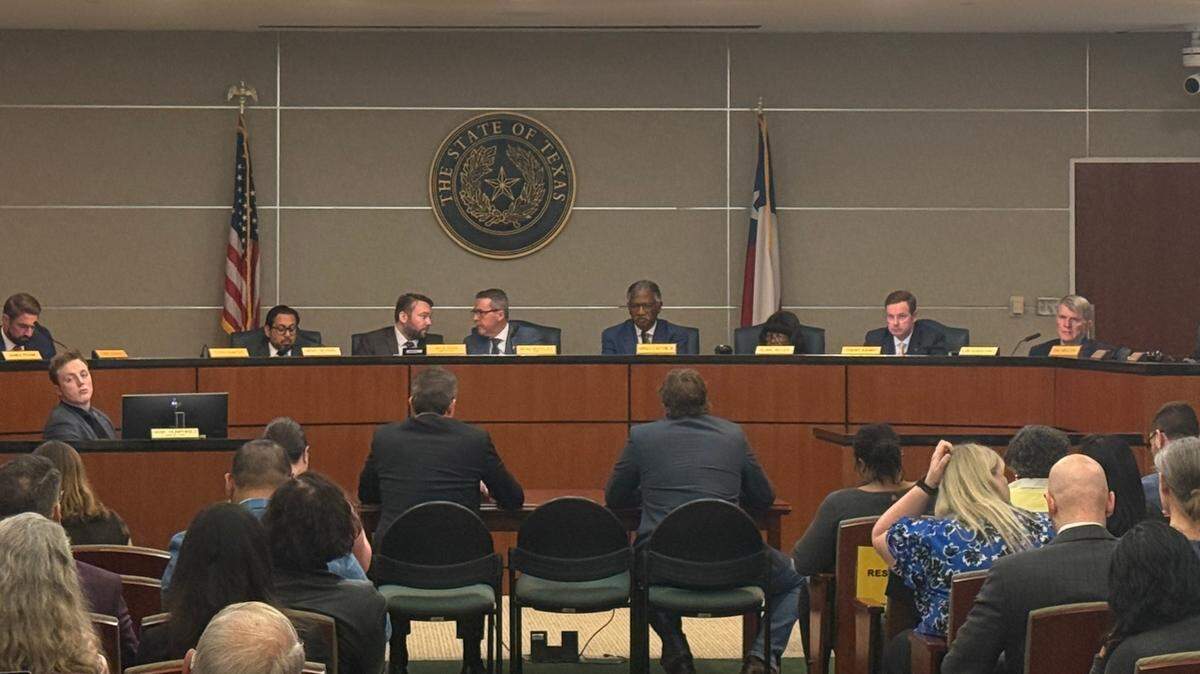
Keller school board Vice President John Birt and Trustee Chris Coker this week defended the district’s handling of a proposed split, bristling at suggestions that the idea was driven by race or socioeconomic factors and saying there was no intent to be secretive.
“I haven’t looked into the socioeconomic standards of what they’re talking about,” Coker said in an interview with the Star-Telegram. “That’s not something I even pay attention to as a person in general. I think to consider someone to struggle more because of their color of skin, or anything like that, is just absolutely asinine.”
Birt said the idea of a split was only explored to see if it would help the long-term financial stability of the district.
The debate over the possible split made its way to Austin on April 29 when Rep. Charlie Geren, a Fort Worth Republican, laid out House Bill 5089, which is meant to clarify the process for splitting a school district. The bill would require such a measure to go to a public election, no matter where the proposal originates, which was a point of contention in Keller.
The Keller proposal, which has since been abandoned, would have cut the district in two along U.S. 377, separating Keller, Southlake, Watauga and Colleyville from district residents west of 377 in Fort Worth.
Lawmakers heard from four trustees and Keller residents, many of whom criticized the district and called for such a split to always require a vote.
As they testified before the House Public Education Committee and in an interview with the Star-Telegram after the hearing, Birt and Coker — two of the board members who were open to the split — addressed some of the issues central to the debate.
There was no ‘collusion,’ trustees say
As Birt called on lawmakers to reject House Bill 5089, he rebuked criticisms that the board lacked transparency as they weighed the split. There was “no collusion,” and “backroom deals” weren’t made, he told the panel of state lawmakers.
“Three board members discussed the possibility of legal and rightful legislation in order to consider whether or not this practice would help the long term financial stability of the district given the insufficient funding we get from the state of Texas,” Birt told the panel.
Birt, Trustee Micah Young and Board President Charles Randklev brought the idea to the full board, Coker said in an interview.
Coker said under the boundaries that were considered, the Keller side of the district would have received $8,300 per student and had $2.5 million in recapture payments — money paid back to the state to help fund schools with less money. The Fort Worth side would have received $10,300 per student and no recapture requirements, he said.
“When it was first presented, I was actually incredibly concerned about the Keller side, not the Fort Worth side,” Coker said. “They had more money per kid, right? And that’s everything in a district.”
Coker said he met with hundreds of parents.
“I’ve been very open about my opinion on everything,” Coker said. “Nothing’s been hidden from anybody.”
Community members have criticized the board for lacking transparency as it approached a possible split. Many said the issue should be up to the public to decide in a vote, though interpretations of the law varied.
“We were only left in the dark because when the information, the concept, was brought forward to the other four trustees, the trustees, that information got leaked out to the community, and I say that in a negative sense because we were still as a board of trustees, still doing due diligence,” Birt said.
“There was no plan,” Birt said. “There was no, ‘We’re going to do this. We’re going to do that.’ It was simply a concept that was allowed, legally under the existing legislation. ... We didn’t know everything either. It was still a concept that was legally and rightfully allowed under existing legislation regarding local control and the commissioners court.”
Birt said other districts were watching Keller to see how the split would play out because they’re also interested. He declined to say which districts in an interview.
Why not hold an election?
At the heart of much of the debate over the Keller divide was whether a split must go to a public vote.
The law as written outlines two paths for a split: a petition brought by members of the public or a resolution from the school board. There’s agreement that if residents of a district were to get enough signatures, the split of a district would go to a ballot for voters to decide.
The varying interpretations come when the school board proposes a split through a resolution that heads to the commissioners court. Some say an election would be triggered while others read the law as saying a district could be divided without going to a public vote. Geren’s bill seeks to clarify that a ballot measure is required in either scenario.
Current law doesn’t allow districts to call for a vote on a split, Birt and Coker said.
“I kept telling everyone, ‘You have the opportunity to vote now ... but you have to initiate the process,” Coker said. “The board can’t do that.”
Birt said he’s not opposed to the idea of a split going to voters, but noted it would likely be moot because 70 percent of the district’s population is in the Fort Worth/Alliance area.
The Keller side of the district is home to 56,381 people and the Fort Worth/Alliance side is home to 132,877.
The current law needs to be fixed, rather than being replaced with a new “stop gap” bill that’s “just as ambiguous as current law,” Birt said.
That fix involves clarifying the next steps for commissioners when they get a resolution for a split from a school board, Birt said.
Coker said he likes the current detachment process, as laid out under Texas law.
Birt said he doesn’t anticipate Keller revisiting the idea of a split.
“It’s not in our foreseeable future,” he said, pointing to the finances.
Both Birt and Coker said the plan would have left the district with about $20 million extra in debt, as bonds would have been reconfigured.
Was race a factor?
The two members disputed that the proposed divide was based on race or socioeconomics, as some suggested, noting that the Fort Worth side of the district is less affluent and more diverse.
Birt told lawmakers he doesn’t know the economic demographics of the Keller-centric portion of the district versus the Fort Worth-centric part of the district
“That never entered into the notion of the three board members, and I was one of them that said there’s an opportunity to keep funding within the western side of the district, rather than have that funding pulled into the massive resources of the district as a whole,” Birt said.
The median household income is $109,000 west of US 377 and $160,000 east of the road.
In the east side of the district, 75% of students are white or Hispanic compared to 55% of students on the west.
Rep. Harold Dutton, a Houston Democrat, said in the hearing that the proposal seemed to be racially motivated. Geren said near the end of the hearing, “I agree with Mr. Dutton.”
“That is such a crock,” Birt said from the audience.
Birts said in an interview that the board was considering whether a split was good for the kids, its legality and whether it was financially viable.
The board ultimately dropped the plan because it wasn’t financially viable, Birt and Coker said.
Lawmakers “want to ignore the fact that they’re not appropriately funding public education and try to spin it off on everybody else,” Coker said.
Earlier in the interview, Coker said he’s “a little concerned about the constant desire to use race as a political talking point.”
“You can clearly see several members trying to push that as some agenda item in our heads when having a discussion on this, and it just, it’s factually inaccurate,” Coker said. “You can’t present what you’re thinking in your own mind onto someone else and call it their truth, right?”
Generally, Coker said, he does favor smaller districts, with the ideal size being 9,000 to 18,000 or 20,000 students. He thinks Keller could even be divided into four districts based on its four feeder patterns.
“I believe the more local that you can bring government – when you’re actually rubbing elbows with the people that you represent on a daily basis – it’s easier to represent and understand the needs of the people that you’re directly touching every day,” Coker said.
This story was originally published May 1, 2025 at 4:45 AM.