
Here are the Democrats running for Tarrant County commissioner, Precinct 2
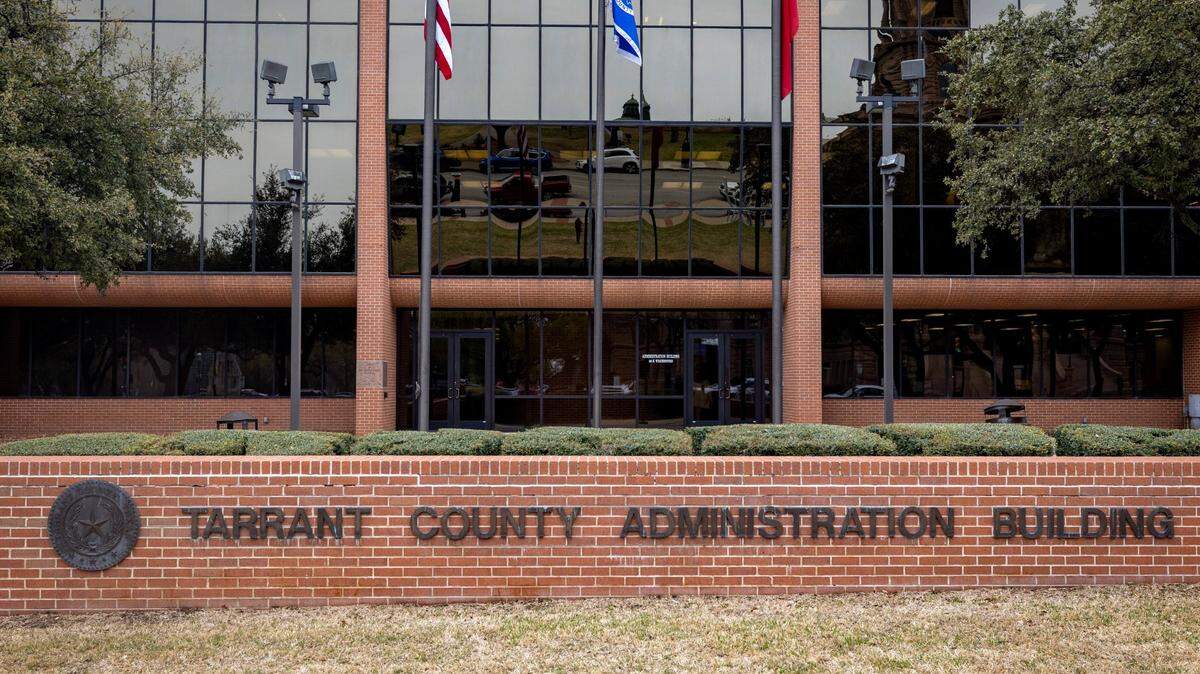
Three Democrats are running in the primary for the Tarrant County Commissioners Court in Precinct 2. The winner on March 3 will advance to the November election and face off with one of these Republican candidates.
Here are the Democrats’ responses to Star-Telegram candidate questionnaires, in the order they’ll appear on your ballot.
Gabe Rivas
Age (as of March 3): 37
Campaign website: GabeRivasforTarrant.com
Best way for voters to reach you: GabeRivasforTarrant@gmail.com or by calling or texting me at 817-899-4622. I also encourage residents to engage with me on social media @GabeRivasforTarrant.
I’m always out in the community at local coffee shops and neighborhood meetings in South and Southeast Tarrant County. Please, come say hi if you see me! My goal is to be a “Neighborhood Commissioner” who’s accessible long after elections are over.
Occupation: I am a Campaign and Community Organizer and Founder of Rivas Political Management & Consulting, bridging the gap between policy and people. Previously, I served as Director of Community Outreach for Tarrant County Precinct 2. As the primary link between the Commissioner’s office and residents of South and Southeast Tarrant, I managed constituent services, emergency communications, and town halls. This provided a deep, firsthand understanding of county operations.
Education: I am a proud product of the public education right here in Precinct 2 including Arlington High School and the University of Texas at Arlington. My roots in our local schools and our homegrown university have absolutely shaped my commitment to this community and my understanding of the opportunities we have to protect for the next generation of Tarrant County students.
Have you run for elected office before? No. While I have dedicated the last 20 years to public service and community advocacy, this is my first time seeking elected office. I am running now because I believe our residents deserve a representative with deep, firsthand experience in county operations who is focused on service rather than politics.
Please list the highlights of your civic involvement/activism in Tarrant County.
My civic involvement is defined by my commitment to Tarrant County. Beyond my professional roles, I served on over 20 local boards and committees. I currently serve on the Board of Directors for Arlington Charities, Symphony Arlington, and the Levitt Pavilion, and have served with the Arlington ISD Citizens’ Bond Oversight Committee and the Community Action Partners Advisory Council. My work spans public health with the Arlington Wellness Coalition, economic development on the Arlington Entertainment District TIRZ Board, and civic integrity on the Arlington Redistricting Taskforce, Parks Board and International Corridor Advisory Committee.
I’ve been an active volunteer for Meals on Wheels of Tarrant County and H.O.P.E. Tutoring and held leadership roles in the League of United Latin American Citizens, where I was named Texas Man of the Year. In every role, I have consistently fought to ensure government is accessible, accountable, and focused on the services our residents deserve.
Have you ever been arrested, charged with a crime or otherwise been part of a criminal proceeding? No.
Have you been involved in a civil lawsuit or bankruptcy proceeding? No.
Who are your top three campaign contributors?
My campaign is fueled by a grassroots coalition of local leaders, community organizations, and neighbors who believe in a more accessible and responsive Tarrant County government. My top contributors reflect this diverse support: the Muslim Democratic Caucus of Texas who have endorsed my race, State Representative Terry Meza, and community member Grant Bell. I am incredibly proud that my campaign is powered by local voices. From generous in-kind contributions from beloved local businesses or a neighbor opening their pocketbook, every dollar represents a shared commitment to improving our County. This local support is what allows me to remain independent and focused solely on the needs of the families I’m running to represent.
Why are you seeking this office?
I’m seeking this office because this community is my lifelong home, not just lines on a map. For 20 years, I’ve dedicated my professional life to advocating for our families. Having served in the Commissioner’s office, I’ve seen our county’s potential and the hurdles preventing neighbors from thriving. Precinct 2 deserves a leader present in the community, not just the courthouse.
Tarrant is at a crossroads. Recent decisions to limit public participation and the humanitarian crisis in our jail undermine the transparency a healthy democracy requires. I will do everything to reverse this trend, making sure every resident, regardless of their ZIP code, has a voice. I offer a unique blend of institutional knowledge and community trust. I know how the budget works and how to navigate bureaucracy to get the results people are counting on. I am running to be a bridge between the people and their government, so no one is left behind.
If elected, what would your top 3 policy priorities be?
My focus is returning the County to the people. Reducing meetings to once a month and limiting public comment create barriers. We need at least twice-monthly meetings, plain-language agendas, and evening town halls. As a neighborhood commissioner, I’ll hold local office hours and fiercely defend voting access by opposing the elimination of polling locations.
Our infrastructure and healthcare are linked. Roads, bridges, facilities, and clinics are a single “Infrastructure of Care.” We have to expand public health with mobile units and neighborhood clinics. This applies to the jail too. Medical and mental health needs must be an infrastructure priority. Ensuring care is a core requirement, not an afterthought.
Finally, growth has to benefit everyone. I’ll work to re-establish county-led rent and utility assistance with local oversight. We need partnerships to incentivize affordable housing, so that as we build out, we also build a path toward economic stability for everyone.
How will you measure your success as Precinct 2 Commissioner?
My success can be measured through three clear metrics: Accessibility, Health Outcomes, and Project Delivery.
First, I will track engagement. Success means restoring access to proceedings and seeing a measurable increase in public participation. If more residents are attending my neighborhood office hours and town halls than ever before, I am succeeding as your Commissioner.
Second, health outcome success is measured by the reduction of the medical services backlog in our county jail and the expansion of clinical services in underserved parts of Precinct 2. We have to move the needle on public health accessibility.
Third, success means completing vital infrastructure projects, like the Mansfield Sub-courthouse replacement, while re-establishing accountable utility assistance programs.
Ultimately, my success will be defined by whether residents of Precinct 2 feel more connected to and supported by their county government.
Why should voters choose you over your opponents?
The distinction in this race is simple. I’m not asking for a chance to learn the job, I’m asking for the voters to allow me to continue doing it. Having served as Director of Community Outreach for Precinct 2, I’ve already been the person residents call when they’re facing eviction, when their county assistance gets stalled, or when they need to navigate the complexities of our county government.
While my opponents offer meaningful perspectives from the outside, I offer the institutional knowledge with the heart of an advocate. I understand the intricacies of the Tarrant County departments and the inter-local agreements with cities that actually move projects forward.
Voters should choose me because I am already doing the work of a Commissioner, and I’m the only candidate ready on day one to fix the issues plaguing our county, because I’ve already been in the trenches fighting them. I’m not running for a title or position, I’m running to keep serving my home.
What challenges do commissioners face with the 2025 redistricting? How would you resolve those issues?
The primary challenge of the 2025 gerrymandering was a lack of transparency and the prioritization of partisan gain over fair representation. This mid-decade redraw specifically targeted Precinct 2, diluting the voting power of minority communities by ‘cracking’ neighborhoods and ‘packing’ voters to gain political power. This process forced 150,000 residents to wait years longer to vote for their representative, a clear failure of the democratic process.
To resolve these issues, we need an Independent Redistricting Commission to take map-making out of the hands of self-interested politicians. We have to be able to restore public trust by requiring minimum 30-day public comment periods, protecting communities of interest, and giving residents a part of the process. All precincts should be compact and respect historical neighborhood lines. Our maps should be drawn to reflect the people of Tarrant County. Right now, they only serve to try to rig the results for one political party.
What is the main issue facing Precinct 2? How do you plan to resolve it?
The biggest issue is the gap between rapid growth and accessible services. After redistricting, Precinct 2 now includes more unincorporated territory and diverse neighborhoods with unique needs. Residents face a service gap where infrastructure hasn’t kept pace. Whether it’s a resident in Mansfield facing a crumbling sub-courthouse or a family in a new area with poor roads, service delivery is failing.
We have to shift to neighborhood-based service equity. We need to expand mobile health units and neighborhood clinics to provide care directly in Precinct 2. Our county buildings can and should be resource hubs for everything from vehicle registration to social services, saving residents the County run-around.
For our roads, we should implement a community first infrastructure plan with public schedules for road maintenance. I will continue my work partnering with local cities to ensure drainage and safety systems are integrated. Growth should never outpace our commitment to ensure every neighbor is seen, heard, and served.
What is the main issue facing the county? How do you plan to resolve it?
The most urgent issue facing Tarrant County is the humanitarian and fiscal crisis in our county jail. With almost 80 deaths in custody since 2017, most of them preventable, and with millions of taxpayer dollars spent on legal settlements, our current path is unsustainable. Besides being a public safety failure, this has been a moral failure of leadership and oversight.
We can’t wait and debate this any longer. We need to move beyond rhetoric to institutional action. Tarrant County needs a permanent policy fix to review jail conditions and medical protocols, and we need to be able to hold those responsible for these deaths (by error, negligence, abuse, or lack of leadership) accountable for their actions or lack thereof.
We need to prioritize mental health diversion and staffing, making sure we have the personnel needed to maintain safety. I’ll make sure we finally get the transparency currently lacking from the Sheriff’s Office. We can’t solve a crisis we refuse to talk about.
Amanda Arizola
Age (as of March 3): 45
Campaign website: www.amandafortarrant.com
Best way for voters to reach you: info@amandafortarrant.com
Occupation: Nonprofit Executive
Education: B.A. in Government, B.A. in Mexican-American Studies - University of Texas at Austin; Master of Business Administration, Master of Health Systems Management - Texas Woman’s University
Have you run for elected office before? No
Please list the highlights of your civic involvement/activism in Tarrant County.
Vice Chair, JPS Health Network Board of Managers, appointed by Commissioner Alisa Simmons and former Commissioner Devan Allan, Pct. 2
Chair, KERA/PBS Community Advisory Board
Chair & Founding Member, Hispanic Women’s Network of Texas – Arlington Chapter
Board Member, James L. West Bilingual Education Advisory Council
Community Advisory Board Member, Harold C. Simmons Comprehensive Cancer Center
Founding Member, HerTexas
Advisory Board Member, Hispanic Scholarship Fund (DFW)
Founding Member, Informed Tarrant Voters
Grants Committee Member, Texas Women’s Foundation
Grants Advisory Committee Member, United Way of Tarrant County
State Board Development & Marketing Chair, Hispanic Women’s Network of Texas
President, MANA de North Texas
Board Member, Hispanic Wellness Coalition
Have you ever been arrested, charged with a crime or otherwise been part of a criminal proceeding? No
Have you been involved in a civil lawsuit or bankruptcy proceeding? No
Who are your top three campaign contributors?
Rosa Navejar John Avila Martha Camarillo
Why are you seeking this office?
I am running for Tarrant County Commissioner, Precinct 2, because newly drawn, heavily gerrymandered maps made it clear our district was being treated as a political pawn. I could not stand by knowing I had the skills, experience, and community trust to step in and serve. I have spent years working alongside residents who feel disconnected from government, and Precinct 2 deserves leadership that is present, accountable, and deeply invested in the people it represents. I chose to run because community members asked me to lead at the next level. This was not a political calculation or a backroom decision. It was a response to residents who have relied on my work and encouraged me to bring my experience, judgment, and values into elected office.
If elected, what would your top 3 policy priorities be?
Improve essential county services (affordability, healthcare access, behavioral health) for working families
County jail accountability and oversight
Common-sense investments in roads, transit, and flood control to support safety, growth, and long-term stability
How will you measure your success as Precinct 2 Commissioner?
I will measure my success in three clear ways. First, real outcomes that change lives. Success means county investments improve access to healthcare, mental-health services, emergency response, and basic infrastructure in Precinct 2, guided by data and resident feedback. If families can get help when they need it and fewer people cycle through crisis systems, we are on the right track.
Second, trust and transparency. Residents should understand what the county does, how decisions are made, and where tax dollars go. Clear reporting and accountability matter.
Third, who benefits. As the first Latina on Commissioners Court, success means more voices shaping decisions and more equitable investment across our precinct.
Why should voters choose you over your opponents?
I bring the most experience in this race, delivering results-based community programming and a proven record as the first Latina JPS Board of Manager, standing up for all of our communities in Tarrant County. I’m a fighter who believes in servant leadership through helping others. Accountability means clear oversight, transparent decision-making, and outcomes the public can see and measure.
What challenges do commissioners face with the 2025 redistricting? How would you resolve those issues?
Many people are confused because they’ve been placed in a new district. Changes to district lines weren’t always clearly communicated, and residents are understandably unsure about who represents them or how county decisions affect them now. I would resolve the confusion by prioritizing clear communication and proactive outreach. That means plain-language explanations of the new district lines, mailed and digital notices to affected households, community meetings in newly drawn areas, and partnerships with trusted local organizations to reach residents where they are. I would also push for easy-to-use online tools so people can quickly see their district, their Commissioner, and how to get help. Redistricting shouldn’t leave people guessing, residents deserve clarity, access, and confidence in who represents them and how to engage with county government.
What is the main issue facing Precinct 2? How do you plan to resolve it?
For Tarrant County Precinct 2, infrastructure planning and maintenance is not an abstract policy issue, it is an immediate, operational challenge that directly affects public safety, mobility, and long-term costs.
The scale of the challenge
Precinct 2 went from managing roughly 20 miles of unincorporated roads to more than 200 miles as development continues outside city limits. That increase happened faster than planning could for adequate staffing, equipment, and maintenance systems were designed to handle. Unlike city streets, these roads fall entirely on the county for maintenance, drainage, signage, and emergency response.
Why this matters for safety and cost
Inadequately maintained roads and drainage systems become dangerous during heavy rain, extreme heat, or winter weather. Flooded roadways, washouts, missing shoulders, and delayed debris removal put residents, first responders, and school buses at risk. When preventative maintenance is delayed, small issues become major failures, turning manageable repairs into expensive emergency projects that strain the county budget and slow response times.
Compounding the issue: staffing and coordination gaps
As unincorporated areas expand, the county is responsible not only for more road miles, but for more complex infrastructure systems, culverts, low-water crossings, drainage channels, and traffic controls, without a proportional increase in staffing. At the same time, development often occurs across jurisdictional lines, requiring coordination with cities, utility districts, and regional agencies that may not be aligned on timelines or standards.
What is the main issue facing the county? How do you plan to resolve it?
The most pressing issue facing Tarrant County is affordability. This isn’t just about housing costs; it’s about whether families can stay in their homes, access healthcare close to where they live, get to work safely, and survive a medical emergency or job loss without losing everything. When affordability breaks down, we see overcrowded emergency rooms, rising property tax pressure, transportation gaps, and strain on county services. Too many families are one paycheck away from crisis.
My plan focuses on three connected actions: make county government work better for working families through responsible budgeting, accessible services, and infrastructure investments; expand healthcare access close to home through preventive care, medical homes, and jail healthcare; and protect families from displacement through housing preservation, community land trusts, heirs’ property protections, and smarter use of county land.
Jared Williams
Age (as of March 3): 36
Campaign website: www.drjaredwilliams.com/
Best way for voters to reach you: info@drjaredwilliams.com
Occupation: Nonprofit Leader
Education: I graduated from North Crowley High School. I earned a bachelor’s degree from Fort Valley State University in 2012, a Master of Science in Environmental Science from Texas Christian University in 2014, and a Ph.D. in Environmental Science from the University of North Texas in 2019. I am currently a seminarian at Brite Divinity School.
Have you run for elected office before? Yes. I was elected to the Fort Worth City Council representing District 6 and served two terms, first elected in 2021 and re-elected in 2023.
Please list the highlights of your civic involvement/activism in Tarrant County.
During my two-terms on the Fort Worth City Council, I expanded economic development and job creation, delivered higher wages for city employees, created new pathways to housing and homeownership, strengthened essential public services, improved community safety, and led with transparency and accountability. Beyond elected office, I have served in nonprofit leadership roles addressing food insecurity, poverty, and community development at the local, state, and federal levels. I currently serve as a nonprofit leader in food banking, an assistant pastor, and a seminarian, grounding my leadership in faith and a deep commitment to the common good. For more than a decade, I have worked through public service, ministry, and community leadership to expand access to food security, strong public schools, accessible quality childcare, stable housing and homeownership, workforce development, and essential services centered on justice, dignity, and opportunity for everyone.
Have you ever been arrested, charged with a crime or otherwise been part of a criminal proceeding? No.
Have you been involved in a civil lawsuit or bankruptcy proceeding? No.
Who are your top three campaign contributors?
My top donors include a mix of local community leaders, small business owners, and longtime advocates for public service, including Alisa Simmons, Michael Bell, Kathy Spicer, Dr. Patrick Moses, Roderick Miles, Jr. Campaign, Jason Smith, Ty Stimpson, Richard Harleaux, Kevin Afkami, All In PAC, and Steve Hawkins. My campaign is powered by everyday people across Tarrant County, with the vast majority of contributions (84%) coming from donors with an average contribution of $33.75.
Why are you seeking this office?
I am running to help build a county government that works for everyday people. Too many families are struggling with the rising cost of living, limited access to county services, and decisions that have failed to improve daily life for residents. My experience as a two-term Fort Worth City Councilmember prepared me to meet this moment. I have governed, managed complex budgets, and delivered results, including raising wages, expanding affordable housing and homeownership, strengthening essential services, and investing in community safety and prevention. I have also served on the Tarrant County Human Services Advisory Committee and bring nonprofit leadership experience addressing poverty, food insecurity, and community development at the local, state, and federal levels. Together, this experience positions me to deliver practical, people-centered leadership that lowers costs, strengthens county services, and benefits residents across Tarrant County.
If elected, what would your top 3 policy priorities be?
1. Lowering the cost of living for Tarrant County residents and families.
I will push for fair and transparent property tax appraisals, expand affordable housing and homeownership, invest in childcare, and support good wages and job creation so families can afford to stay rooted in their communities.
2. Ensuring access to excellent county services.
I will focus on delivering high-quality, accountable services by strengthening public hospitals, safeguarding human dignity in county jails, investing in mental health care, and improving roads and public transit through data-driven budgeting and strong partnerships.
3. Protecting fundamental rights at Commissioners Court, including the right to vote.
I will defend fair elections, expand access to voter registration and voting, and ensure county decisions are transparent, lawful, and centered on the voices of the people we serve.
How will you measure your success as Precinct 2 Commissioner?
I will measure my success by whether county decisions are improving outcomes for everyday people in Precinct 2. That includes lowering the cost of living, ensuring access to excellent county services, and protecting fundamental rights, including the right to vote and the ability for residents to provide public comment and input. In every decision, I will push for measurable improvements in how effectively the county delivers services.
Success means using data, best practices, and clear performance benchmarks to evaluate programs and investments, and adjusting course when something is not working. It also means regular engagement with residents, county workers, and community partners so public input helps shape priorities and decisions.
Ultimately, I will measure success by transparency, accountability, and whether county government is working for people and delivering real results on the issues that matter most.
Why should voters choose you over your opponents?
I bring proven experience governing, delivering results, and a people-centered vision for county government. My focus is on lowering the cost of living, strengthening county services, and protecting fundamental rights through transparent, accountable leadership grounded in data and community input.
What challenges do commissioners face with the 2025 redistricting? How would you resolve those issues?
The 2025 redistricting process undermined public trust due to failed leadership by politicians in power whose actions weakened fair representation and disproportionately impacted communities of color. These decisions, along with changes that limited access to voting locations, raised serious concerns about transparency and fairness. As a City Councilmember, I joined Commissioners Alisa Simmons and Roderick Miles in opposing these flawed decisions.
During my time on City Council, I gained direct experience leading redistricting and played a major role in one of the most transparent and inclusive redistricting processes in the City’s history and in Texas. As County Commissioner, I will push for redistricting that is transparent, inclusive, and grounded in law and best practices, including clear criteria, meaningful public input, careful data analysis, and full compliance with the Voting Rights Act. Commissioners must steward public trust and ensure every resident’s voice is respected.
What is the main issue facing Precinct 2? How do you plan to resolve it?
Precinct 2 residents are working harder and harder for less while failed leadership has not centered the real challenges families face. The rising cost of living, combined with limited access to county services, is a major concern across our precinct. Through deep engagement with neighbors in Precinct 2, I have heard clearly what everyday people are facing: fear of being priced out of their homes, difficulty accessing affordable childcare, unfair property tax appraisals, the need for timely and reliable county services, and growing concern about threats to fundamental rights and democratic participation.
As County Commissioner, I will push for meaningful, sustained solutions to these challenges. That includes working to lower the cost of living by supporting good wages, improving access to quality childcare, and pushing for property tax appraisal reform. I will also work to strengthen county services by improving access to public hospitals, mental health care, disability services, and other human services, while safeguarding the dignity of people in the county’s jails. I will protect our fundamental rights so residents have a real voice in the decisions that affect their lives. My approach is grounded in listening to residents, using data and best practices, and making steady progress that delivers real results for everyday people in Precinct 2.
What is the main issue facing the county? How do you plan to resolve it?
Countywide, the number one issue is failed leadership and the inability of politicians in power to address the real challenges facing everyday people. As a result, families are struggling with the rising cost of living, limited access to county services, unsafe conditions in county jails, and aging infrastructure that has not been maintained.
As County Commissioner, I will push for sustained solutions by lowering the cost of living through good wages, childcare access, housing stability, and property tax appraisal reform; strengthening county services including public hospitals, human services, and conditions in county jails; and making responsible investments in infrastructure such as roads and transit. I will also protect fundamental rights so residents across Tarrant County have a real voice in county decisions.
My approach is grounded in listening to residents, using data and best practices, and delivering steady progress that improves daily life for everyday people.