
Trump to return to White House after 4 years. Only one past president has done that
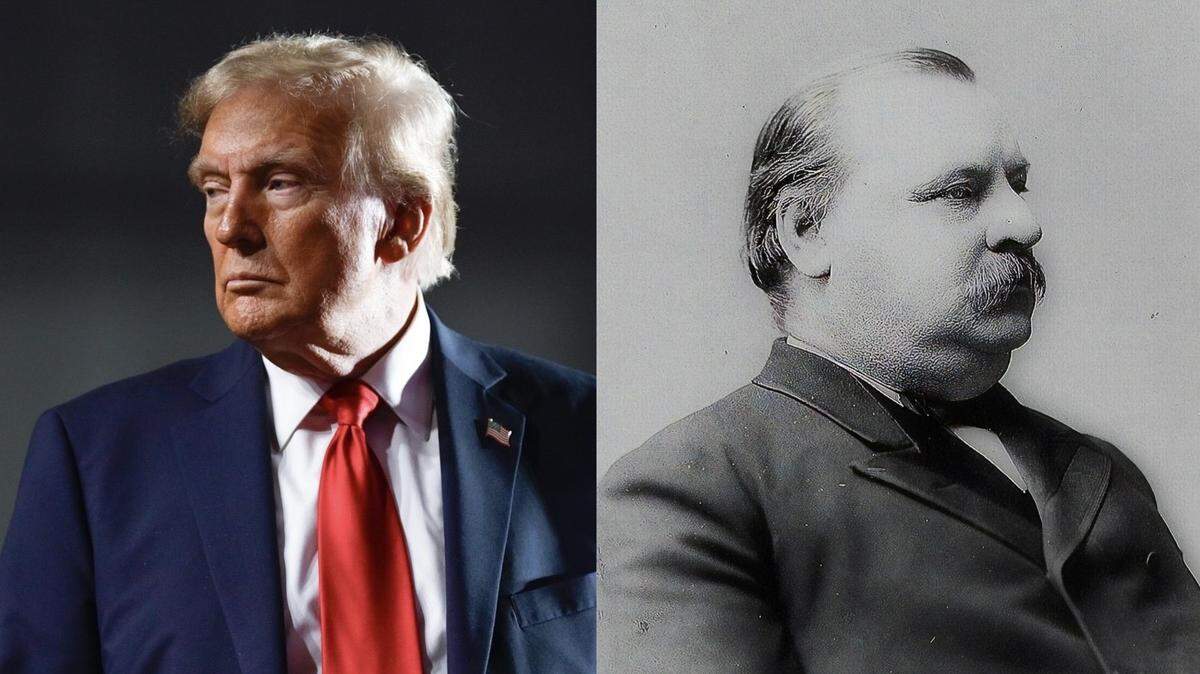
After winning the election, President-elect Donald Trump will return to the White House for a second, nonconsecutive term. It’s only happened one other time in America’s 248-year history.
Trump — who defeated Vice President Kamala Harris — will follow in the footsteps of Grover Cleveland, the 22nd and 24th president of the United States.
There are a few noteworthy points of difference and comparison between the two men and their presidencies, Thomas Balcerski, a presidential historian at Eastern Connecticut State University, told McClatchy News.
“Personality-wise, Grover Cleveland is a pale comparison to Donald Trump,” Balcerski said. “Not blustering and flamboyant, he was known to put honesty and virtue above all other things … he was this civil servant to the extreme.”
Born in the Garden State in 1837, Cleveland began his career as a lawyer in upstate New York, according to White House records.
He quickly ascended the political ladder, serving as the mayor of Buffalo and the governor of New York in short succession.
In 1884, he ran as a Democrat for the presidency, ultimately defeating James Blaine, his Republican opponent, an “irascible” and divisive politician from Maine, according to the University of Virginia’s Miller Center.
His victory was made possible by the support of both Democrats and a group of Republicans known as Mugwumps, who were concerned about corruption and disliked Blaine.
Throughout his first term, Cleveland — an overweight and mustachioed man — pursued policies against protective tariffs, in contrast to Trump, who has called for across-the-board tariffs on imports.
“Tariffs were a huge issue,” Balcerski said, noting that, in this period before income taxes, they were a major source of revenue for the federal government.
“Grover Cleveland, as Democrats were in this late 19th century period, was generally against strong protective tariffs,” Balcerski said. “Republicans, then and now, were much stronger tariff supporters.”
Cleveland also signed the Chinese Exclusion Act, which cut down on Chinese immigration to the U.S.
One could draw parallels between this legislation and Trump’s proposed plan to cut down on illegal immigration, Balcerski said.
In the 1888 election, Cleveland was defeated by Benjamin Harrison, his Republican opponent, though he won the popular vote. However, four years later, he faced off against the incumbent Harrison and this time he was victorious.
Cleveland’s second term precipitated an economic depression, which he addressed by repealing the Sherman Silver Purchase Act. The act made the government more reliant on silver and was considered “mildly inflationary,” according to the White House.
During this period, there was a major debate about whether silver should be part of the monetary supply, Balcerski said, noting that this was something Cleveland resisted.
“There is an interesting corollary to Trump, which is still unfolding, and that’s Bitcoin or cryptocurrency,” which the president-elect has been supportive of, Balcerski said. “In a way this might be the opening stages of a new monetary debate that’s going to take place.”
By the end of his second term, “Cleveland was wildly unpopular,” Balcerski said.
Eventually, his party nominated William Jennings Bryan, “who was completely ideologically the opposite of him,” he said. Bryan ultimately lost the 1896 election to William McKinley, his Republican opponent.
After serving out the remainder of his second and last term, Cleveland retired to New Jersey and died in 1908.
This story was originally published November 6, 2024 at 11:20 AM with the headline "Trump to return to White House after 4 years. Only one past president has done that."