Growing Fort Worth suburb tangled in lawsuit heads toward critical election
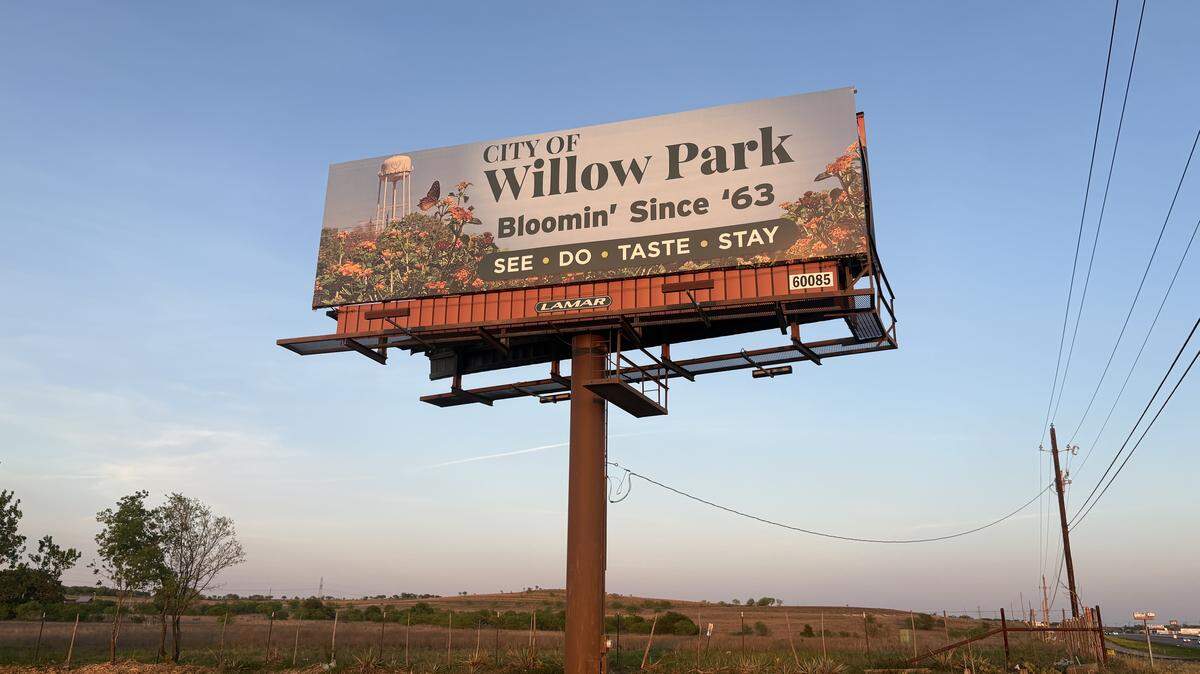
Willow Park, a growing city west of Fort Worth, is heading toward an election that could flip the balance of its five-member City Council — as it grapples with crumbling roads, new home developments and a lawsuit filed by neighboring cities.
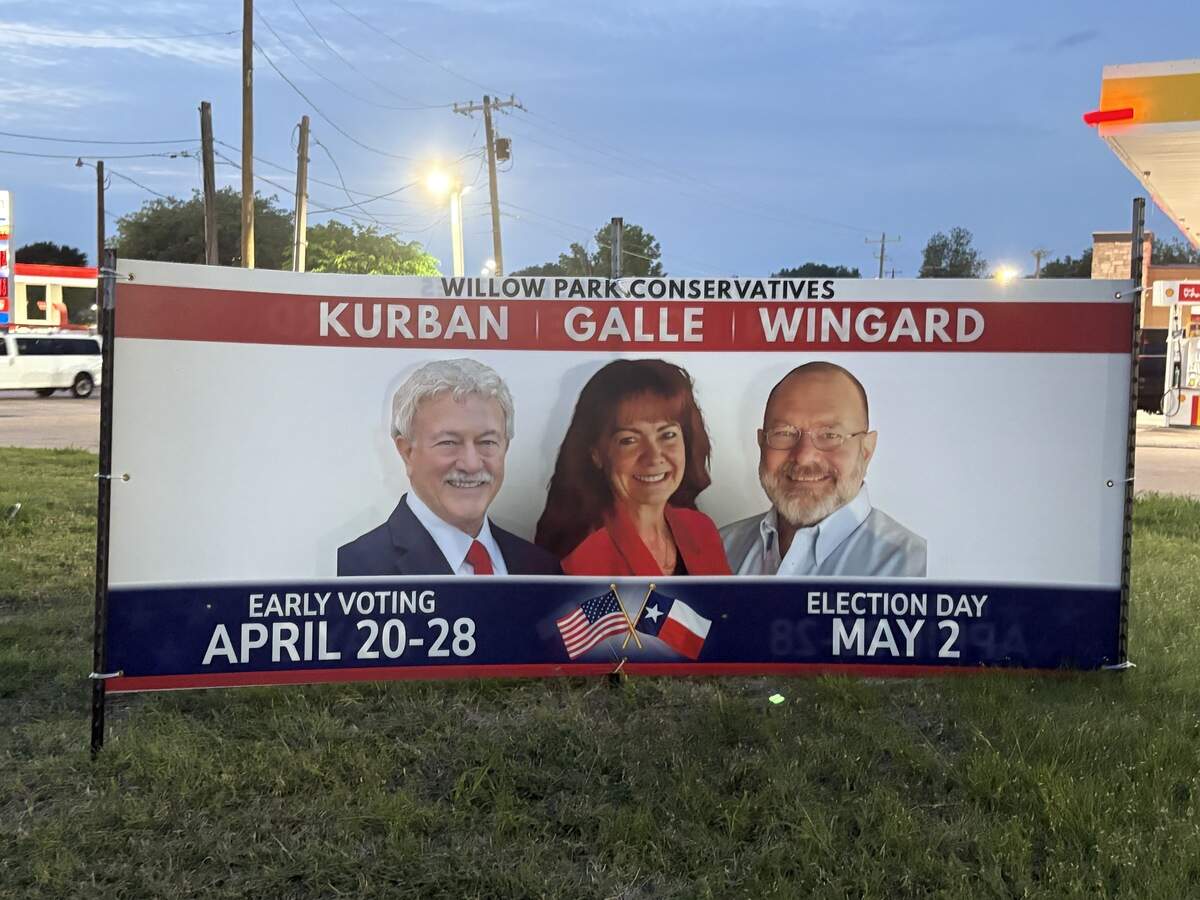
Three at-large City Council seats in Willow Park — a city of nearly 7,000 along the lucrative I-20 corridor — are up for grabs on May 2. The three incumbents, Nathan Crummel, Scott Smith and Buddy Wright, are aligned against Marci Galle, Houston Wingard and Roy Kurban. Early voting starts Monday, April 20.
The city, which Crummel calls “the gateway to Parker County,” took in around 2,000 new residents in the last six years. Just shy of 800 voted in the city’s last election, making low voter turnout a concern on both sides. “We’re not looking to keep things the same,” Wright said of himself and fellow incumbents. “We see potential ... and their side seems to be afraid of growth. They’re afraid of development. They’re afraid of change.”
The challengers have the support of prominent conservatives and the city’s relatively fresh mayor, Teresa Palmer. Palmer’s tenure, which began in May 2025 after she defeated Doyle Moss, has seen the resignation of two city council members and the city attorney last year. The city manager was also voted out.
City governance style at stake, ethics violations accusations
The election could flip the way the city is governed. Palmer is a fierce advocate of Willow Park becoming a home rule city. Texas cities can either be general law, meaning state statutes dictate its powers and duties, or home rule, meaning a city operates based on its own charter, as long as that charter does not conflict with state law.
She appointed 12 people, including Wingard, Kurban, Galle’s daughter Gwendolyn, and former Republican state Rep. Jonathan Stickland, who represented suburban Fort Worth from 2013-21. The committee proposed adding a sixth council member and giving the mayor voting power.
“It’ll get more citizens involved in managing our city,” Wingard said. “Not just a small group at city hall.”
While the charter will not be voted on in the upcoming election, the slate of challengers said, if elected, they will make it a priority. Wingard, a Lockheed Martin retiree, said part of what riled him up to run was what he believed to be coordinated mistreatment of the mayor by City Council and staff. Palmer has faced harsh critics.
At a March City Council meeting, Palmer cut former City Council Member Amy Fennell’s public comment short with gavel bangs when Fennell got to her thesis: That Palmer’s leadership is unraveling the city. Fennell was escorted out by police. Public comment at a City Council meeting three days shy of early voting began with rebuke of the challengers’ campaign signs — which a resident called an ethics violation, arguing the signs did not include a disclosure statement.
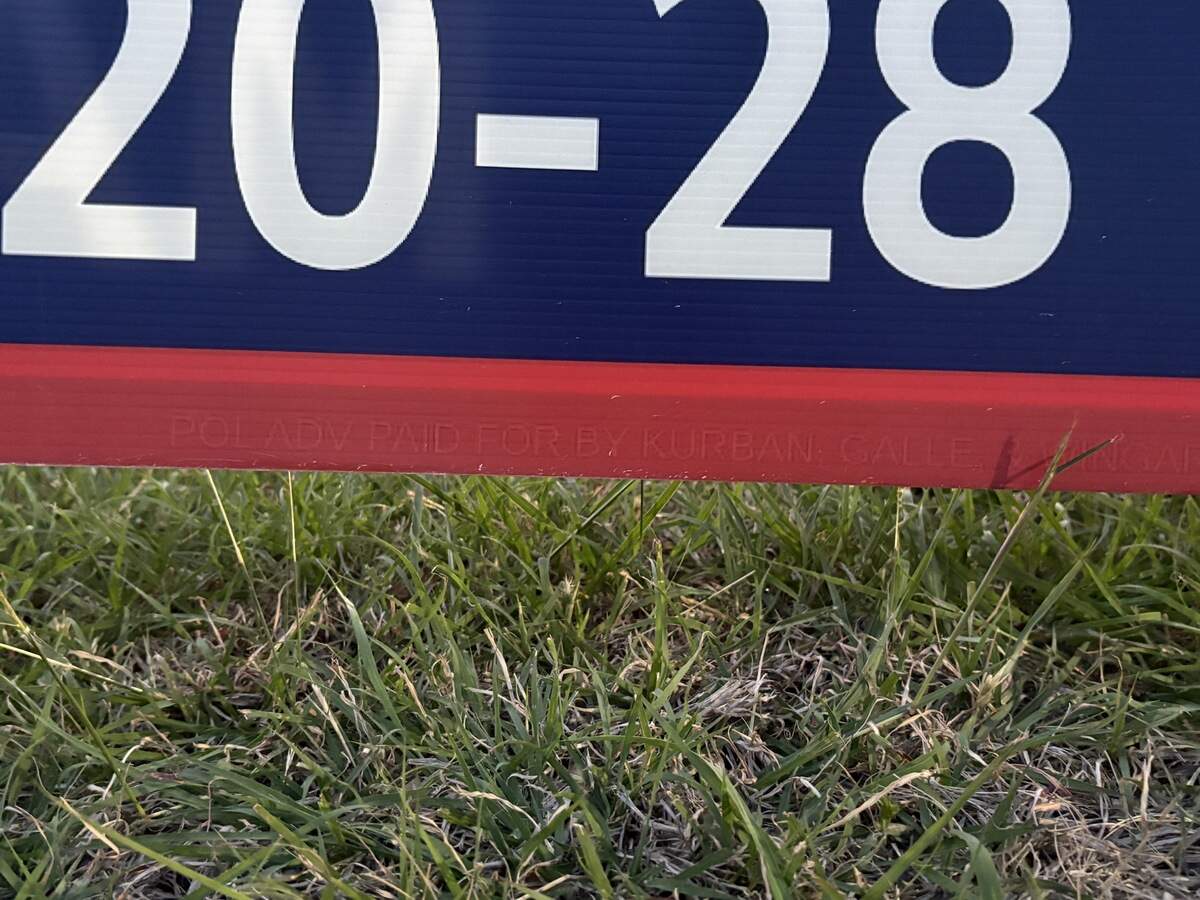
Texas election code requires political signs to include disclosures about who paid for them. A review of one of the signs shows that the sign does include a disclosure statement. It is, however, engraved in red ink against a red background at the bottom of the sign, requiring one to squat or lay in front of the sign to see it. After the signs were the subject of an article in the Community News, Wingard, through his attorney, sent a letter to the newspaper demanding a retraction. A copy of the letter was shared with the Star-Telegram.
“It is our belief that malice may be inferred from your continued unwarranted bias against the current Mayor who won by a landslide and those folks aligned with her point of view with regard to the future of Willow Park,” the letter read.
Legal issues, relationships with developers
But the fracas isn’t the only thing that has propelled Willow Park into the spotlight. Accusations of unlawful annexation of property that is part of a $500 million development spanning over 320 acres weighs on the city, too. Fort Worth and Aledo, the plaintiffs in the suit, have filed an injunction seeking to stop Willow Park from doing any work on the development, the Beall-Dean Ranch, ahead of a hearing in mid-May.
Willow Park approved a $5 million debt to funnel water and utilities to the development and approved a special taxing zone for the area in January. Two of the incumbents, Scott Smith and Buddy Wright, accepted hundreds in campaign contributions from the developers behind the project, Robert and Logan Beall, records show.
Kurban a former karate champion, criticized this, calling it a “conflict of interest.” Kurban boasts the largest campaign coffer at over $19,000, made up of donations from martial arts “friends” around the county — and a $200 donation from Stickland.
Wingard and Galle, a former City Council member and the former legislative director for Republican state Rep. Mike Olcott, report having accepted no contributions.
“[The developers] have got an interest in the wellbeing of our community because it’s commercially good for them,” Wright said in response. “There’s nothing untoward about a member of the community, whether it’s a commercial entity or a private citizen, making their voice known, and whether it’s through a campaign contribution, so be it.”
Smith, in response, said he was at first hesitant to accept the contributions.
“But after consideration and talking with [Robert] and things like that, the conflict of interest is not there,” Smith said. “And the reason why is we already have approved their product. ... What they’re doing is investing in their investment. ... They’re edging their bet on keeping people that are knowledgeable about their product, about their lawsuit. ... Why would you want to start over with three people who have no idea what’s going on?”
Transparency concerns, crumbling roads
The incumbents see themselves as “local servants” trying to help their city, as opposed to politicians, Crummel said. They view growth, like what is planned through Beall-Dean, as an inevitably charging bull already in town — and one they believe should be harnessed for sales tax and property tax revenue to fix the city’s dilapidated infrastructure. Development shouldn’t be a haphazard jig of slapping ideas on blank acres, Crummel said.
Residential and commercial projects should be considered for how well they align with Willow Park’s character and how much the money they generate Crummel said. There is “empirical data” on the priority order and costs of capital improvement projects, and it is data that Crummel said needs to be communicated with citizens — some of whom may need a little education on what Crummel calls “The Good Neighbor Doctrine.”
“It’s not just, ‘All right, raise your hand if you need street improvement,” he said. “We can address these logically and in some sense or order based on the grades they’re given. … Because sometimes, you have to include a B student with a failing student just because of vicinity.”
The challengers, on the other hand, believe there is a lack of transparency between the City Council and the citizens. Wingard, who lives near the planned 241-home Clearion Development, said three years ago, trees near his home were cut for the development, leading him to take a trip to city hall.
“I was a little concerned, and can’t remember who it is I talked to because I’d never been to city hall before to be honest with you, but basically, I was told that’s big money and as an everyday citizen, I didn’t need to be worried about it,” Wingard said. “I didn’t like that answer. I’m a taxpayer … the old mayor was there for eight years, and it left us citizens out of the loop.”
Kurban said the perceived gap appears “secretive.” Kurban, in public comment in the past, has threatened to file a complaint with the attorney general about the City Council. He suggested that resignations at city hall were done in fear of him.
Kurban called the current council “terribly incompetent.”
Galle said they lack “original thoughts” when it comes to promoting the health and safety of citizens. Galle added that her opponents’ philosophy of directing sales tax revenue toward funding capital improvement is “wrong.”
“Sales taxes fluctuate,” she said. “The best way to do capital improvements is through bond issuances that are supported by a portion of the property taxes.”
All three challengers said they believe the City Council is too quick to accept new developments. The group also singles out a $10.1 million municipal bond City Council planned to issue in February to fix crumbling roads and bad pipes in the Squaw Creek neighborhood. The city is paying $1 million a year in water loss due to the dilapidated pipes, Crummel said.
Galle, who lives in the Squaw Creek neighborhood, led a petition to put the bond to a public vote. To the challengers, citizens not having the ability to vote on the bond stands out as proof that citizens are left out on the loop.
The incumbents have highlighted getting the project back on track as their No. 1 priority if elected.
“Miss Galle ran a petition to kill it,” Smith said of the Squaw Creek project. “And it really hurt the citizens to be honest with you ... We’ve got to fix our roads ... and where we differ from their end is they want everything to be a voted bond ... Well, here’s a factor. We’ve got, say, 250 houses on two and a half miles ... those are the only people affected, and so when you put out a vote for a bond ... who’s going to vote for that other than those affected?”