Granbury hid data center details, residents’ lawsuit alleges
Four Granbury and Hood County residents are taking legal action over the city’s handling of a data center proposal that has ripped at the fabric of public trust in the idyllic North Texas town along the Brazos River.
The lawsuit was filed Monday in Hood County in Texas’ 355th District Court against Granbury Mayor Jim Jarratt, City Manager Chris Coffman, Mayor Pro Tem Bruce Wadley and the members of the Granbury City Council.
The suit claims the city violated the Texas Open Meetings Act after Granbury leaders took a tour of a data center in Dallas days before a contentious meeting Jan. 6, where the city council approved the annexation of nearly 2,000 acres that straddle Meadow Wood Road, south of U.S. 377 and north of Paluxy Highway.
On Tuesday, the Granbury City Council voted to rezone the acreage for a data center power plant. At that meeting, Jarratt and Coffman denied that the City Council knew about Dallas-based developer Bilateral Energy LLC’s plans before the annexation request went to the council.
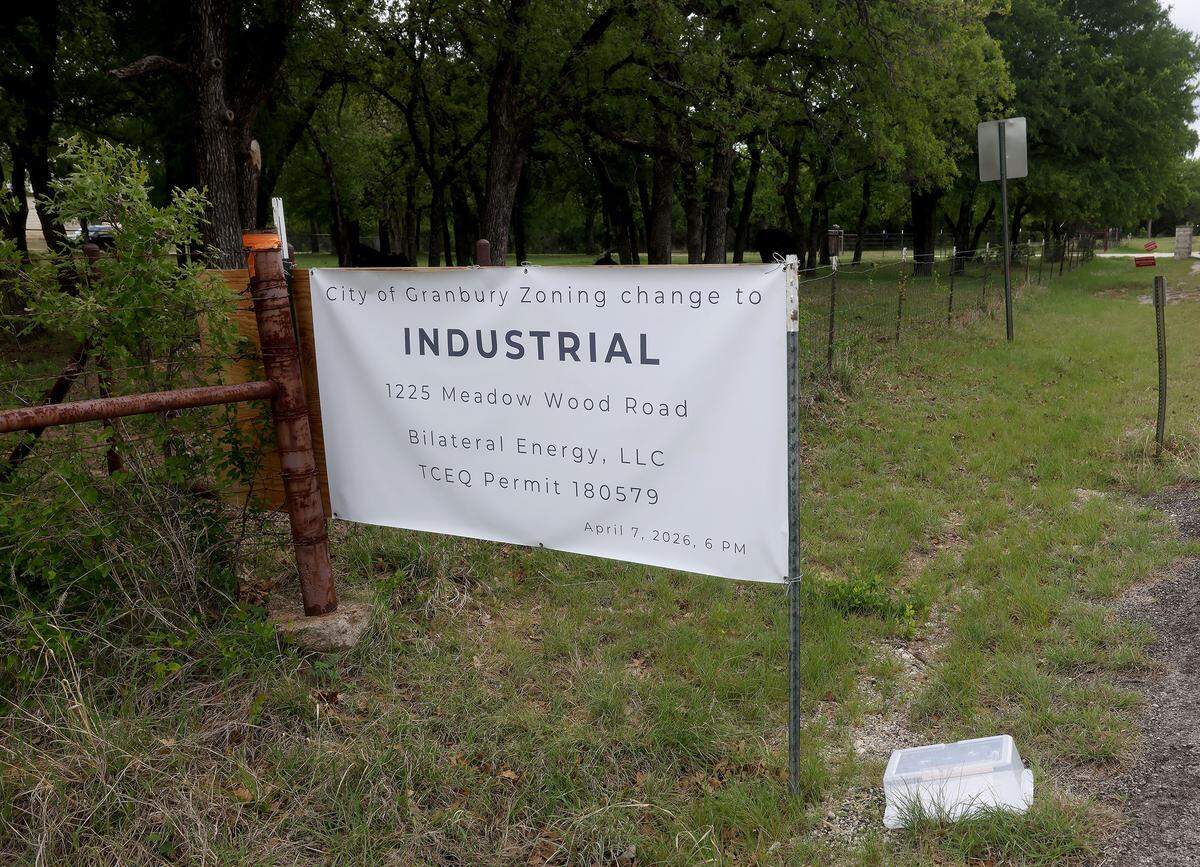
Coffman told the Star-Telegram this week that although the city was interested in a data center development he dubbed “Project Patriot” and had spoken with representatives from Bilateral, he said he did not know what company they were with, and the city didn’t formally cinch a deal.
The lawsuit, filed by attorney Steven Dias with the firm Dias Hall, seeks a permanent injunction, a temporary restraining order, and a jury trial, in addition to reversing the annexation of the acreage and compensating residents for the loss of property values and the “enjoyment of their homes.”
The plaintiffs argue that the website link for the land annexation agenda item at the Jan. 6 council meeting was broken, showing an error message, until five hours after the meeting began. The plaintiffs also said that the address the city provided for the annexation is part of a parcel that the city already owned.
Plaintiffs said that the city “willfully evaded disclosing and providing documents” given in public records requests and refused to release documents, even after a request from Attorney General Ken Paxton’s office to do so if it did not find the documents to be confidential.
At the crux of the lawsuit is the claim that Jarratt, Coffman, Assistant City Manager Michael Ross, and the City Council broke quorum requirements when they took a tour of a Dallas data center in early January with Hood County Commissioners Kevin Andrews and Jack Wilson.

Records obtained by residents include a Jan. 2 email from Granbury’s Economic Development Director, Shea Hopkins, in which Hopkins was coordinating with Daniel Wong, director of Bilateral Energy, to avoid a quorum while the council toured the facility.
“From the current confirmations I have it does appear that there would be a quorum if we were to all tour at the same time,” the email reads. “Would it be possible for us to stagger a second group even two minutes behind the initial group? I just want to make sure that we are doing things the appropriate way.”
This, the lawsuit alleges, was a “a futile attempt to sidestep and subvert the Texas Open Meetings Act” and became a “walking quorum” — subverting the law by attempting to meet in smaller groups in order to secretly deliberate.
Records obtained by residents also include a “letter of support” for Project Patriot written by Coffman and addressed to Wong and Bilateral representative Aaron Lessig. It outlines a 60% city property tax abatement on both real and personal property owned by the developer for 10 years, and 1% electricity sales revenue shares derived from the property’s onsite electricity generation.
Coffman told the Star-Telegram that at the time, he did not know what company the men to whom he wrote the letter represented.
Jarratt and Coffman gave identical statements to the Star-Telegram when reached Thursday evening, saying that they could not comment on the lawsuit. The other defendants could not be reached for comment.
However, in an email Jarrett sent to the Star-Telegram earlier Thursday afternoon, he denied that there were serious negotiations with any developer.
“As you know, in Economic Development there is a lot of ‘kicking tires’ and ‘thunder with no rain,’” Jarratt wrote. “As you are also aware, a serious proposal will come from the entity involved in the ultimate construction and operation of any proposed housing development, light manufacturing, or industrial project. We have not seen a serious proposal.”
A judge has not given the plaintiffs an initial hearing date for their case yet, Dias said.
Staff writer Liz Campbell contributed to this report.
This story was originally published April 9, 2026 at 9:58 PM.