
Keller City Council votes to partner with ICE despite protests from residents
Keller became the first Tarrant County city to approve collaborating with ICE on some law enforcement initiatives — even as protesters who gathered in front of Keller Town Hall and the majority of speakers at Tuesday night’scity council meeting opposed the decision.
Keller City Council voted unanimously to join the 287(g) program, which will allow Keller police to work with Immigration Customs Enforcement to determine a person’s immigration status if they are booked in to the Keller city jail.
Around 30 people from Keller and neighboring cities gathered outside of the Keller Town Hall, holding signs that read, “The next person ICE rounds up could be you!“ and “Even though it’s HOT I want NO ICE in my city” before the meeting, and many of them spoke during the public comment period.

Mayor Armin Mizani said that the reason cities like Keller are opting into working closely with ICE is because of the rioters protesting immigration raids in Los Angeles.
“You can blame the rioters in Los Angeles,” he said. “You can blame the people that go into businesses. You can blame the people that have attacked.”
Mizani said that he wasn’t surprised by the number of people who came out in opposition to this program.
“I think this is just a common-sense proposal that’s going to solidify public safety in our community and help partner, not just local law enforcement, but with the county, but also with the state and the federal law enforcement agency,” Mizani said.
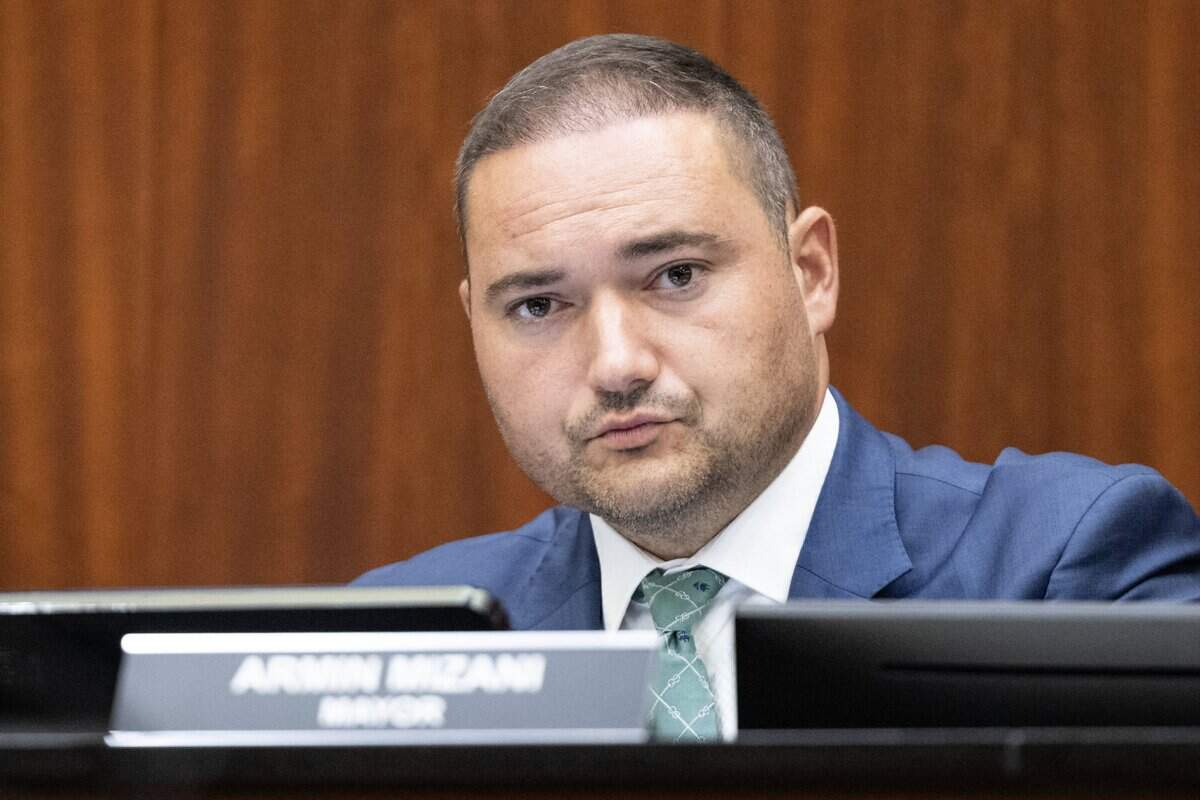
Some who spoke during public comments noted the mayor's immigrant background. He said he was proud of his heritage, his father's Iranian immigrant background, and his mother's Cuban and Puerto Rican ancestry.
He said that while his parents were not arrested for any crimes, his expectations would be that if they were, law enforcement would do their job and identify individuals and that authorities would be notified.
The 287(g) program allows state and local law enforcement agencies to partner with ICE to “keep their communities safer” by collaborating with the federal agency on some immigration enforcement actions. The Tarrant County Sheriff’s Office has participated in the 287(g) program since 2017.
In the pre-council meeting, council members spoke with a representative from ICE Enforcement and Removal Operations. The representative declined to provide the Fort Worth Star-Telegram with his name.
The warrant service officer model (WSO) gives police the authority to serve civil immigration warrants to those in custody in their jail who are identified as undocumented through the Automated Fingerprint Identification System (AFIS).
The representative said that the program doesn’t change the policy the Keller police already follows.
“The warrant service officer happens within the confines of the jail,” the representative said to the council. “You’re not doing any increased screening that’s already being done. All you’re doing is being able to serve the warrants that are issued from ICE for the folks that are in your jail.”
Once a warrant has been served, an ICE detainer has 48 hours to come and take them to a detention center.
Mayor Mizani said that he stands unapologetically on the side of public safety.
“If you got pulled over a speeding ticket, is that going to lead to an arrest in Keller? It will not,” Mayor Mizani said. “But if you committed a robbery, if you commit an assault, if you murdered someone in some surrounding city for whatever reason, if you’re driving under the influence, that will lead to an arrest.”
Detention officers will undergo an 8-hour virtual training course and a bi-annual retraining.
“What the warrant service model will do is train our detention officers to be able to alleviate that step from ICE,” Mizani said.
Keller is the fourth Texas city to join the 287(g) program and the first in Tarrant County.

Keller resident Andrew Sternke said that gives enormous power of minor interactions and risks turning Keller into a city where fear replaces trust, especially in immigrant and minority communities.
“Opting into this program will mean minor adjustments to the responsibilities of our detention officers, but our department’s priorities and philosophies will remain unchanged,” the Keller Police Department said in a statement provided to the Fort Worth Star-Telegram. “Our employees are committed to upholding the rule of law and serving the community with respect and empathy. That includes those within our care at the Keller Regional Detention Center.”
Mizani previously told the Star-Telegram that Keller already conducts background checks when people are booked in the jail, and joining the 287(g) program formalizes the arrangement with ICE.
On June 28, Gov. Greg Abbott signed Senate Bill 8 that requires Texas sheriffs to partner with ICE. The bill also provides funding for training.
But protesters who gathered before the council meeting said the 287(g) agreement means more people are subject to racial profiling, and the program often undermines trust of law enforcement officers, thus jeopardizing public safety.
Buddy Luce, of Indivisible TX-24, a grassroots group that organized Tuesday night’s protest also spoke during Tuesday’s meeting.
Before the council voted, Luce criticized the mayor and council for ignoring what the majority of residents wanted which was for Keller to not join the 287(g) program.
“What does that tell you? Maybe you’re barking up the wrong tree,” Luce said.
This story was originally published August 5, 2025 at 11:00 PM.