MHMR will take over support services for juvenile offenders in Tarrant County
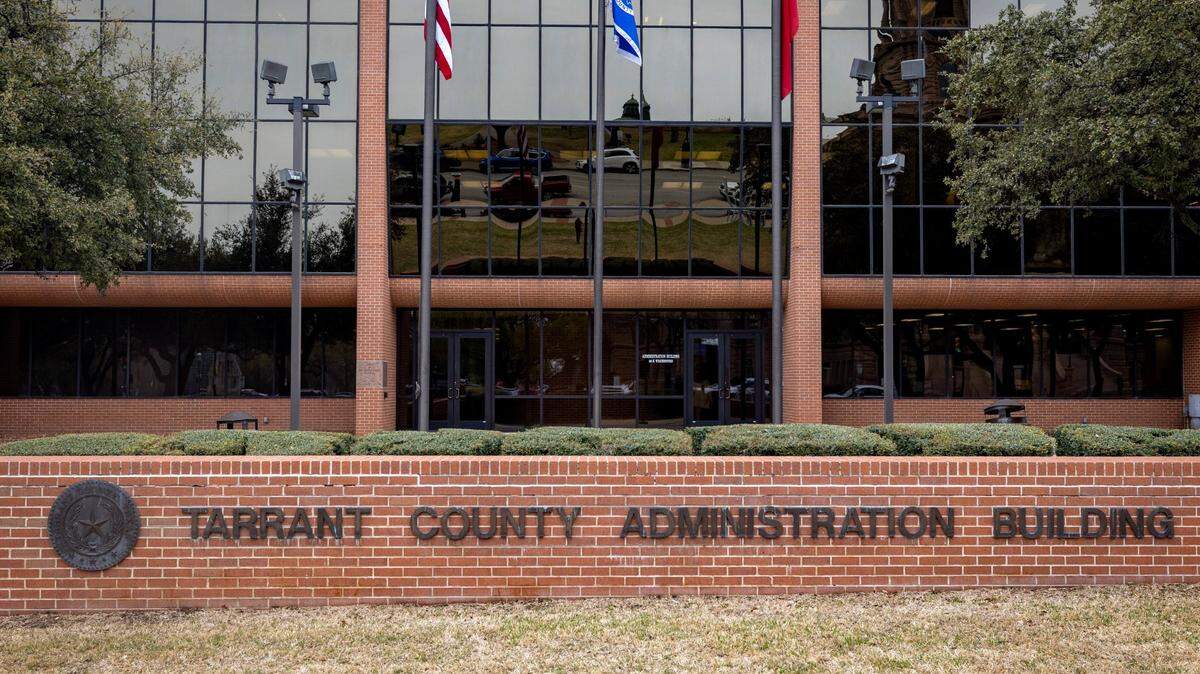
The Tarrant County Commissioners Court reversed an earlier vote Tuesday and approved a contract with My Health My Resources of Tarrant County to provide services for children in the juvenile justice system.
Earlier in the meeting, the proposed contract failed, with Democrats Alisa Simmons and Roy Brooks joining Republican Gary Fickes to vote against it. But after a two-hour closed session, the commissioners considered the contract again. This time, they voted 4-1 to approve it, with Simmons the lone dissenting vote.
The contract said MHMR would provide a holistic “wraparound” approach rehabilitation and support services. MHMR would “address the multifaceted needs of at-risk youth through coordinated services, enhancing their chances of rehabilitation, reducing recidivism and promoting positive youth development,” according to the contract, which is worth up to $895,000.
MHMR provides services for people with intellectual and developmental disabilities, mental health conditions, substance use disorders and developmental delays. It is a unit of local government whose board is appointed by county commissioners.
Pennsylvania-based Youth Advocate Programs Inc. had been providing services to Tarrant County since 1992, but lost its contract in July after questions arose during a Juvenile Board meeting over language such as “diversity initiatives” and “systemic racism” on its website.
Before the executive session, Brooks said he did not agree with the proposed contract with MHMR because Youth Advocate Programs had demonstrated it provided these services in the county for years very well, unlike MHMR.
“This is a business line providing counseling to youthful offenders in our criminal justice system and directing them onto a path that is designed to lead to the living of successful lives,” Brooks said. “This is something that MHMR does not do.”
Simmons said the actions by the Tarrant County Juvenile Board in July seem “unethical” and without regard for taxpayers, the safety of the community and the children whose lives will be impacted by their decision.
“The juvenile board used its shaky and politically charged, possibly illegal cancel culture excuse to find a loophole to pull a fast one to justify what I see are very unjust actions,” she said.
Republican County Judge Tim O’Hare said the contract did not end because of the language on the website.
He said judges voted to kill the contract because Gary Ivory, the CEO of Youth Advocate Programs, had told O’Hare that 15 cents of every dollar Tarrant County sends to the nonprofit goes to lobbyists and law firms to file amicus briefs.
“So now push comes to shove. Are you really about not having a gap in services, or are you really about politics?” O’Hare said before the first vote to approve the contract with MHMR. “Trying to blame the other side for politics?”
During the July meeting, Judge Chris Wolfe pointed out to the Juvenile Board the language on the website, citing “diversity initiatives ” and “systemic racism.” He raised a motion to reconsider the contract. O’Hare immediately seconded the motion. But a vote wasn’t taken at the time. A vote later in the meeting ended the contract.
Later during that meeting O’Hare brought up Girls Inc. and asked if the Juvenile Board should be sending children to organizations that champion certain policies. He questioned Girls Inc.’s positions on abortion, sexuality, the police and transgender issues.
“We’re talking about a different thing, but I think it’s a very similar scenario. It looks identical to me,” O”Hare said in the July meeting.
Ivory has said previously that Youth Advocate Programs does not use Tarrant County taxpayer money for lobbyists. Payments to lobbyists are made from philanthropic donations, he told the Star-Telegram.
Youth Advocate Programs uses a proprietary program that cannot be duplicated by MHMR or anyone else in Tarrant County or the state of Texas, Ivory said.
He also clarified that Youth Program Advocates is a nonpartisan organization and is not influenced by donors.
Ivory learned of the vote reversal from the Star-Telegram. He questioned why commissioners went into executive session and apparently made a decision in private. This is pushing the conversation away from the kids and families who need it the most, he said, but nonprofit will continue to work to get its contract back in Tarrant County.
“It’s a manufactured crisis that they wanted to create because we were too ‘woke’ just like they did Girls Inc., just like they did with Big Thought, we were the third one,” Ivory said. “And now they’re going after all the targets based on this culture wars.”