
Mercy Culture accuses Fort Worth of discrimination over plans for human trafficking shelter
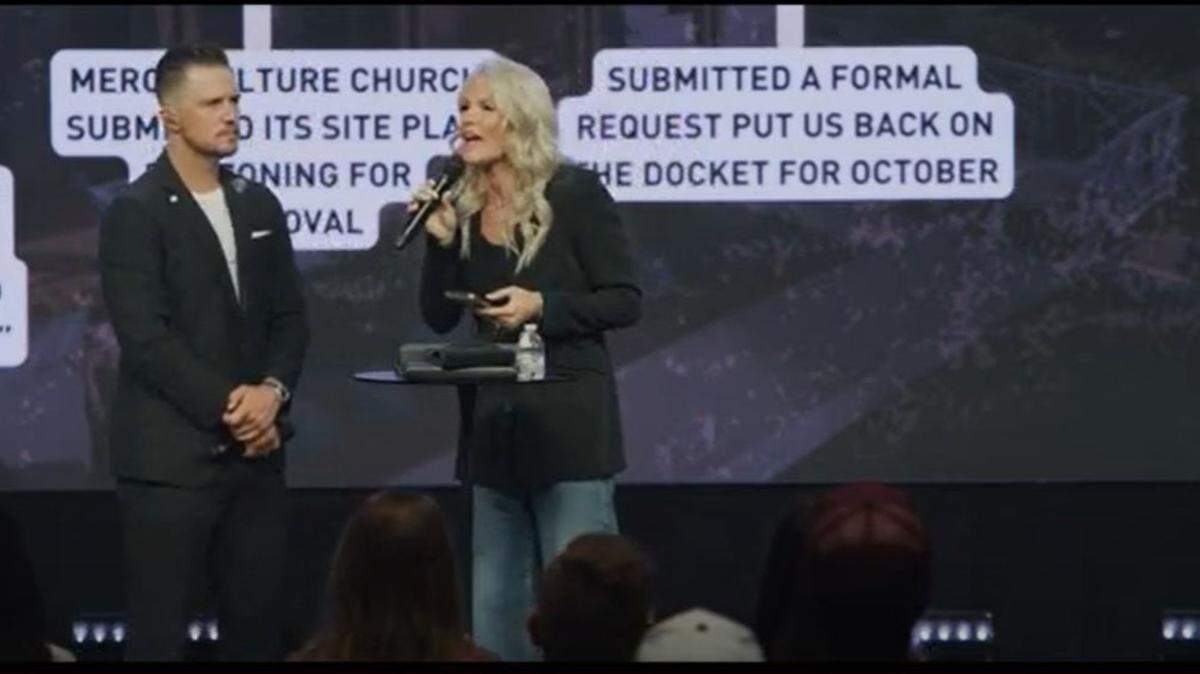
Mercy Culture Church’s lead pastors are accusing the city of Fort Worth of discrimination over bureaucratic procedures delaying the development of a proposed human trafficking victims shelter.
The church applied for a commercial building permit on July 10, but a city review of the application determined the proposed 100-bed shelter didn’t comply with the Fort Worth’s land use rules.
The city is requiring Mercy Culture to rezone its property before building the shelter. This would require a public hearing before the zoning commission and approval of the City Council.
Those rules infringe on the church’s freedom of religion, Lead Pastor Heather Schott told her congregation Sunday. She noted the church’s current zoning, established in 2004, allows for “church related activities.”
“The city of Fort Worth and the zoning committee, let me make this clear, does not determine what those activities are. The Bible does,” she said.
The proposed shelter is part of the church’s Justice Reform ministry, which seeks to rehabilitate victims of human trafficking.
The two-story building would include a dining hall, exercise room, offices, gathering spaces and two stories of residential sleeping rooms that could house up to 115 people, according to the building permit application and plans obtained by the Star-Telegram through an open records request.
Mercy Culture filed a site plan amendment on Aug. 5, which if approved by the zoning commission and City Council, would allow the church to build the shelter.
It also applied for a zoning change on Aug. 26, according to the city’s online permitting website, however, Heather Schott disputed that in her sermon Sunday.
“We did not apply for a zoning change, because we do not need a zoning change, she said.
Church representatives did not respond to an email from the Star-Telegram seeking clarity on the Aug. 26 zoning change application.
Schott’s husband and co-lead pastor Landon Schott also cited a federal law meant to protect religious institutions from discrimination to claim the city was overstepping its authority by requiring a zoning change.
Both pastors called on their congregation to lobby members of the City Council to approve the church’s site plan so the project can move forward. A petition calling for the city to approve the project had 1,639 signatures as of 10:15 a.m. on Oct. 1.
They specifically called out Mayor Mattie Parker saying it was time for her to show with action that she is committed to the cause of fighting human trafficking.
“We’re going to let the city know that Mercy Culture is kind, and kind of savage,” Landon Schott said.
Assistant City Manager Dana Burghdoff acknowledged Mercy Culture’s concerns while adding that the city is “committed to working through the appropriate processes to ensure that all legal and zoning requirements are met, as we do with any project of this scale,” in a statement to the Star-Telegram.
The city is scheduling meetings with church leadership to go over next steps, and make sure there’s clarity about the city’s processes, she said.
“I, like many Fort Worth residents, believe in the importance of combating human trafficking and supporting survivors,” Parker said in a statement to the Star-Telegram.
“In the coming days, I will convene a meeting with church and city leaders to discuss the process, outline next steps, and explore a path forward that serves our community’s best interests and aligns with our shared mission,” she said.
Mercy Culture has been trying to get the project off the ground since December 2021, but ran into opposition from residents in the nearby Oakhurst neighborhood the over concerns about parking and safety.
This drew the ire of Mercy Culture Church pastor Landon Schott, who called those opposed to the project an “insane demonic resistance” during a May 2023 sermon.
Heather Schott held a meeting with Oakhurst residents in March 2022 to discuss the project, however, several attendees reported not having any of their questions answered.
“It was just them preaching about why it’s the right thing to do that was it,” said Katheryn Omarkhail, vice president of the Oakhurst Neighborhood Association.
Schott, in her Sunday sermon, described some of the meeting attendees as “a group of agitators that hate Christian values.”
No one in the neighborhood is opposed to the mission of helping trafficking victims, but there is concern about putting the shelter in a residential neighborhood, Omarkhail said.
She noted the church’s proximity to Interstate 35W, saying it would be easy for human traffickers to whisk away victims on the nearby freeway.
Omarkhail compared Mercy Culture’s discrimination claims to Landon Schott’s previous comments calling Oakhurst residents warlocks and demons.
“There just spinning this whatever way they can to get public support,” she said.
This story was originally published October 1, 2024 at 12:11 PM.
.jpg)