Developers spend big money on Fort Worth politicians. Who spends the most — and why?
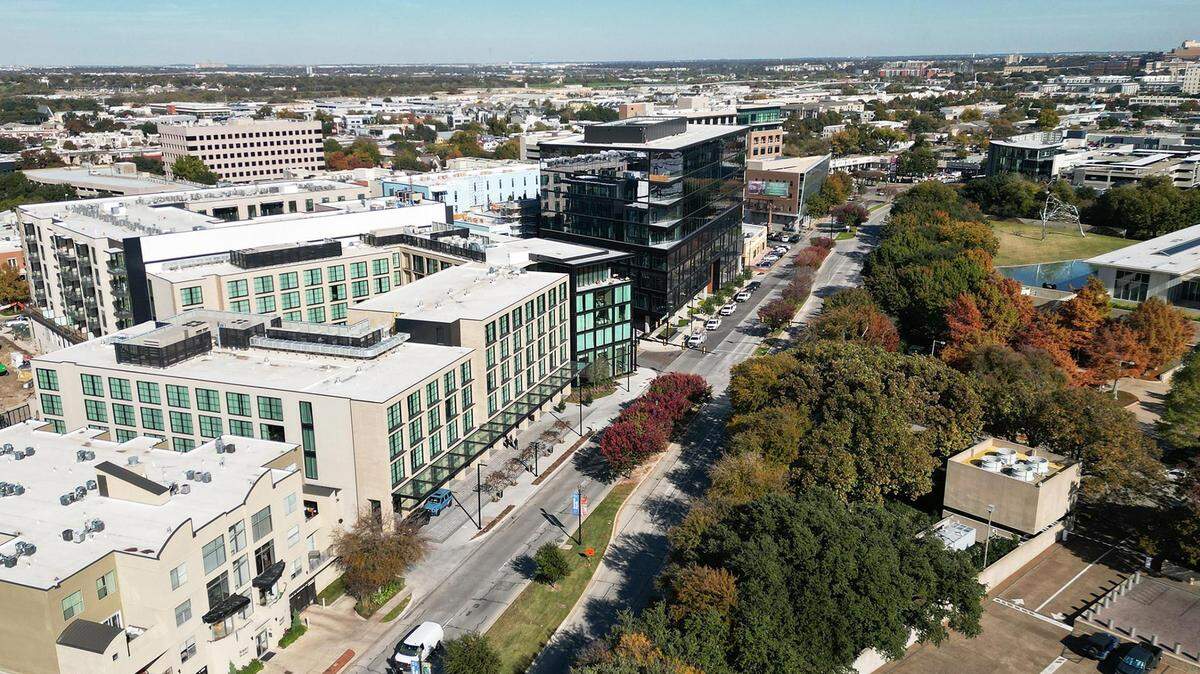
Real estate developers have spent millions chasing their fortunes in Fort Worth’s property market. Companies and their top executives have also invested hundreds of thousands of dollars in the city’s political scene.
The Star-Telegram analyzed the public campaign finance filings of Mayor Mattie Parker and every sitting city council member. The documents reveal that real estate investors and their family members rank among Cowtown’s most lavish political donors, matching the heft of police and firefighters unions, law firms, and an obscure network of funds tied to different branches of the Bass family.
Some of the most generous spenders lead some of the city’s most prominent developments. Their ties with the government run deep, and the sustainability of their projects can rely heavily on cooperation with city hall — in the form of favorable zoning changes, smooth permitting, tax incentives and economic development agreements.
Texas law forbids (almost all) corporations from directly contributing to state and municipal political campaigns, but loopholes abound.
Companies can funnel money to their preferred candidates through company-themed political action committees (PACs). Like-minded businesses can band together and form interest groups to advocate for their favored policies and bankroll the politicians who might advance them. Executives and their relatives can also shell out cash in a personal capacity.
To experts, the deluge of developer dollars is endemic to boomtowns across Texas and the country, as businesses hoping to profit from a city’s growth vie for the attention and support of city leaders.
Fort Worth council members who returned requests for comment said their policy decisions have been guided by the best interests of their constituents and the city at large, not the wishes of a wealthy donor class.
When asked to describe her relationship with the developers who have splurged on her campaign, Mayor Mattie Parker said it’s her “responsibility to facilitate smart economic development, whether by partnering with established developers and business leaders or welcoming newcomers eager to invest in Fort Worth.”
She’s confident her track record “reflects transparency and a strong commitment to working with the entire council to uphold our shared mission of supporting projects and opportunities that align with the best interests of Fort Worth and its residents.”
Council members Carlos Flores and Jeanette Martinez described their relationships with their developer donors as purely “professional.”
“Campaign contributions are solely up to the persons or organizations and reported in accordance with campaign finance rules,” Flores added.
Council member Charlie Lauersdorf told the Star-Telegram that his relationships with developer donors don’t extend “beyond my role as a councilman and having a shared vision in the future of our great city. A campaign contribution doesn’t influence how anyone is treated — my commitment to all District 4 residents and the entire city is steadfast.”
Council member Michael Crain struck a similar tone.
“As the Councilmember for District 3, I am committed to addressing requests from developers, property owners, homeowners and residents both efficiently and fairly,” he wrote in a statement. “I have advocated for enhancing our Development Services Department to meet the growing demand for permits, ensuring sustainable growth that benefits both large-scale projects and individual homeowners.”
Mayor Pro Tem Gyna Bivens told the Star-Telegram that her votes on development initiatives are ultimately dictated by the wishes of engaged community members, not the preferences of developers that help fund her campaigns.
“The proof for that is in the pudding,” she said.
Who are some of the biggest political financiers in the Fort Worth development scene?
John Goff (Crescent Real Estate LLC)
Goff co-founded Crescent Real Estate in the early 1990s. The Fort Worth company now boasts $10 billion in assets, among them the Dallas Ritz-Carlton, the Westin Riverwalk in San Antonio, and a compound of sleek residential and corporate buildings just west of downtown Fort Worth.
Crescent opened its namesake hotel on Camp Bowie Boulevard in November 2023. An attached apartment complex welcomed its first tenants a few months later. Crescent also finalized an office building across the street last year; it began unveiling plans for another, $70.4 million business complex in the fall.
Fort Worth taxpayers helped get the project off the ground. The city’s economic development department first floated the creation of an “Economic Development Program Agreement” with Crescent in February 2021. The arrangement required a minimum of $200 million in private capital investment. The city would cover 7.9% of the costs (roughly $15.8 million), expecting to rake in roughly $34 million in tax revenue over the ensuing 10 years; just under $12 million of that future revenue would be used to pay for debt incurred by the construction of Dickies Arena.
City leaders authorized the contract a few weeks later, and it went into effect the following October.
Goff has also helped spearhead the rollout of a $150 million Texas A&M campus expansion downtown, an undertaking touted as a future wellspring of growth in Fort Worth’s urban core. Workers broke ground on the project in June 2023. City council in September greenlit up to $18 million in development bonds to help push the campus forward.
Goff and his family members have donated $62,000 to sitting Fort Worth politicians.
Parker’s mayoral campaign received $50,000 from Goff and his wife in May 2021. The Crescent campus falls within the boundaries of District 7, whose freshman council member, Macy Hill, received $10,000 directly from Goff over the past year. Hill spent $4,062.45 to host a campaign fundraiser at the Crescent hotel in May, according to public filings.
“John Goff cares deeply about our city and is proud to support Mayor Parker, Councilmember Hill, and Councilmember Flores,” said Kasey Pipes, a Fort Worth public relations consultant and Goff’s spokesperson. “He believes we are fortunate to have such talented, thoughtful leaders to support.”
Pipes added that Parker and Hill took office after city hall approved the Crescent incentives package. Goff also donated $12,500 to Parker’s predecessor, Betsy Price, between January 2018 and February 2020, according to the former mayor’s campaign finance reports.
Hillwood
Hillwood chairman Ross Perot Jr. staked his first major claim in Fort Worth in 1985. That year, the heir to the Perot business empire acquired 13,000 acres of pasture roughly 15 miles north of downtown, laying the groundwork for the AllianceTexas mega-development.
Its eponymous airport, opened to air traffic four years later, anchored decades of bustle across Cowtown’s northern outskirts. The corridor now hosts hundreds of stores, factories and firms, including a Facebook data center and an Amazon air depot. By 2023, the development had generated $100 billion in “economic impact,” according to Hillwood; city leaders have authorized dozens of tax breaks and other incentives in hopes of fueling the surge.
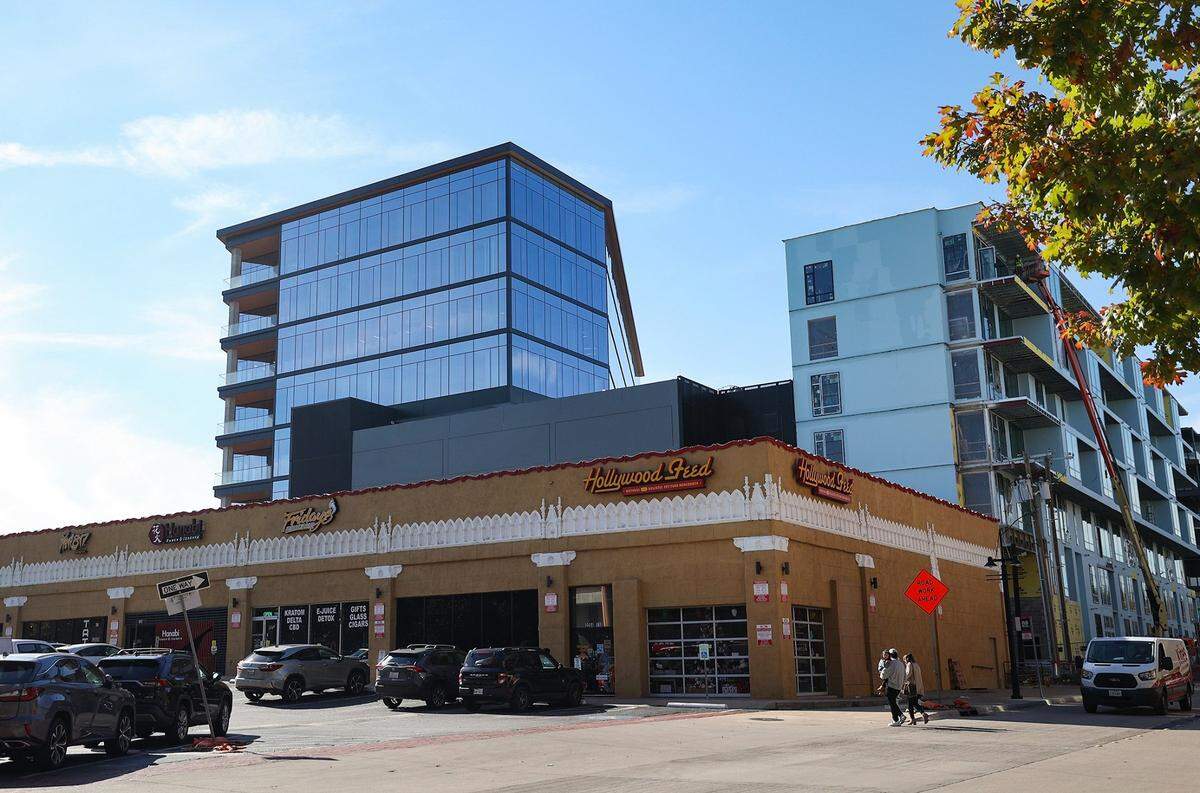
Hillwood’s Fort Worth-area portfolio also includes at least nine residential subdivisions. In October 2023, the company purchased a block of downtown a short stroll north of the convention center and Texas A&M’s future satellite campus.
Hillwood’s involvement in Fort Worth’s political scene reflects its entrenchment in the city’s economy. Hillwood executives have collectively contributed at least $53,061 to city leaders. Parker received $25,561, including $20,000 in donations in 2021 from Perot Jr. and Hillwood president Mike Berry.
Berry and Perot Jr. also collectively chipped in $80,000 to a now defunct PAC called the Texas Progress Fund, according filings analyzed by campaign finance research group Transparency USA. The fund, also bankrolled by Edward Bass and commercial real estate developer Haydn Cutler, donated $25,000 to Parker between March and May of 2021.
“Hillwood has been a committed landowner in Tarrant County and within the City of Fort Worth for over 30 years,” company spokesperson James Fuller wrote in a statement. “Our associates actively engage in civic and philanthropic activities throughout the communities we serve, including supporting local leaders and candidates for political office.”
Michael Mallick
Michael Mallick’s presence in the Fort Worth development scene spans decades. Buttressed by tax abatements from the city, Mallick built out dozens of single-family homes in a long-blighted pocket of the city’s southeast in the early 2000s. He partnered with Dallas real estate outfit Sphinx Residential to build a subsidized senior living community right next to the subdivision around a decade later, by the corner of South Riverside Drive and East Berry Street.
Lennar Homes is now unfurling another bundle of homes on Mallick-owned land on the opposite side of South Riverside. The city included the parcel in a “neighborhood empowerment zone” in October 2022, potentially waiving a roster of development fees for the homebuilder.
Council members have received $85,500 from Mallick over the years. Vertex Asset Partners, one of dozens of Fort Worth companies registered under Mallick’s name, donated $75,000 to Parker’s mayoral campaign between March and May of 2021.
“I like to support good government and causes and candidates.” Mallick told the Star-Telegram. “It’s just part of being part of the community.”
Walsh Ranch
Late Fort Worth oilman Howard Walsh channeled many of his prospecting profits into a 7,200-acre ranch about 12 miles west of downtown, at the convergance of Interstate 20 and I-30. The roughly 11-square-mile expanse of pasture now hosts one of Cowtown’s largest and most alluring “master planned” communities — a self-contained network of subdivisions, stores, and schools that promises billions in taxable value upon its completion.
Walsh affiliates and Fort Worth officials have collaborated closely on the project since its conception, churning out dozens of blueprints, contracts, and funding agreements to keep the undertaking chugging forward.
City leaders created an exclusive 1,700-acre “public improvement district” for the property in September 2016. The zone shifts millions of dollars in road construction and landscaping costs from the developer to homeowners in the form of raised property taxes.
The intertwined corporate entities responsible for managing Walsh, and the people who oversee them, have doled out $70,500 to sitting Fort Worth council members. The cohort targeted most of their funds ($41,000) at Parker.
Walsh did not respond to a request for comment.
Ken Newell
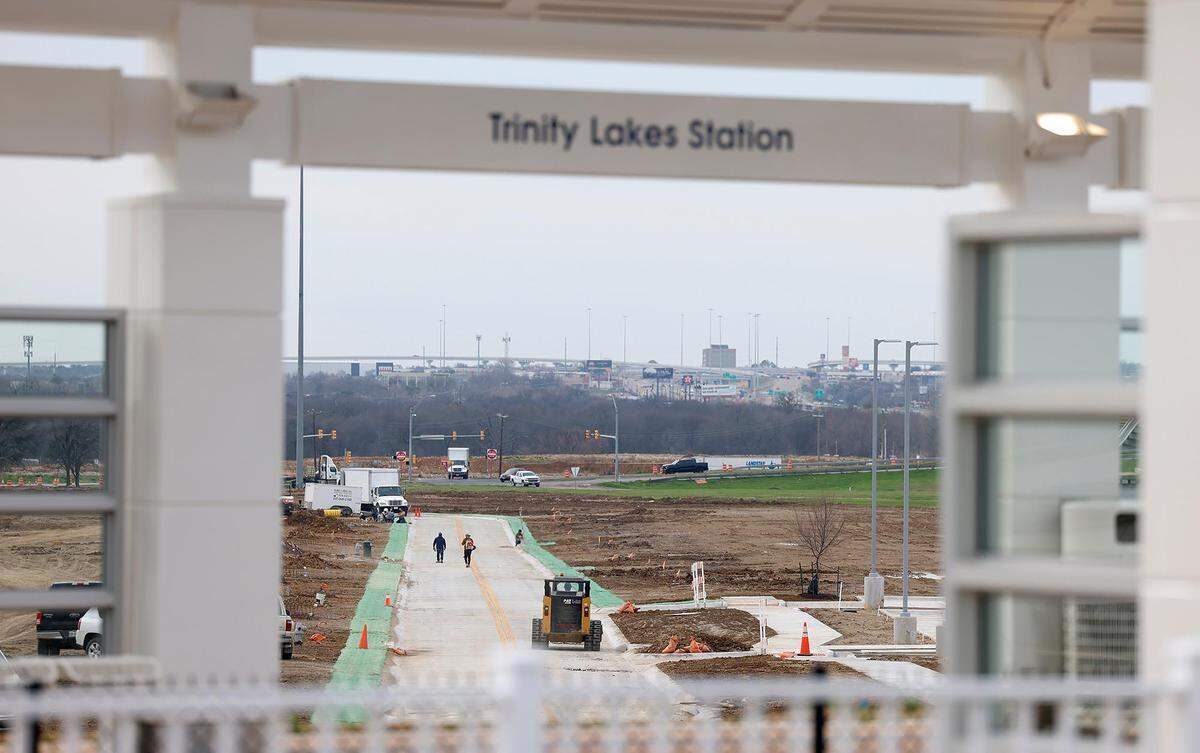
Newell made headlines in recent years for his efforts to convert an abandoned gravel mine on the eastern edge of Loop 820 into a bustling “transit-oriented development” dubbed Trinity Lakes. The Fort Worth developer (and one-time Trinity Metro board member) plans to build out a 1,600-acre complex of apartments, storefronts and parks anchored by a new Trinity Railway Express stop.
The first TRE traincars rumbled through Trinity Lakes Station on Feb. 19; Newell, Bivens and regional transit leaders celebrated the stop and the grand future it promised during a ribbon-cutting ceremony in April.
More than a decade earlier, Fort Worth created a tax-increment financing district to help bring the project to fruition. Cities across the state use TIF districts, close cousins of public improvement districts, to funnel funds into “areas of strategic value.”
The taxable value of any businesses or properties within the boundaries of a TIF zone are frozen upon its creation. As public and private investors pump money into the area, land values (ostensibly) surge; new taxable revenue is rerouted back into the district until the TIF expires, used to pay off investments in public infrastructure or subsidize new ones.
Bivens, whose district includes the Trinity Lakes development, has received at least $30,741 in campaign contributions from Newell and his companies since 2014, including $13,000 for a billboard advertisement, according to a 2019 donation report. (Bivens’ filings list two other donations totaling $10,000 from “Ken Newell” but provide no address for the donor.)
Newell did not return a request for comment.
Councils and Associations
Developers won’t hesitate to set aside competition for properties and profits to advance common commercial goals — and political interests.
The Fort Worth Apartment Association — once the Apartment Association of Tarrant County — has worked “tirelessly to reduce excessive regulatory and legislative burdens that impact [multifamily] property owners’ financial stability” since its founding in 1967. The group’s membership roster — 1,800 companies spanning nine north Texas counties — includes the Metroplex’s most prolific apartment builders.
Its PAC collects member donations and redirects them to “political campaigns of candidates who advocate for the industry’s interests.” Parker and four council members are among its beneficiaries, having collected $20,000 from the group.
The Real Estate Council of Greater Fort Worth undertakes similar advocacy for the region’s commercial real estate industry. Banks, construction firms, and developers (like Hillwood) rank among its leading members.
The council’s PAC has doled out at least $15,500 to Fort Worth politicians in hopes of “influencing decision-making processes” and “building relationships with local officials.”
Every member of City Council — except Hill and Beck — has received a share of the at least $10,500 handed out by the Greater Fort Worth Builders Association’s PAC to Fort Worth leaders. The coalition lobbies on behalf of homebuilders, developers and contractors across seven north Texas counties.
Why give?
These political investments are far from unusual.
“It is not uncommon to see wealthy donors, especially representing big businesses or developers, contribute mightily to local officials,” said Brandon Rottinghaus, an associate professor of political science at the University of Houston, describing state and national trends. “For most of these donors, local politics are sort of easy to enter and pretty simple for them to control.”
What few limitations exist on political donations in Texas have produced a “free for all” at the municipal level, Rottinghaus said. City hall candidates have comparatively small campaign coffers, and members of the public tend to care more about national politicians than the ones who govern their neighborhoods. Small budgets and low interest allow a few dozen wealthy donors to flood a city’s political system with cash — and attempt to command the attention of local leaders in the process.
“At the local level, there are fewer actors, fewer gatekeepers, and so possibly the potential to have direct influence on these things is greater,” said Daron Shaw, a state politics professor at the University of Texas Austin.
The dynamic can be especially intense in fast-growing metropolises.
“In a city that is growing and that is rapidly changing, the likelihood of a strong relationship between donors and elected officials is going to be higher,” Rottinghaus added. “Most of these groups want to have a say in what the development looks like because they have a financial interest in the outcome.”
Both scholars noted that overlaps between awarded contracts and a spate of big-money donations don’t concretely prove that the donor’s financial connections with a city were contingent on specific contributions.
“We’re talking about, you know, just sort of disparate pieces of data,” Shaw said. “We haven’t even run correlations, let alone causality.”
Conversely, receiving a big campaign check doesn’t automatically make a politician beholden to every whim of their benefactor. Initiatives pushed by big political spenders can also yield substantial, widespread benefits for the public, not just their pocketbooks. A mega-donor’s pet project can be embraced by thousands of constituents who give nothing at all.
If the causes championed by Cowtown’s donor class would earn the graces of city leaders on merit alone, why spend so much money on their campaigns?
Civically minded Fort Worth millionaires with cash to spend may just feel particularly fond of a certain candidate and their policies and personalities.
But Rottinghaus and other scholars have observed there are often material interests at play.
“These donors want to be in the conversation; that’s a big factor in making deals down the road,” he explained. “What people find is that it buys you access, so it may not be that the contribution has a direct effect on some tangible outcome for a donor, but the scholarship suggests that part of the value of the donation is that it means that you’ve got the ear of that that elected official.”
Few politicians, Shaw suspects, would shun a generous contributor hoping to connect, even if their donations weren’t the deciding influence on future policy decisions.
“If you give me $50,000 in my campaign and ask, ‘Hey, can I meet you for lunch?’ Well, every politician is going to take that meeting,” Shaw said.
Drawing a hard ethical line on these kinds of interactions can, Shaw and Rottinghaus say, be a testy affair.
“The problematic nature of these relationships is in the eye of the beholder,” Rottinghaus said. “Some people will see this as corruption. Some people will see this as business as usual.”
The Fort Worth leaders who commented on the matter skewed skeptical about strengthening campaign contribution restrictions on people and companies with financial ties to the city.
“Over regulating it would simply limit the diversity of voices and perspectives in the political process and ultimately lead to just a few well-funded interests being able to compete,” Lauersdorf wrote in a statement. “You’re talking about firms and individuals who have valuable insights into community issues and a shared vision for the city and I personally see their contributions as a form of civic engagement.”
Bivens said that’s a question best left to voters. Parker didn’t respond.
Campaign finance transparency is a powerful, if imperfect, tool to ensure some measure of regulation, Rottinghaus added. But the flow of political cash will always be difficult to contain.
“As long as there are politics, there will be money in politics.”
This story was originally published October 15, 2024 at 6:00 AM.
CORRECTION: The Fort Worth city council authorized an economic development agreement for the Crescent development in March 2021. An earlier version of this story had an incorrect date.