
Fort Worth City Council finds compromise on redistricting map after day-long meeting
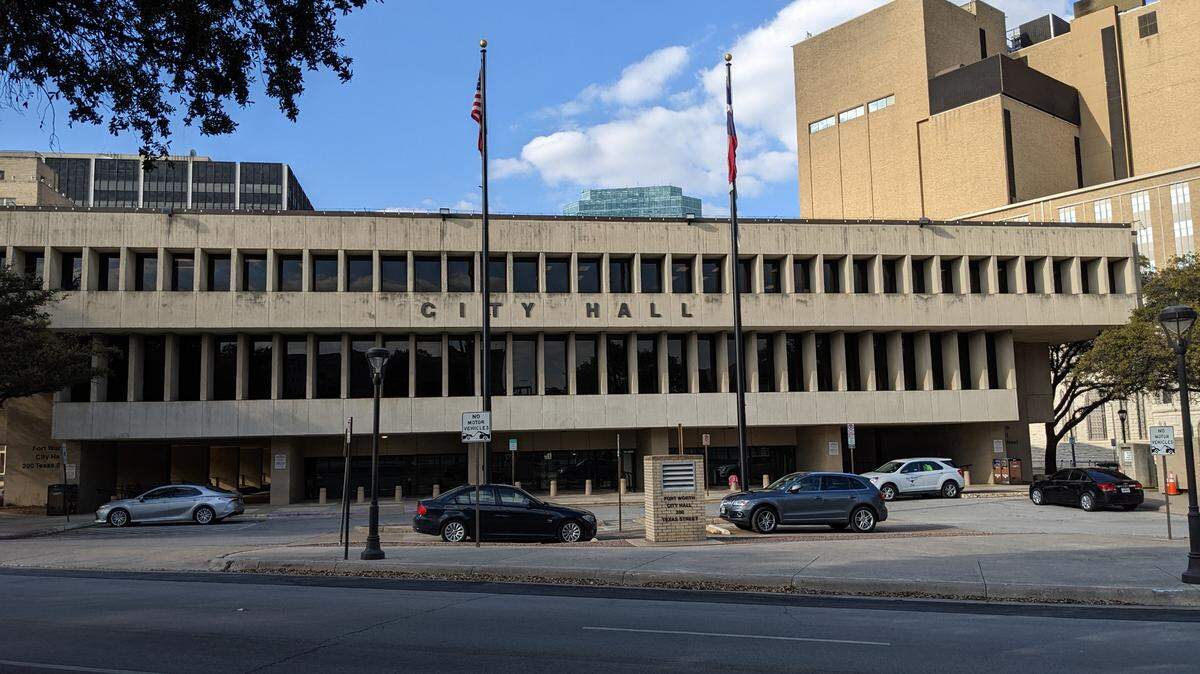
It took nearly eight hours, but the Fort Worth City Council gave its initial approval Wednesday to a redistricting map.
The map includes a so-called “horseshoe” feature connecting east Fort Worth to the south side to ensure Hispanics have adequate representation on the City Council.
There was concern from some that it wouldn’t hold up to legal scrutiny, but the council decided it was more important to have a map that adequately reflects the city’s diversifying population.
The council reconsidered the horseshoe after breaking for lunch. Mayor Mattie Parker said the council lost its consensus on the non-horseshoe map after city council member Gyna Bivens switched sides.
Bivens said a conversation with former Mayor Pro Tem and redistricting task force member Bert Williams opened her up to the concept of a horseshoe map. Her main concern though was getting consensus on one map rather than dragging out the process any further.
There are ways the city could argue the horseshoe map is not gerrymandering, said Phillip Arnold, a lawyer from the outside law firm advising the council.
As long as race is not the primary factor for a map’s design, you can have odd-shaped districts, Arnold said.
The city could argue these communities have similar economic interests or have cultural ties. What’s important is that it’s not only about race.
The council heard two and a half hours of public comment Tuesday with the majority arguing for a strong Hispanic district in the south side.
City council member Elizabeth Beck argued the best way to do that is having a horseshoe that connects east Fort Worth to neighborhoods like Rosemont, Worth Heights and Hemphill.
She noted this may negatively impact her chances of getting re-elected, but said having two strong Hispanic districts is what’s best for Fort Worth.
Several residents expressed frustration with the redistricting process itself. Daniel Garcia Rodriguez, an organizer with the group United Fort Worth, argued Fort Worth’s process is flawed because it allows politicians to draw their own maps.
“Fort Worth needs an equitable independent redistricting process where community voices are at the forefront, not politicians’ elections,” Garcia Rodriguez said.
Garcia Rodriguez and fellow organizer Pamela Young pointed to Austin’s redistricting process as a possible model for Fort Worth.
An official from Austin briefed Fort Worth’s redistricting task force in October 2020 on how that city’s process worked.
An independent auditor selected 60 candidates from a pool of qualified applicants. Eight commissioners were selected by lottery from that pool 60 candidates. Those commissioners then selected six other members from the pool of 60 candidates to represent the city’s diversity.
“It’s not perfect, none of this is perfect, but it’s better than having these people who are elected with clear conflicts of interest pick who’s going to be their voters,” Young said.
District 2 council member Carlos Flores didn’t commit to independent redistricting, but said the council will evaluate its redistricting process and apply the any lessons learned.
The council’s new map will have two new districts after they were added in a 2016 charter election. A vote to formally adopt that map will take place at the March 29 council meeting.
This story was originally published March 23, 2022 at 3:56 PM.
.jpg)