
Pushing for federal action, Texas abortion advocates turn efforts to Washington
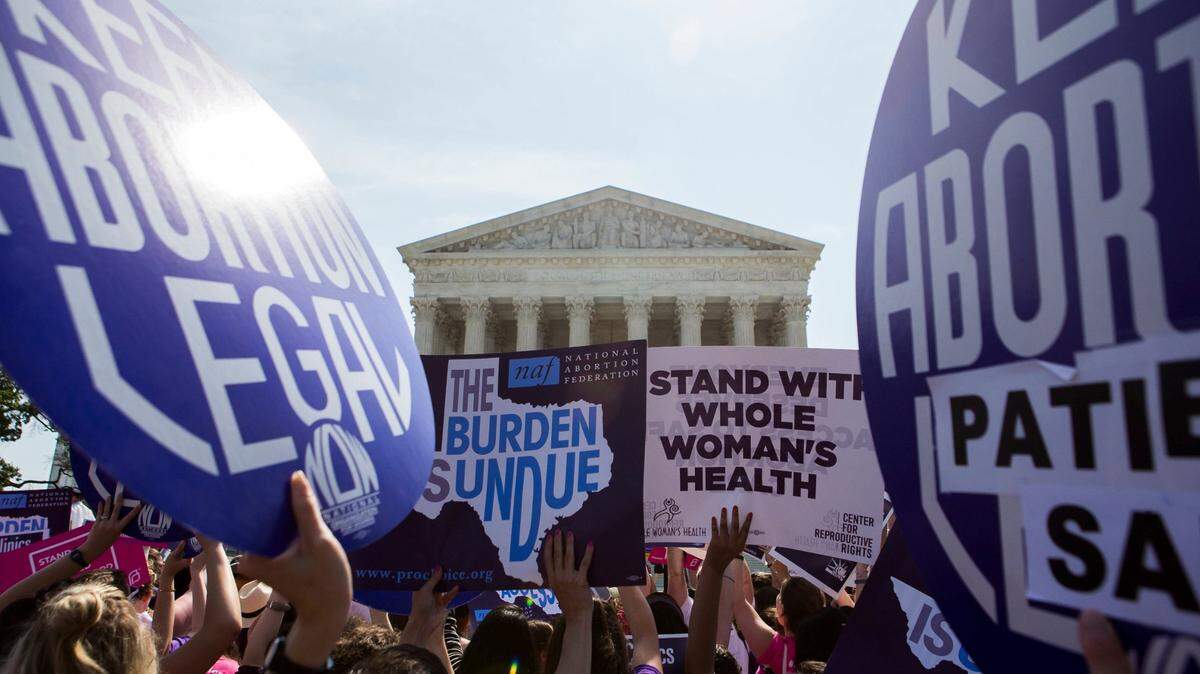
Abortion advocates from Texas have been all over Washington, pressuring lawmakers to pass federal abortion protections as worries mount over the nationwide implications of the state’s abortion law.
Advocates have held a rally outside the Supreme Court, met with members of Congress and White House staff and participated in the Rally for Abortion Justice Oct. 2. About 5,000 to 10,000 people from across the country participated in the rally.
Many of the Texas abortion advocates in Washington were a part of Trust Respect Access, a coalition of Texas groups seeking greater abortion protections. Abortion providers and representatives from abortion funds also traveled to Washington.
Advocates met with staff for Democratic representatives from Texas and two senators: Bob Casey, D-Pennsylvania, and Tim Kaine, D-Virginia. They also met with several Democrat members of Congress, including Texas Reps. Joaquin Castro, Lizzie Fletcher, Veronica Escobar and Sylvia Garcia.
The passage of Texas’ abortion law, which effectively bans all abortions after six weeks of pregnancy, has ignited concerns about similar legislation passing in other states.
A federal judge temporarily blocked Texas’ law last week, but the 5th Circuit Court of Appeals restored enforcement of the law two days later.
The case could also make its way back to the Supreme Court, which declined to stop the law from taking effect Sept. 1.
“Our Texas legislators are failing Texans, and we had to find another avenue in which to advocate for our rights,” said Aimee Arrambide, the executive director of Avow Texas, an abortion advocacy organization. “We had to go to D.C. to talk to the federal people in the federal government.”
While in Washington, the advocates pushed for the passage of the Women’s Health Protection Act, a bill the House passed in September that would counter state efforts to restrict abortions. The bill received no Republican support and one Democrat, Henry Cuellar, D-Texas, voted no.
The abortion rights groups also pushed for the EACH Act, which ensures abortion coverage for those using federal health care programs, and the HEAL Act, a bill intended to remove health coverage barriers for immigrants. Both bills are being considered by Senate committees.
Abortion opponents are against any federal legislation to sustain abortion access.
Theresa Schauf, the Respect Life Coordinator for the Catholic Diocese in Fort Worth, said federal abortion protections “would be a grave mistake.”
“To seek more abortion when there’s so much abortion already taking place in our country … it’s a travesty,” Schauf said. “I’d hate to see more of that in our country and our nation and our state.”
The bills have virtually no chance of becoming law since they require 60 votes in the Senate to cut off debate. Democrats control 50 seats.
“It’s a shame that it would face so many challenges,” said Diana Gómez, the advocacy director for Progress Texas, an organization that promotes progressive policies.
National abortion law concern
Advocates are concerned about the future of abortion rights nationwide. A Florida legislator has introduced a bill similar to Texas’ abortion law, and the Supreme Court will soon hear arguments on a Mississippi bill that bans most abortions after 15 weeks of a pregnancy. The case could overturn decades of protections established in the 1973 Roe v. Wade ruling.
Abortion rights groups are concerned because the court now has only three justices appointed by a Democratic president favoring abortion rights. Six were appointed by GOP presidents who oppose abortion.
“Texas right now, while it’s the epicenter, we’re going to start seeing these types of things pop up in other states,” said Cerita Burrell, the director of programs for The Afiya Center, a Black-led organization in Dallas that provides support for people seeking abortions.
Courtney Chambers, the Texas advocacy director for Whole Woman’s Health Alliance, advocates on behalf of clinics that provide abortion services. National groups that oppose abortion “test out their tactics in Texas” to see if similar legislation can be proposed in other states, Chambers said.
“We know that what starts in Texas does not stay in Texas,” Chambers said.
Chambers was among a number of abortion advocates to meet with White House aides, including from the Gender Policy Council, which has a goal of advancing gender equality and equity.
In the meeting, the advocates demonstrated how the law is affecting Texans on the ground, Arrambide from Avow Texas said. The law has prompted fears among both patients and providers.
“I think the [Biden] administration is well aware that this is something that they need to address,” Arrambide said.
But some people in Texas have been pleased with the effects of the law so far.
Joe Pojman, the executive director of the Texas Alliance for Life, is a staunch supporter.
“We consider each day to be a victory because at least some unborn children’s lives are being protected,” Pojman said.
The abortion advocates left Washington with various thoughts about the future of abortion rights in the U.S.
Arrambide was concerned that it may be too late to change the trajectory of abortion rights in the U.S. Still, seeing abortion advocates from Texas come together gave her hope, she said.
Burrell from The Afiya Center said “it’s hard to be overly optimistic.”
This story was originally published October 13, 2021 at 5:30 AM.