
Is the Senate trying to ‘demonize’ Texas over its abortion law? Ted Cruz thinks so
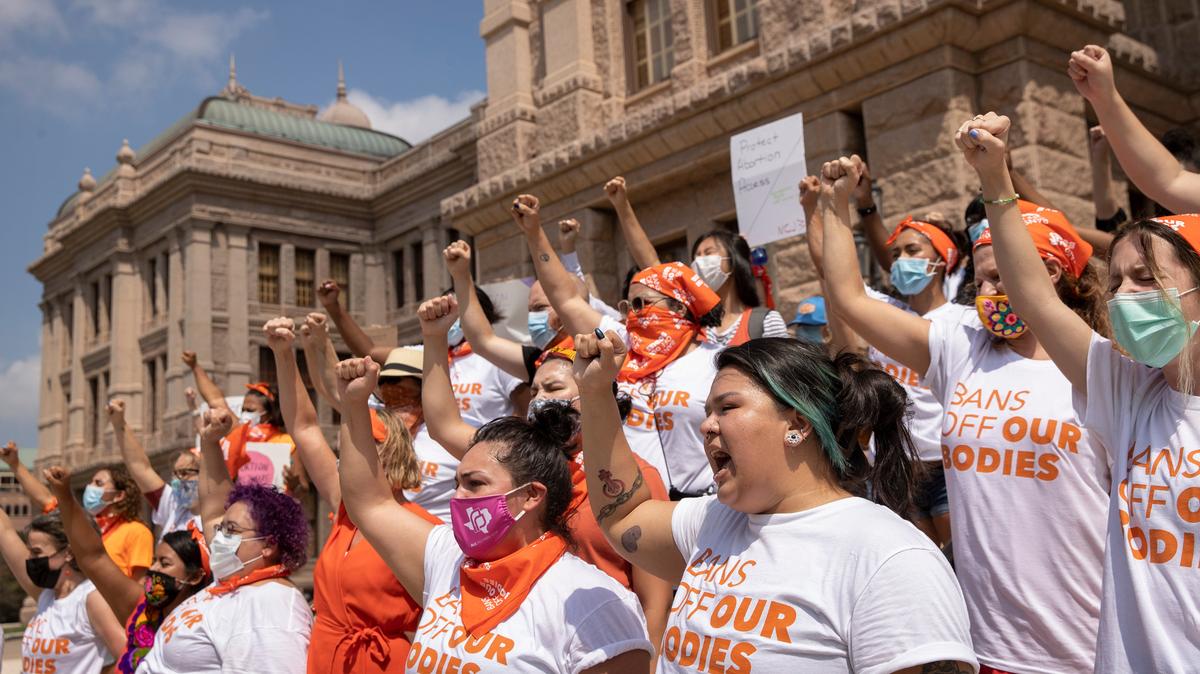
U.S. senators sparred Wednesday over Texas’ abortion law, feuding about the government’s role over abortion and the Supreme Court’s quick decision to uphold the law.
Republican senators continued to decry abortion at the hearing, with Sen. Ted Cruz, R-Texas, saying the Democrat-run Senate Judiciary Committee hearing was about “trying to demonize Texas and trying to demagogue on the question of life.”
The law, which effectively bans abortions as early as six weeks into a pregnancy, went into effect Sept. 1. It has prompted widespread condemnation and fears among abortion advocates, who say people rarely know they are carrying a child six weeks into their pregnancy.
“[The bill] was the culmination of a decade of erosion of access to abortion health care with the intent of creating a de facto ban without actually calling it a ban,” Donna Howard, a Texas state representative from Austin, testified at Wednesday’s hearing in front of the Senate Judiciary Committee.
In a 5-4 vote Sept. 1, the Supreme Court declined to stop the ban from taking effect, but the decision left the door open for future challenges.
The debate over the ban comes at a crucial time for abortion rights in the U.S. The Supreme Court will hear arguments in December about a Mississippi law that bans most abortions after 15 weeks of pregnancy, a decision that could threaten to overturn decades of protections established under the 1973 Roe v. Wade decision.
The court’s decision earlier this month has raised concerns among Democrats about how the court deals with emergency cases. When Texas abortion providers sought emergency relief from the Supreme Court to block the state’s law, there were no oral arguments and the opinion was unsigned.
Sen. Dick Durbin, an Illnois Democrat and the chairman of the Judiciary Commitee, lambasted the court for stripping away abortion rights “in the dark of night.”
This situation — where decisions are made quickly and opinions are short and unsigned — is commonly referred to as the “shadow docket.” These cases often involve the court deciding whether to block a law while lower courts debate its constitutionality.
At Wednesday’s hearing, Republicans accused Democrats of suddenly caring about the shadow docket, a process that is not new but became more popular under the Trump administration.
“This whole notion of the shadow docket is called an operating court that is deciding an emergency motion,” Cruz said.
Sen. John Cornyn, R-Texas, added that “it’s inappropriate for the federal government or the Senate Judiciary Committee to try to single out individual states.”
“It’s clear that this is a part of a concerted effort to intimidate and bully members of the Supreme Court,” Cornyn said.
Stephen Vladeck, a professor at the University of Texas School of Law, criticized the Supreme Court’s increasing use of the shadow docket.
“They’re doing so through unsigned, mostly unexplained and often inconsistent rulings,” Vladeck told the committee. “More and more of these rulings are directly and permanently shaping state and federal policies.”
A federal judge in Texas is scheduled to hold a hearing Friday concerning the Justice Department’s request to halt enforcement of the law. Abortion rights groups also brought another challenge to the U.S. Supreme Court last week in an effort to stop the law’s enforcement.
The House of Representatives passed the Women’s Health Protection Act last week to protect a person’s ability to decide whether to have an abortion. The bill counters efforts at the state level to restrict abortions.
The bill is unlikely to pass through the Senate, where it requires 60 votes to cut off debate.