U.S. Supreme Court takes up Texas’ abortion law Monday. Here’s what’s in store.
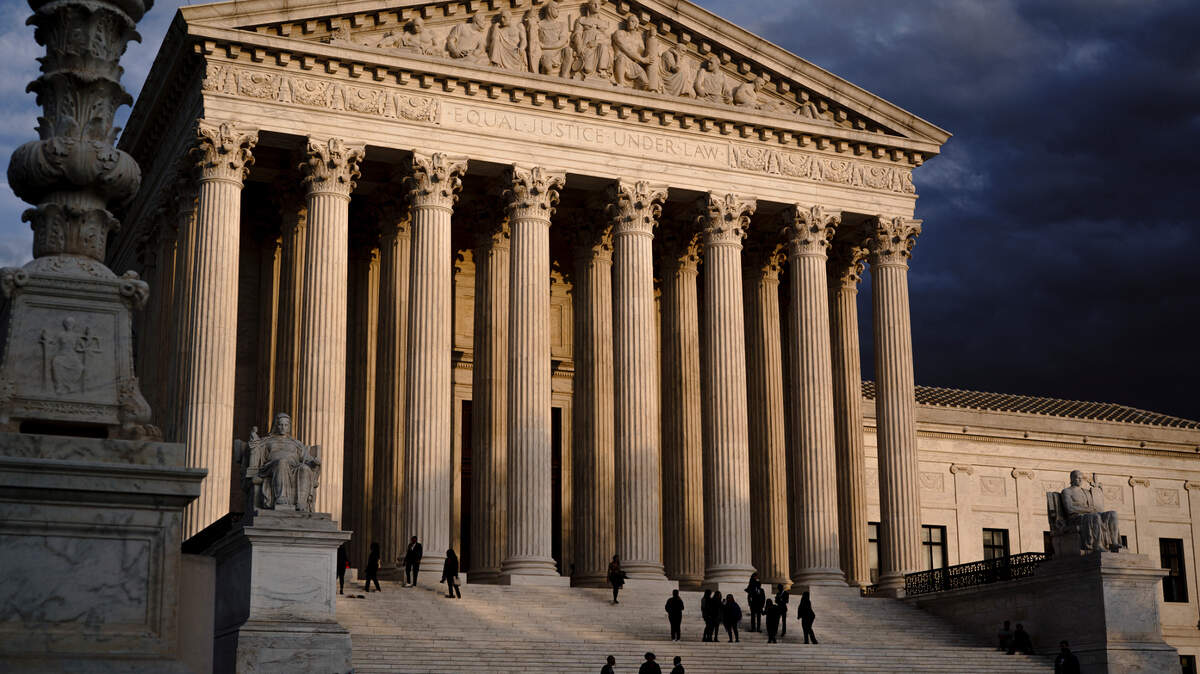
The U.S. Supreme Court will hear arguments Monday on Texas’ restrictive abortion law, but the question at hand isn’t whether the law effectively banning abortions is constitutional. Instead the court will consider the measure’s enforcement mechanism that allows almost anyone to sue a person who performs an abortion.
The court is reviewing cases brought by the Biden administration and abortion providers on an expedited timeline, two months after the restrictive law went into effect. Senate Bill 8 prohibits abortions after cardiac activity is detected in a fetus — a so-called “fetal heartbeat.” This typically occurs around six weeks, before many women know that they’re pregnant. The bill does not include exceptions for cases of rape and incest.
The Biden administration on Oct. 18 asked the nation’s highest court to intervene and stop the law while battles on its constitutionality wind through the courts. In addition to the enforcement question, justices will hear arguments on whether the federal government can sue to block the state law.
“You could imagine that same kind of enforcement mechanism coming up in any number of other contexts, whether it’s gun rights ... whether it’s corporate campaign speech, or whatever it happens to be,” said Southern Methodist University law professor Dale Carpenter. “So all of the questions that the court is confronting on Monday are questions that are at least conceptually distinct from the abortion issue itself.”
Texas Gov. Greg Abbott, who signed the measure into law, expected it would be headed to the U.S. Supreme Court. In an interview with the Star-Telegram, he said he’s glad the Supreme Court is accelerating a process as it will lead to an answer sooner. Kamyon Conner, executive director of the Texas Equal Access Fund, was also pleased with the timeline. The group helps connect Texans seeking abortion procedures with funding and is a petitioner on one of the cases.
“We need a decision made in a swift manner because people in Texas have been going without abortion care for almost exactly two months now,” Conner said in a Thursday interview. “It’s been a devastating blow to folks in our state.”
Supreme Court has previously declined to intervene
The Supreme Court previously declined to weigh in on the Texas law, after allowing it to go into effect on Sept. 1. Abortion rights advocates had pushed the court to block the law from taking effect. The court also allowed the law to remain in place ahead of Monday’s arguments.
For Texas Right to Life, an anti-abortion advocacy group, the court’s past sidesteps on halting the law are a positive signal.
“That’s really encouraging to the pro-life movement,” said John Seago, the organization’s legislative director.
He later added that he would be surprised if the court “backtracked” and paused the law following Monday’s arguments.
A pause — or in legal jargon, a temporary injunction — is the ideal outcome for Conner, but her expected outcome is less clear.
“I really have no idea,” she said. “I’m just lighting candles and sending out good energy. I am doing everything I can to harness some positive energy for us.”
There’s broadly an expectation that the court has already made up its mind, as foreshadowed by the justices’ previous decision to let the law go into effect or their positions on abortion, Carpenter said.
“I would say that neither of those are necessarily true,” he said. “That in fact, there may be some ... justices that are not comfortable with abortion rights who say, nevertheless we’re also not comfortable with the Texas procedure,the private enforcement mechanism.”
Abortion providers and advocates said the state’s enforcement mechanism could be adopted for other policies and in other states.
“Sanctioning Texas’s cynical strategy here would invite S.B. 8-like limitations throughout the country,” they argued in a court document.
The arguments from both sides
Texas officials, the Biden administration and abortion providers filed court documents outlining their positions headed into Monday’s arguments.
In addition to asserting that there are jurisdictional issues with the Supreme Court taking up the cases, Texas argues that the state doesn’t harm the U.S. “by the mere existence of an allegedly (unconstitutional) state law that may affect private parties.” The abortion providers and advocates suing several state officials “allege they are injured by the prospect of private lawsuits in Texas courts, but that injury is not traceable to or redressable by the executive officials they sued,” the state argues.
Texas’ law states that most people, except government employees, may have civil action brought against them for performing an abortion or aiding in the performance of an abortion. Plaintiffs would get at least $10,000 in damages if they win.
Though it’s not the question up for debate Monday, Texas Attorney General Ken Paxton maintained the law is constitutional in the court filing.
“A time will come — and no doubt soon — for the state courts to rule on the constitutionality of SB 8, and this Court will, in turn, retain the last word on the correctness of their adjudication of federal law,” the document reads. “But the United States does not get a free pass around long-settled federal-courts doctrines because it would prefer to litigate in a federal forum just a bit faster.”
The U.S. government argued it has the authority to sue Texas because it has an interest in protecting the constitution and preventing a state from nullifying court precedent.
“S.B. 8 was designed to nullify this Court’s precedents and to shield that nullification from judicial review. So far, it has worked: The threat of a flood of S.B. 8 suits has effectively eliminated abortion in Texas at a point before many women even realize they are pregnant, denying a constitutional right the Court has recognized for half a century,” the federal government argued in a court filing. “Yet Texas insists that the Court must tolerate the State’s brazen attack on the supremacy of federal law because S.B. 8’s unprecedented structure leaves the federal Judiciary powerless to intervene. If Texas is right, no decision of this Court is safe. “
Supreme Court will also hear Mississippi abortion case
One month after the Texas arguments, the Supreme Court is scheduled to hear an abortion case out of Mississippi related to a law prohibiting most abortions after 15 weeks of pregnancy.
The state argues that previous orders protecting a women’s right to access abortions should be overturned. Lawmakers from Texas, including some from Tarrant County, have filed briefs with the court supporting and opposing Mississippi’s position. Unlike the Texas cases, Mississippi’s tests the law’s constitutionality.
If the Supreme Court reaffirms its past holdings on abortion rights, Texas’ Senate Bill 8 would likely be found unconstitutional, Carpenter said. On the flip side, if the court strikes down Roe v. Wade or Planned Parenthood v. Casey the Texas law would likely be found constitutional. The court could also rule somewhere in the middle.
While Carpenter predicts a ruling on the Texas arguments could come in a matter of days or weeks, he expects a decision on the arguments on the Mississippi case in mid-2022. It’s notable the court didn’t combine the Mississippi and Texas cases, Carpenter said.
“The court may be trying to ... trying to emphasize to us that it wants to disentangle these two halves of the Texas law,” he said. “On one hand you’ve got the direct challenge of the Texas law to abortion rights, which says you can’t have an abortion after approximately six weeks. But the conceptually distinct part is this enforcement mechanism.”
This story was originally published November 1, 2021 at 5:30 AM.