Some criticize Governor Greg Abbott for what isn’t on Texas special legislative agenda
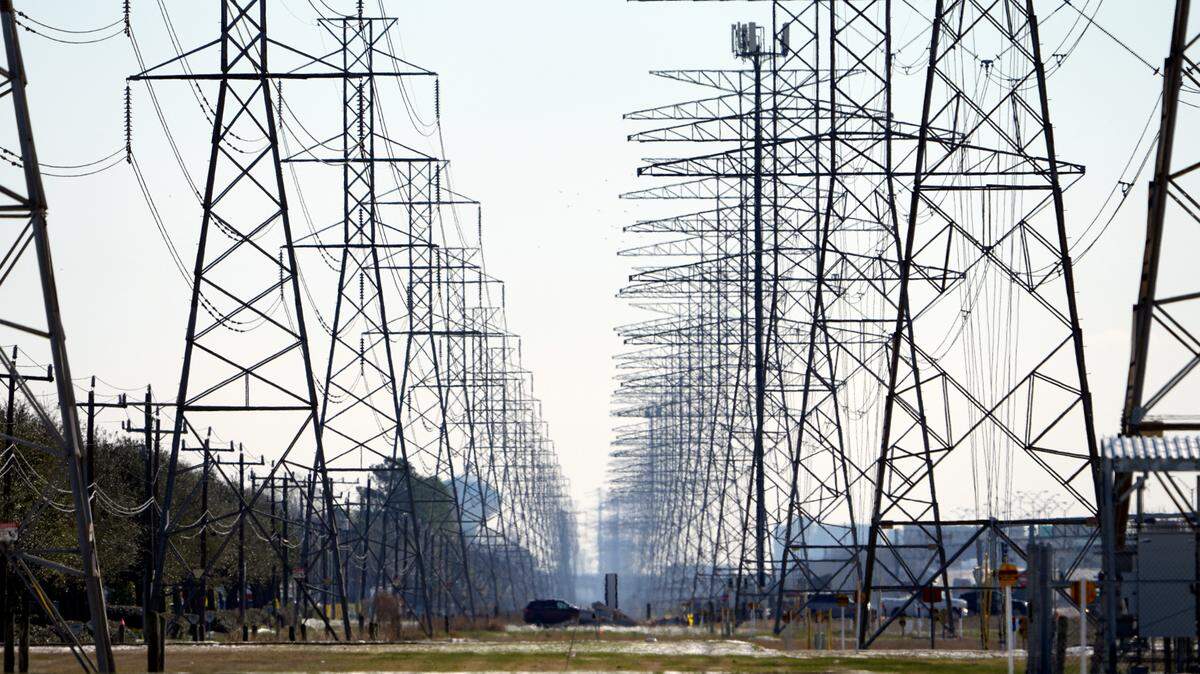
Some Democrats and consumer advocates say Republican Gov. Greg Abbott should have included legislation related to the Texas power grid on his special session agenda, which was announced Wednesday.
Following the February winter storm that left people across the state without power for days, Texas lawmakers during the regular legislative session passed several bills responding to the collapse. Among the bills were Senate Bill 2, which called for reform within the Electric Reliability Council of Texas (ERCOT), and Senate Bill 3, that requires winterization for natural gas facilities deemed critical, as well as electricity generators and transmitters.
House Democratic Caucus Chair Chris Turner of Grand Prairie is among those critical of Abbott.
“We have real crises in this state — hundreds of Texans died because the governor couldn’t keep the heat on last February, millions of Texans are still unable to access basic medical care and our COVID-19 vaccination rates have plateaued,” Turner said. “That’s what a real leader would focus on.”
U.S. Rep. Marc Veasey, a Fort Worth Democrat, tweeted that, “It is clear that (Gov. Abbott) is going to continue playing partisan political games instead of focusing on issues that impact families, like repairing the Texas grid.”
A spokesperson for Abbott did not immediately return a request for comment.
Lt. Gov. Dan Patrick, a Republican, suggested that legislation related to the winter storm be added to a special session agenda in an op-ed published in the Dallas Morning-News on June 29. In the piece, Patrick said “the Legislature made good progress this session, but there is more important work to be done.”
Lawmakers need to help customers who experienced overpricing during the storm, and the “need for more dispatchable power that we can turn on when we need it” must be addressed, he said.
“The bottom line is that Texas needs more power,” Patrick said. “It will take two to three years to build additional plants, so we must act quickly. The special session gives us a unique opportunity to address the critical issue.”
Patrick’s office did not immediately return a request for comment.
When signing Senate Bill 2 and Senate Bill 3, Abbott said the state had “passed comprehensive reforms to fix all of the flaws that led to the power failure.”
“The bottom line is that everything that needed to be done was done to fix the power grid in Texas,” Abbott said.
While Abbott didn’t add power grid-related items to the special session, on Tuesday he did direct the Public Utility Commission to take several immediate actions. Abbott, in a letter to PUC leadership, told the commission to:
- “Streamline incentives within the ERCOT market to foster the development and maintenance of adequate and reliable sources of power, like natural gas, coal, and nuclear power.”
- “Allocate reliability costs to generation resources that cannot guarantee their own availability, such as wind or solar power.”
- “Instruct ERCOT to establish a maintenance schedule for natural gas, coal, nuclear, and other non-renewable electricity generators to ensure that there is always an adequate supply of power on the grid to maintain reliable electric service for all Texans.”
“Order ERCOT to accelerate the development of transmission projects that increase connectivity between existing or new dispatchable generation plants and areas of need.”
Virginia Palacios, executive director of Commission Shift, said she was disappointed not to seen agenda items that would strengthen the state’s electric grid, reduce energy bills and reform the Texas Railroad Commission, which regulates oil and gas. Commission Shift advocates for changes at the Railroad Commission that “improve the agency’s function, transparency, and accountability.”
“Already this summer we have seen the electric grid tested, and Texans deserve a functioning energy infrastructure that keeps businesses going and protects our communities,” Palacios said in a prepared statement.
The special legislative session starts Thursday.
This story was originally published July 7, 2021 at 12:52 PM.