Texas Supreme Court pauses expansion of vote-by-mail eligibility amid coronavirus
The Texas Supreme Court sided with Attorney General Ken Paxton on Friday night and paused an expansion of vote-by-mail eligibility amid the novel coronavirus’ outbreak.
Earlier Friday afternoon, Paxton urged the court to immediately stay the 14th Court of Appeals 2-1 decision that upheld a lower court’s ruling. In April, state state district Judge Tim Sulak issued a temporary injunction allowing Texans who lack immunity to the novel coronavirus to cite the disability category under state law in order to request a mail-in ballot.
Since the onset of the pandemic, legal battles have ensued over concerns with voters flocking to potentially crowded polls in-person amid the pandemic.
Paxton had said that his appeal of Sulak’s ruling meant the order was stayed — a point civil rights groups and organizations suing the state had pushed back on. Paxton argued that the appeals court violated the state’s right to stay temporary injunctions from lower courts by filing an appeal, and requested that the Texas Supreme Court grant the emergency stay while it addressed the issue.
The Texas Supreme Court set oral arguments for the case on Wednesday, May 20.
Paxton applauded Friday night’s emergency stay, and vowed that the trial court’s ruling will be reversed.
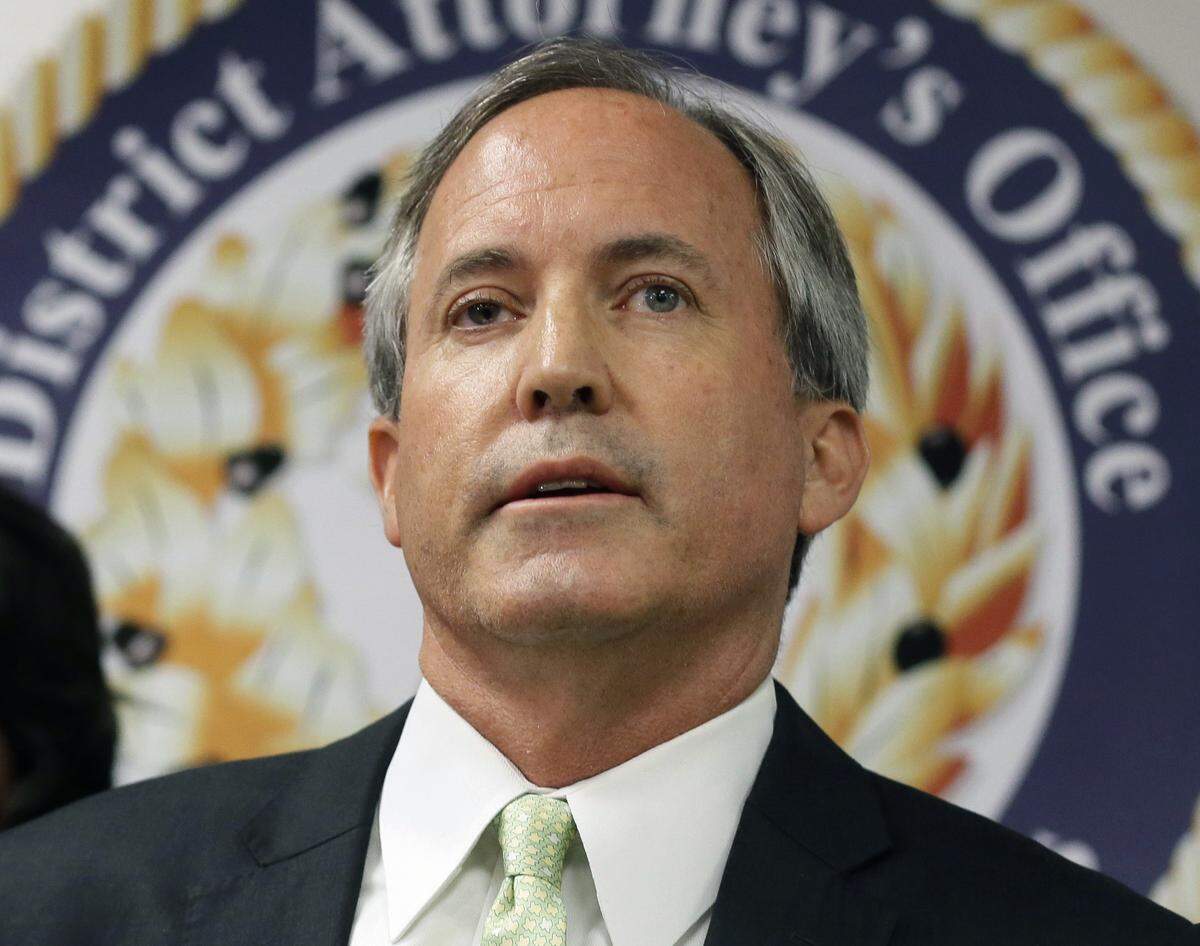
“Protecting the integrity of elections is one of my most important and sacred obligations. The Legislature has carefully limited who may and may not vote by mail,” Paxton said in a statement. “I am pleased that today the Texas Supreme Court confirmed that my office may continue to prosecute voter fraud and issue guidance on mail-in ballots while that appeal plays out.”
Meanwhile, Texas Democratic Party Chair Gilberto Hinojosa said Friday’s ruling will put Texans’ lives at risk.
“This is a dark day for our democracy. The Republican Texas Supreme Court is wrong to force the people of Texas to choose between their health and their right to vote,” Hinojosa said in a statement. “We will continue to fight like hell to protect every eligible Texan’s right to vote and have their voices heard by their government.”
The Texas Supreme Court’s ruling is the latest development in a slew of legal challenges in both state and federal courts that have sought to expand access and loosen restrictions to Texas’ mail-in ballot laws amid the pandemic. And it came hours after a federal district judge had heard arguments Friday in the Texas Democratic Party’s federal lawsuit on the issue.
The Texas Democratic Party and voters suing the state argue that the current election conditions violate tenants of the First, 14th and 26th amendments and provisions of the Voting Rights Act, in part, by discriminating between classes of voters, such as voters under the age of 65.
In order to qualify to vote by mail, Texans must submit an application and be either 65 years or older, disabled, out of the county on Election Day and during in-person early voting, or be eligible to vote but confined in jail.
Attorneys for the state argued that state leaders are taking the necessary precautions to ensure voters will be safe casting their ballot at the polls. And that before the federal courts weigh in, issues raised by the Texas Democratic Party’s state district court lawsuit should first be settled by The Texas Supreme Court.
Paxton also has asked for a halt to processing mail-in ballots
In addition to Friday’s request, Paxton had requested Wednesday that the Texas Supreme Court weigh in on his interpretation of the law to prevent elections officials in the counties of Dallas, Cameron, El Paso, Harris and Travis from processing mail-in ballots.
Michael Abrams, who argued on behalf of the state, said that the Texas Supreme Court’s ruling will have a significant impact on the federal case — whichever way it rules — and that state courts should be the first to interpret state law. The state requested that U.S. District Judge Fred Biery deny the plaintiffs’ motion for a preliminary injunction, or at the very least stay the motion until the Texas Supreme Court has issued a ruling.
“By that time, the horse will be out of the barn, time-wise,” Biery said.
Chad Dunn, the Texas Democratic Party’s attorney who argued on behalf of the plaintiffs challenging the state, pushed back and said that would be an unacceptable outcome that would leave them in a “twilight zone” where it’s unclear who is permitted to vote by mail and whether counties may process applications.
“There are real-life plaintiffs before this court that are suffering harm now. They want to mail in a ballot application request now and they don’t know if they can,” Dunn said.
Dunn pointed to comments Paxton has made, warning local officials that they could be subject to criminal sanctions if they advise voters who normally aren’t eligible to apply for mail-in ballots.
Paxton has repeatedly argued that while a person ill with COVID-19 would qualify for a mail-in ballot, a fear of contracting the virus would not meet the state’s eligibility requirements.
Abrams noted that Gov. Greg Abbott has recently issued a proclamation that extends the early voting period for the July 14 runoff elections by a week, which he said will provide voters with more opportunities to vote and prevent overcrowding at polling places. The Secretary of State’s Office is also expected to provide local election officials with guidance early next week on how to protect the health and safety of voters and poll workers.
And with increased testing and contract tracing capabilities, Abrams said the state should be able to limit community spread of the virus.
But Dunn argued the state’s plans would result in a “survival of the fittest election,” disenfranchising voters under 65 years old who may have underlying conditions or live with others who do.
“And it ultimately is the job of federal district courts to ensure that states’ executive officials can’t play fast and loose with constitutional rights like is existing here,” Dunn said.
Attorneys for the state also argued that suddenly expanding access to mail-in ballots amid the pandemic could lead to increased instances of voter fraud. But Biery questioned why allow voters 65 years or older to vote-by-mail at all then.
Attorneys for local election officials urged for a swift ruling to help provide clarity. Biery said a ruling would be forthcoming, but he had no guarantee as to when.
“There’s no perfect solution until this thing goes away, which is not going away,” Biery said of the virus.
Meanwhile, election day nears, with early voting beginning June 29 for the July 14 runoff elections.
This story was originally published May 15, 2020 at 2:52 PM.