Fully conscious giraffe flails as two-man vet team helps treat injury in Kenya
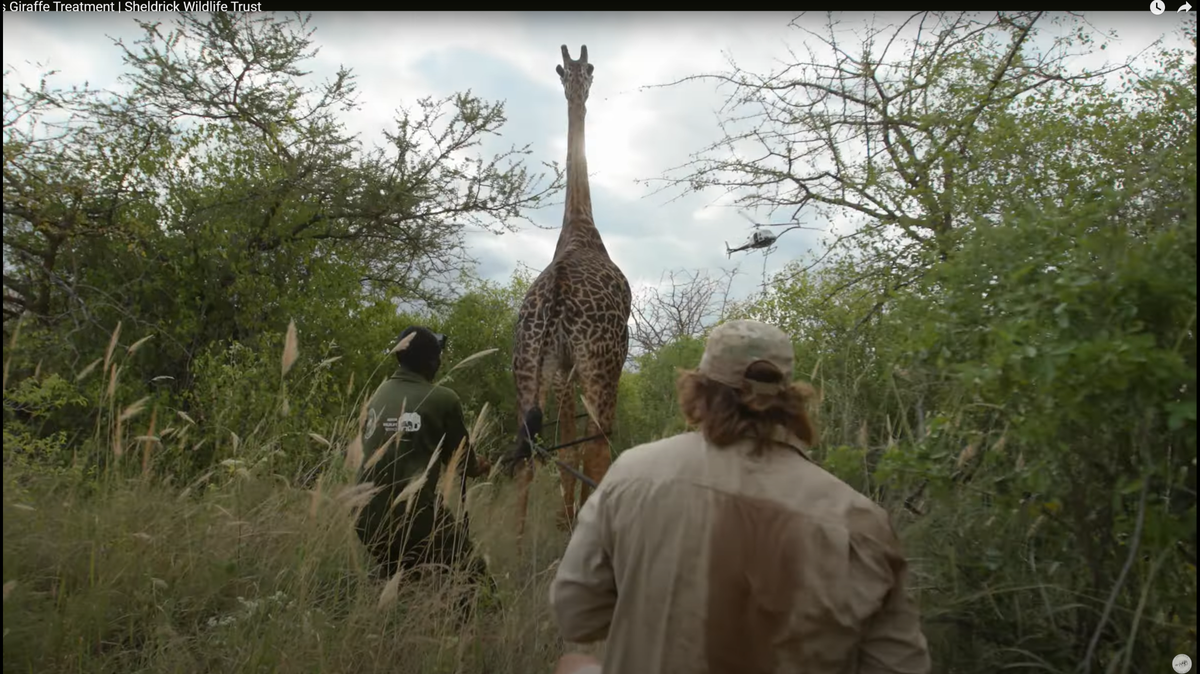
A two-man veterinary team, running through dense and difficult terrain, performed a “high-stakes” procedure to save a wild bull giraffe in southern Kenya.
Tourists in Tsavo West National Park first noticed the giraffe’s “badly infected” wound and reported it to wildlife experts, according to a June 2 news release from the Sheldrick Wildlife Trust.
The group said treating giraffes is especially difficult because they cannot be fully anesthetized due to their unique physiology.
Instead, these “extraordinarily powerful” creatures must be sedated just long enough to be roped, then immediately brought back to full consciousness for treatment, experts said.
Ideally there would be four people on the ground to rope and hold down a bull giraffe while other team members treated the injury, according to experts.
On the day of the report about the injured Tsavo West National Park male, only two staff were available, the Sheldrick Wildlife Trust said.
With the majority of the mobile vet team occupied on another call and knowing the giraffe needed immediate help, they had to make due with “a skeleton crew,” rescuers said.
The giraffe was sedated from the air. About eight minutes later, it “began high-stepping” with no sense of direction — a sign the sedation was starting to kick in, experts said.
The two men worked in sync to wrap the rope around the animal’s legs, holding it “on a charged journey through the bush,” experts said.
As it slowed down they pulled it to the ground and leapt on its neck to prevent it from standing.
The powerful male began “racing in place,” as the sedation was reversed for treatment, flailing its limbs “with enough force to topple entire trees,” rescuers said.
His leg was “badly infected and filled with maggots, which would have continued to eat away at the wound without intervention,” the team said in the release.
It was cleaned and treated, and the giraffe is expected to make a full recovery, rescuers said.
According to the Sheldrick Wildlife Trust, giraffe populations have declined by about 30 percent since the 1980s, largely due to poaching, habitat loss and climate change.
This story was originally published June 3, 2025 at 10:28 AM with the headline "Fully conscious giraffe flails as two-man vet team helps treat injury in Kenya."