Creature with spike-covered genitalia found ‘ambushing’ in Thailand. See new species

In the karst, rocky limestone landscape of Thailand, a group of green creatures hides in the shadows.
The predators are wrapped around branches, peeking out from rock outcrops or “close to the forest floor, presumably waiting for terrestrial prey to pass.”
Now, these “ambushing” animals have been identified as a new species of snake: the red-barred green pit viper.
Researchers were surveying the karst environment when they noticed the animals and captured them with hooks, according to a study published Jan. 28 in the peer-reviewed journal Taprobanica.
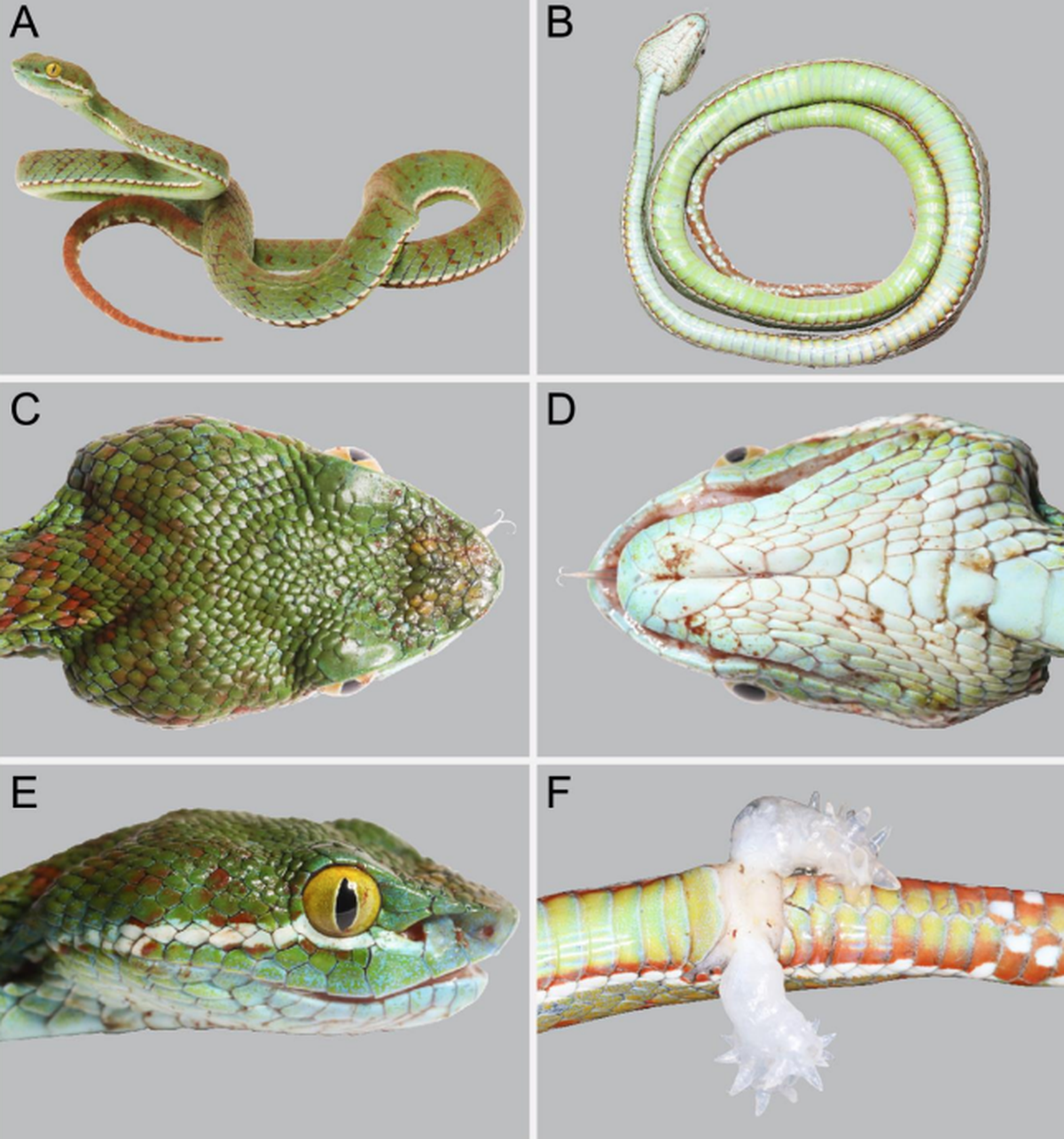
Their bodies are “long” and “thin,” reaching more than a foot long, researchers said, and their triangular head has an “elongated” and “flattened” snout.
The snakes have “large” eyes with “bright golden yellow” irises, according to the study.
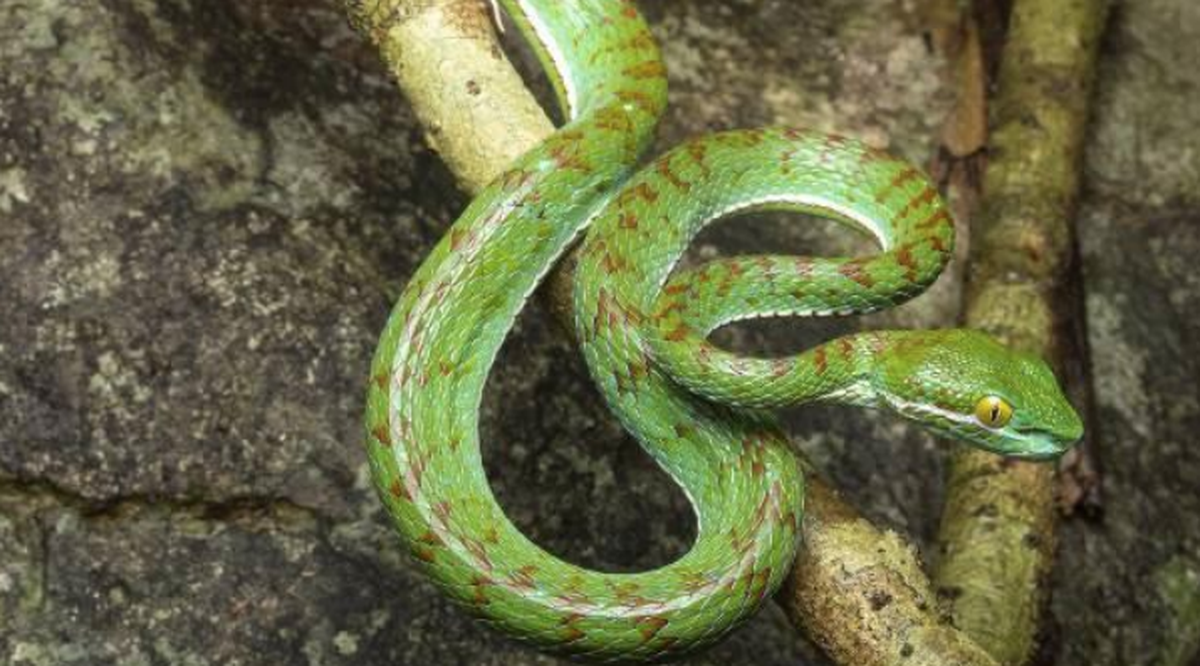
The bright colors of the eye extend to the rest of their bodies, described as “bright grass green” with “irregular” and “serrated” reddish-brown markings that lead to a “light brick-red” tail, researchers said.
The bottom of their bodies are a pale blue fading to bluish-green toward the tail, and the snake’s chin and throat are a light turquoise, according to the study.
The snake was named Trimeresurus erythrochloris, derived from the Greek “erythros” meaning “red” and “chloros” meaning “green,” researchers said.
“The species name is given in reference to the beautiful dorsal coloration of the new species, which consists of red bands on the green background,” researchers said, also earning the species its English name, the red-barred green pit viper.
The snakes are similar to other forest-dwelling pit vipers, including in the shape of the male genitalia.
Male snakes have what is called a hemipenis, the male reproductive organ that is stored in the tail most of the time but is then inverted outside the body to mate.
The hemipenis of the red-barred green pit viper has “well-developed dense pointed almost spine-like papillae at its base,” looking more like a mace or morning star weapon than genitalia.
The new species “was recorded at relatively low elevations; the surrounding habitat consists of lowland mixed with semi-deciduous monsoon tropical forests,” researchers said. “The new species is semi-arboreal and nocturnal; both specimens were found between (8 p.m.) and (1 a.m.) after rain on a low bush close to the ground.”
Some of the snakes that weren’t collected were found wrapped around a branch, near the entrance of a rocky cave, on dead fallen branches or just near the forest floor, according to the study.
So far, the new species has only been found in an “isolated chain of limestone hills” in southeastern Thailand, but the range runs to Cambodia, and it’s possible the snakes could be found elsewhere, researchers said.
“Though (the red-barred green pit viper) appears to be locally common with up to 10 individuals observed during one night survey, it seems that the new species is quite elusive and is only active after heavy rains,” researchers said. “Seemingly the quite narrow distribution of the new species makes it vulnerable to habitat degradation.”
The snake’s bright colors may also make it a subject for the illegal pet trade, according to the study, and researchers recommend the species be the subject of further study.
The new species was found in eastern Thailand along the western border of Cambodia.
The research team includes Parinya Pawangkhanant, Sabira S. Idiiatullina, Ton Smits, Ian Dugdale, Andrew Pierce, Chatmongkon Suwannapoom and Nikolay A. Poyarkov.
This story was originally published January 28, 2025 at 4:32 PM with the headline "Creature with spike-covered genitalia found ‘ambushing’ in Thailand. See new species."