Rare Christian tattoo found on partially mummified body in Sudan. See the iconography
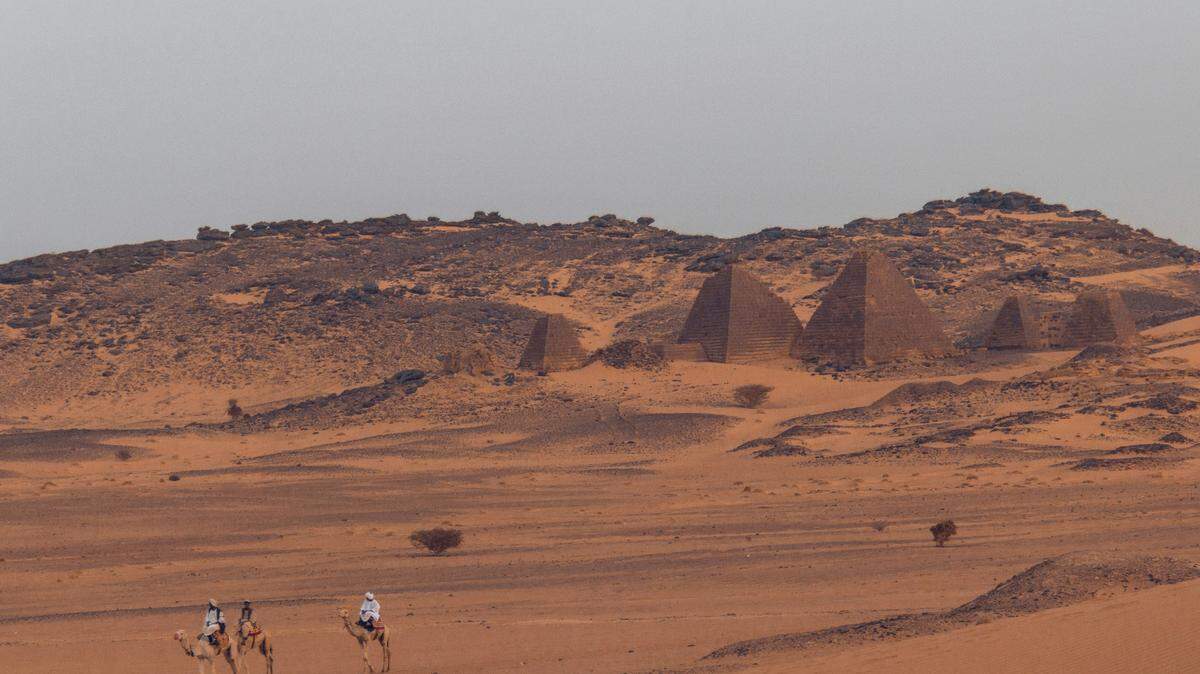
More than a millennium after a man died in medieval Nubia and was buried at a monastery, researchers are learning about his devout faith for the first time.
During excavations at Makurian Ghazali, an ancient site in modern-day Sudan, archaeologists uncovered the remains of a walled monastery, two churches, a settlement, iron-smelting operations and multiple cemeteries, according to a study published Nov. 14 in the peer-reviewed journal Antiquity.
The desert oasis was occupied from about 680 to 1275 A.D., according to the study, and was first excavated in the 1950s before subsequent projects between 2012 and 2017.
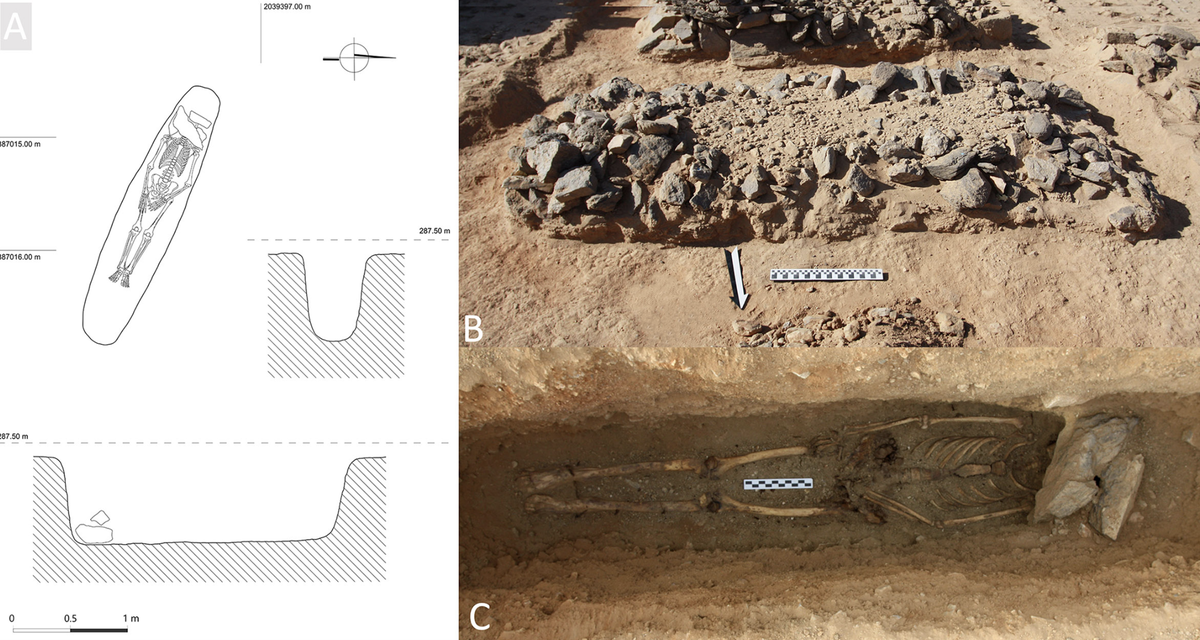
Part of these excavations uncovered partially mummified human remains, including the body of a man between the ages of 35 and 50, according to the study. He likely died between the years 667 and 774 A.D, around 1,300 years ago.
The body was found in a stone box-grave and wrapped in a shroud, researchers said, lying on its back with one hand crossed in front of the pelvis.
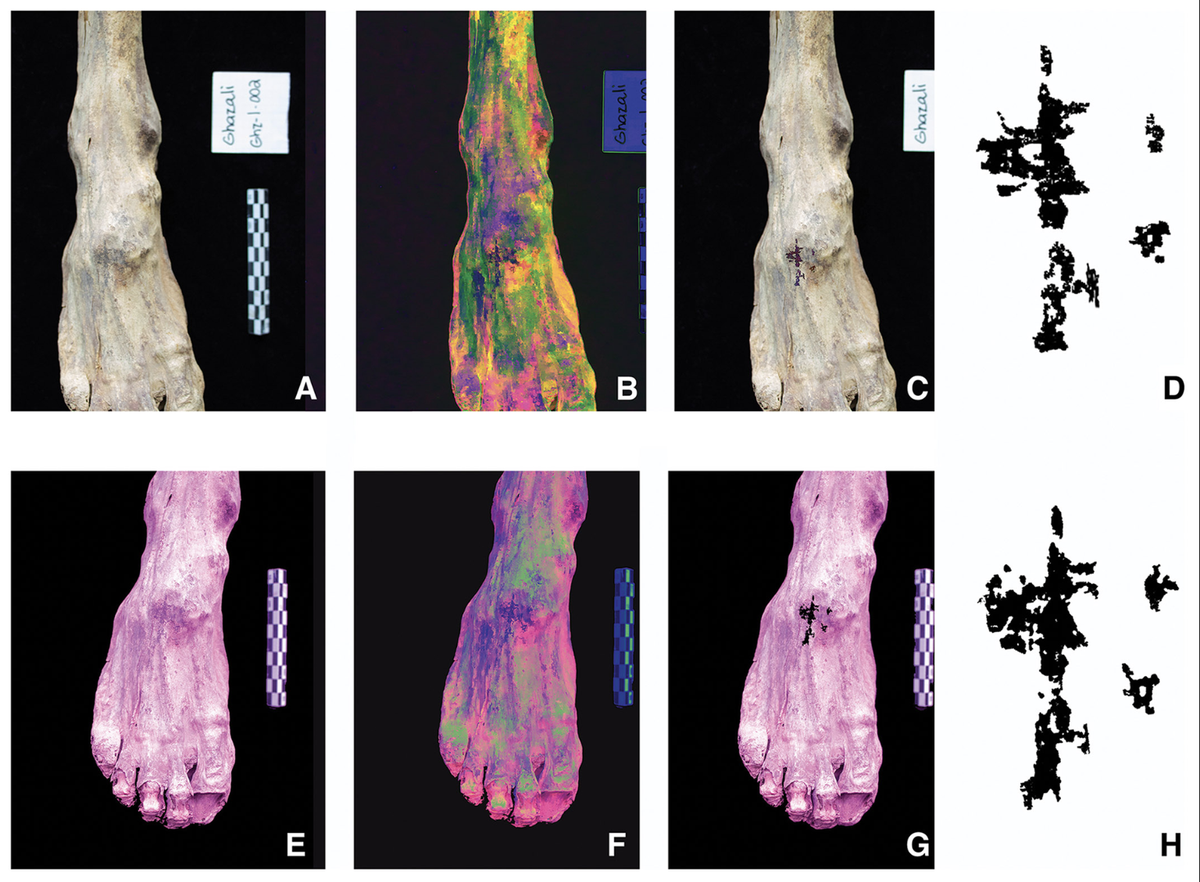
The parietal mummification, which occurred naturally due to the desert environment, preserved the skin of the right foot, and a darker and unnatural coloration was found there.
Photographs taken of the foot and then placed under digital analysis found that the unnatural coloration was not only intentional, but artistic: It was a set of tattoos.
“The identified tattoos cover a total area of (0.6 by 1 inches) and, in alignment with the symbols at Ghazali and elsewhere, comprise three signs: the Greek letters chi (X) and rho (P) superimposed (a ‘Christogram’), accompanied by alpha (A) and omega (Ω or ω) with a bearer-perspective orientation,” researchers said.
In classic Christian symbolism, the alpha and omega are found on either side of the Christogram, according to the study, so this choice to arrange the tattoo so that all parts are seen correctly by the wearer may be a stylistic or regional variation.
Tattooing in the Nile Valley goes back millennia, researchers said, spanning from at least 3100 B.C. to 74 A.D. in what made up ancient Nubia and Egypt.
They are usually limited to dots and lines, and of the 45 mummified tattoo examples ever found, all but four of them were found on women, according to the study.
This Christian tattoo, however, is rare because it’s only the second tattoo ever found from medieval Nubia, the other belonging to a 20- to 35-year-old woman with the monogram of the Archangel Michael on her thigh, according to the study.
The man was found buried in what researchers called Cemetery 1, the closest in physical distance to the monastery, suggesting he may have wished to be buried “ad sanctos,” a medieval custom of burying religiously devout people close to religious establishments.
The location of the tattoo and its orientation also give an inside look at the man’s religious preferences.
“The location of the tattoo may have been chosen as a private sign of faith, as it was designed to be viewed by the bearer and could be covered easily,” researchers said. “A connection with pilgrimage and travel by foot as a devotional act is also possible.”
Makurian Ghazali is in the Bayuda Desert in north-central Sudan.
The research team includes Kari A. Guilbault, Robert J. Stark and Artur Obłuski.
This story was originally published December 23, 2024 at 1:07 PM with the headline "Rare Christian tattoo found on partially mummified body in Sudan. See the iconography."