5,300-year-old burial mound — one of the largest of its kind — found in Czechia
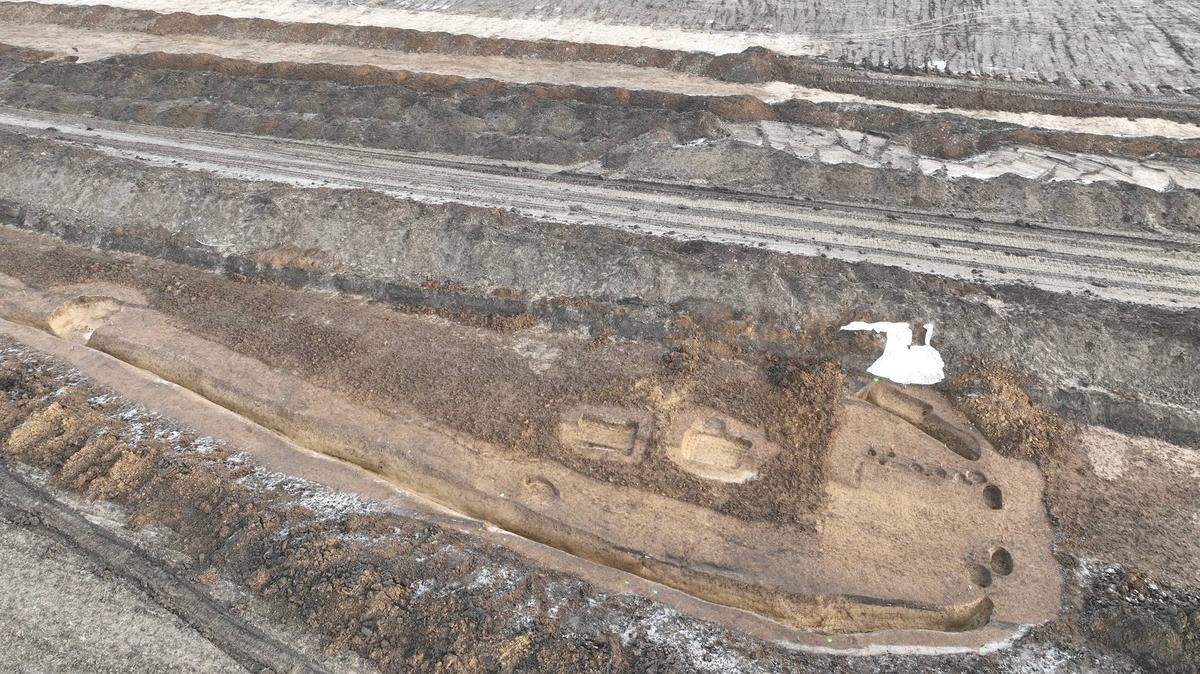
During a highway construction project in Czechia, archaeologists uncovered part of an ancient burial mound. The massive structure just kept going and turned out to be one of the largest of its kind in Europe.
Archaeologists first uncovered an “elongated trapezoidal gutter” during road work between Dlouhé Dvory and Lípa, the Department of Archaeology at the University of Hradec Králové said in a June 19 Facebook post. The team recognized the gutter as a “typical” structure for a type of ancient burial mound known as a long barrow.
While excavating the surrounding area, archaeologists found a huge long barrow grave dating between 3800 and 3350 B.C.
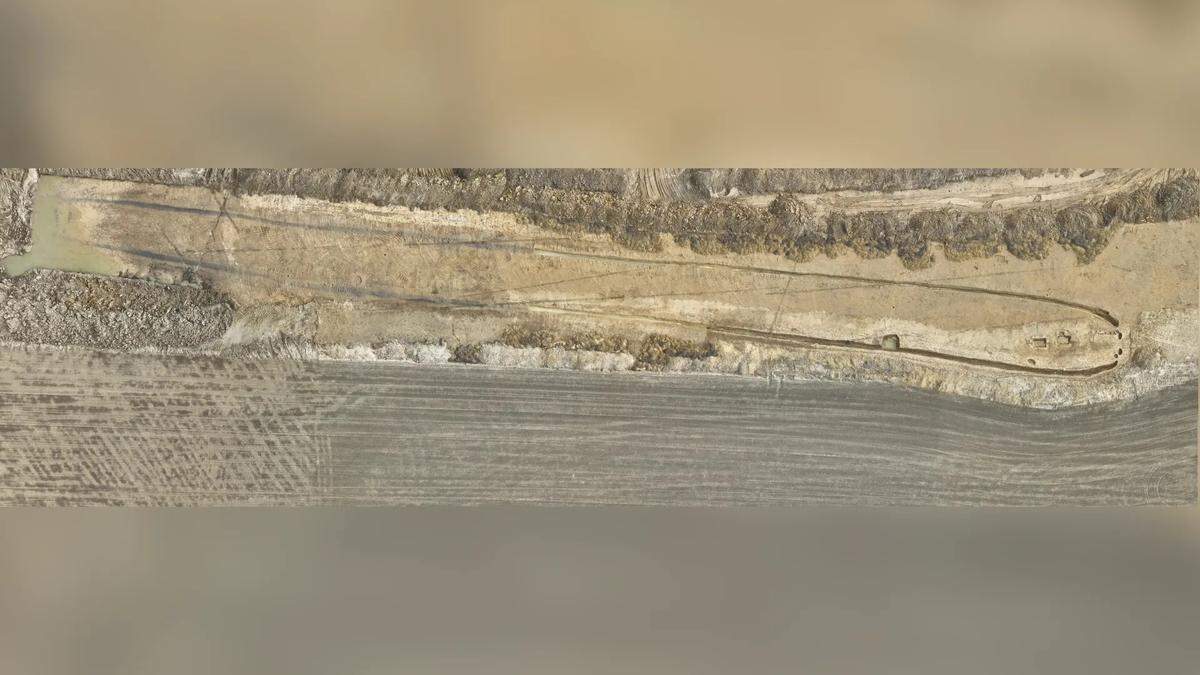
An aerial photo shows the massive oval structure. The mound measured about 620 feet long and about 50 feet wide at its widest point, making it one of the largest and longest structures of its kind in central Europe.
The above-ground portion of the ancient mound was gone, likely destroyed by agricultural work, the department said.
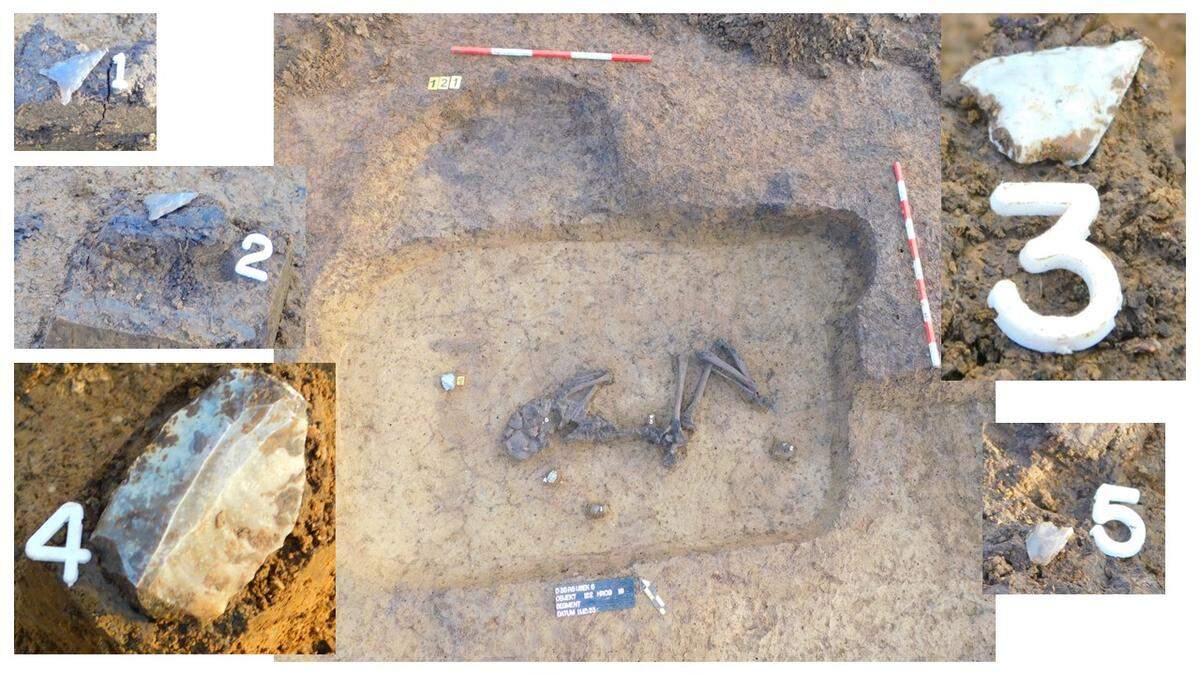
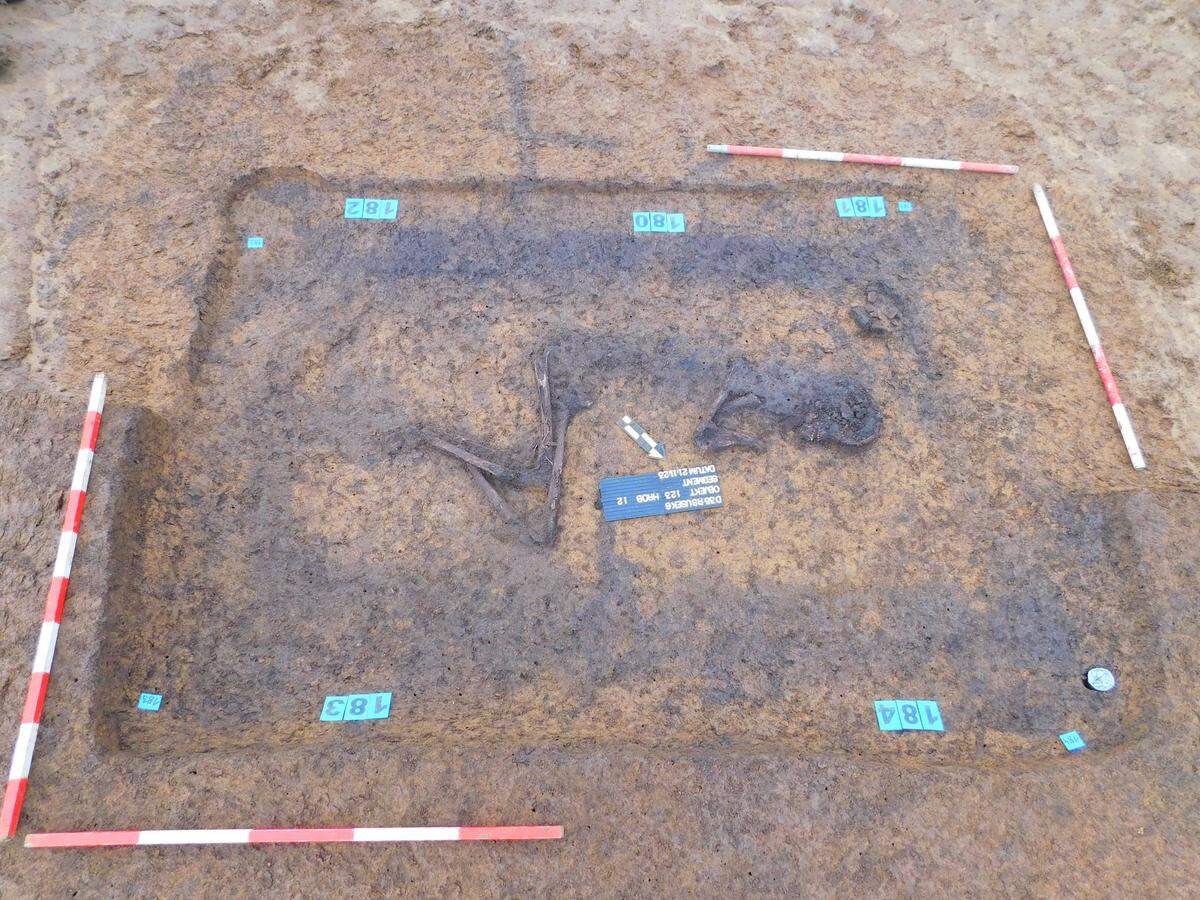
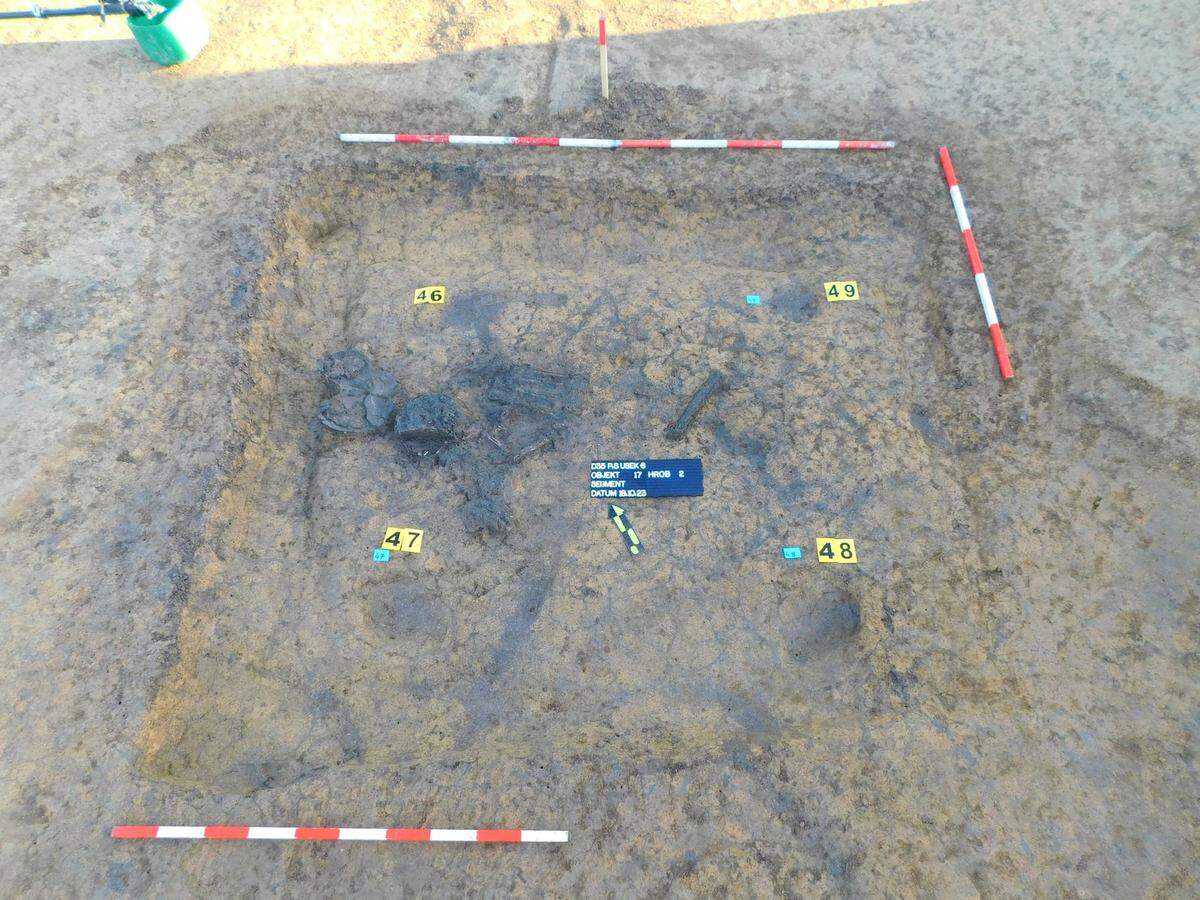
In the remaining section, archaeologists found two central burials containing the individuals the mound was probably built for, as well as 28 additional burials. Like the surrounding mound, the graves likely date back at least 5,300 years. Further laboratory analysis of the burials will provide more specific ages.
Around the central burials, archaeologists uncovered several artifacts left as offerings. One grave contained pottery fragments,while another had four flint arrowheads and a flint blade. Photos show a few of these artifacts.
The ancient burial complex was linked to the Funnel-Beaker culture, the department said.
Dlouhé Dvory and Lípa are nearby villages in northern Czechia and a roughly 70-mile drive northeast of Prague.
This story was originally published June 21, 2024 at 9:38 AM with the headline "5,300-year-old burial mound — one of the largest of its kind — found in Czechia."