Mysterious stone carving baffles UK archaeologists. Can you solve the riddle?
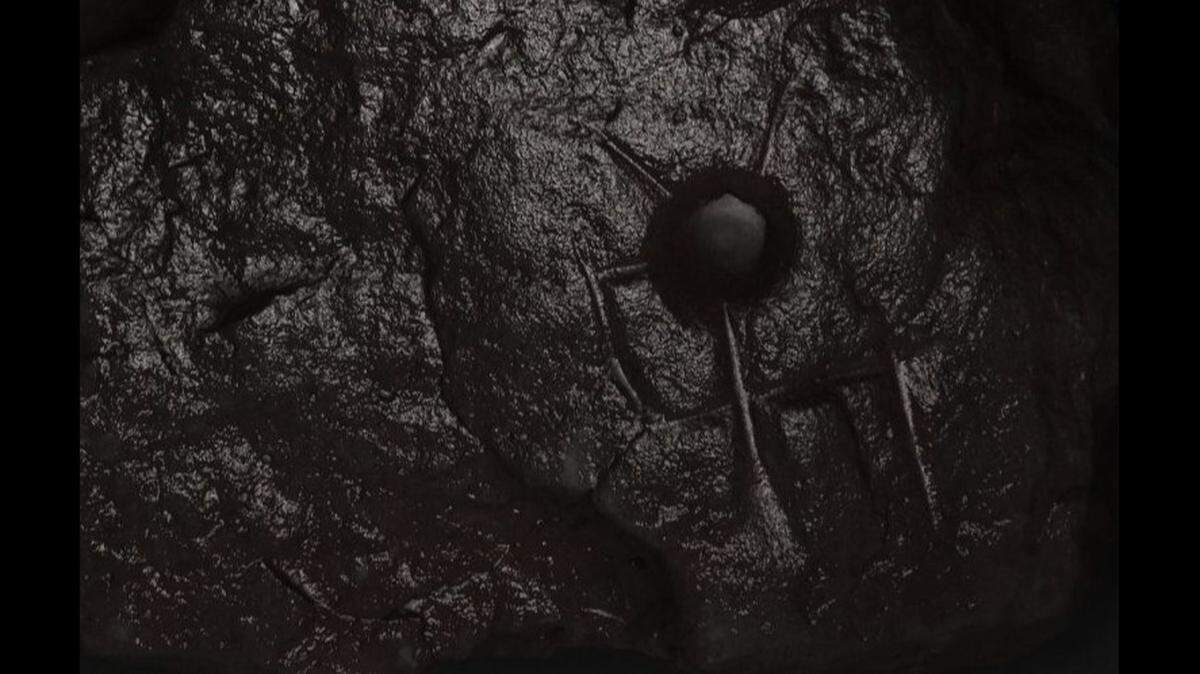
A mysterious stone carving found on a hillside in the United Kingdom has baffled archaeologists — so much so they’ve turned to the public for help.
Can you solve the riddle of the Nessglyph?
Archaeologists began excavating an Iron Age fort at Nesscliffe Hill in Shropshire, according to a Monday, Jan. 16, news release from the Shropshire Council. Researchers found a spot that had been previously excavated then backfilled with soil. Shropshire is a county about 155 miles northwest of London.
Buried in the backfill, archaeologists unearthed an “unusually carved red sandstone,” the release said.
The stone carving, named the Nessglyph, has an indented cup-like center surrounded by straight lines crisscrossing and running multiple directions, photos show. The stone was likely carved with something metal, experts said.
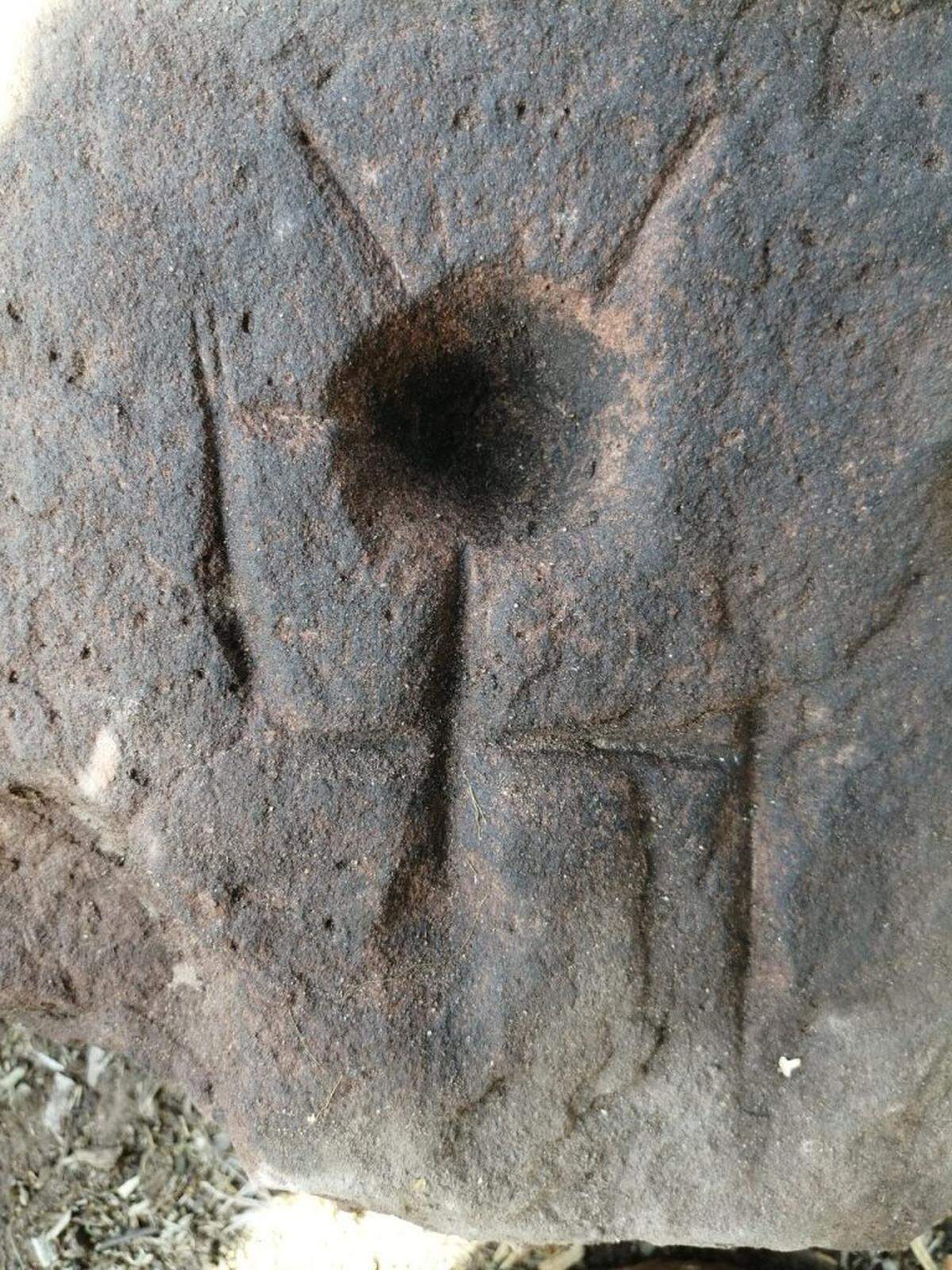
But what is it? Is it an abstract design? A figure of some sort? Or something else entirely?
“We can speculate that the Nessglyph is figurative, with the cupmark being the head,” project co-leader Paul Reilly of the University of Southampton said in the release. “It has two long horns and two small horns, a central body line and two arms, one held up and the other down, the upward one showing a possible hand holding a pipe or a weapon.”
Carvings of horned figures have been found from periods predating the hillfort, but Iron Age carvings of this type are “difficult to find,” Reilly said.
Mysteriously, Nesscliffe Hill is within a region generally considered territory of the Cornovii, a collection of tribes during Roman Britain, Reilly said, with their name possibly translating to “the ‘horned ones.’”
“There is the possibility of a connection to a horned deity cult in the Roman army as depicted at several military sites across Britain,” he added.
But the design, location and age of the stone carving don’t point to any clear-cut explanations.
The carving was found near a hillfort originally constructed during the Iron Age, a period from 750 B.C. until 43 A.D., according to the University of Warwick. The Nesscliffe Hill site was later used by the Roman military during its occupation of Britain. This period lasted from 43 A.D. until 410 A.D., according to Britannica.
But was the stone carved during the Iron Age or the Roman occupation? Archaeologists said they don’t know because the stone was found in a backfill area and could have been moved during prior excavations.
“We are inviting people to help us solve the puzzle, or tell us if they have seen other similar carvings,” Reilly said.
“Anyone with information or knowledge to help solve the puzzle should contact Paul Reilly at p.reilly@soton.ac.uk or Gary Lock at gary.lock@arch.ox.ac.uk,” the release said.
This story was originally published January 19, 2023 at 1:06 PM with the headline "Mysterious stone carving baffles UK archaeologists. Can you solve the riddle?."