2,000 years later, ancient Roman concrete still stands — and experts finally know why
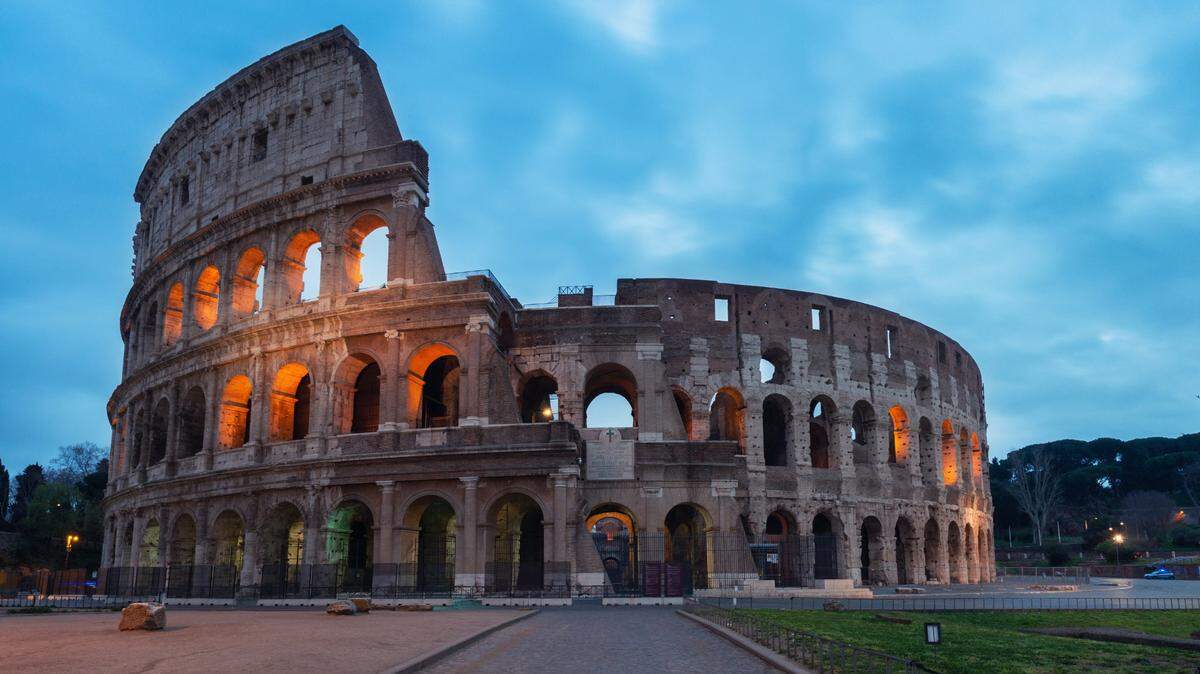
The Colosseum, the Pantheon, and mile after mile of aqueducts all share some common traits: the three iconic sites were constructed with ancient Roman concrete and still stand today.
By contrast, modern concrete structures crumble within decades.
So what’s the secret to the durable, long-lasting concrete used by ancient Romans? The mystery baffled scientists — until now.
To discover why the ancient concrete was so durable, researchers examined concrete from the archaeological site of Privernum, near Rome, according to a study published Friday, Jan. 6 in Science Advances.
The ancient Romans used unreinforced concrete “for centuries” and “throughout the entire” empire to construct walls, fountains, aqueducts, roads, bridges, and other infrastructure, the study authors explain.
Using specialized microscopic analysis techniques, the researchers focused on a common ingredient in the concrete: bright white chunks of mineral known as lime clasts. Previously, scientists had dismissed them as an indication of poor or incomplete construction.
The white chunks fascinated Admir Masic, a co-author of the study, “These are not found in modern concrete formulations, so why are they present in these ancient materials?” he said in an MIT news release.
Researchers argued these previously-overlooked lime clasts, added through a process called “hot mixing,” were the secret to the durability and “self-healing” nature of ancient Roman concrete.
To test their hypothesis, the researchers made two types of concrete: one with ancient Roman-inspired lime clasts, the other a modern formula without the lime clasts.
The researchers cracked both concrete slabs then ran water over the cracks, according to the MIT release. Two weeks later, the Roman-inspired concrete had sealed its cracks, but the modern concrete did not.
The lime clasts provided a key chemical component that allowed calcium in the concrete to fill in cracks, the study said. This “self-healing” mechanism is what keeps ancient Roman concrete standing century after century, the scientists concluded.
The cement used to make concrete accounts for “up to 8% of total global greenhouse gas emissions,” the authors write. Using the Roman recipe could reduce that by making concrete last longer.
For this reason, the researchers want to make their Roman-inspired concrete recipe commercially available, the MIT release said.
This story was originally published January 9, 2023 at 4:21 PM with the headline "2,000 years later, ancient Roman concrete still stands — and experts finally know why."