Tree line ‘brimming’ with eagles captured by photographer running errands. See photo
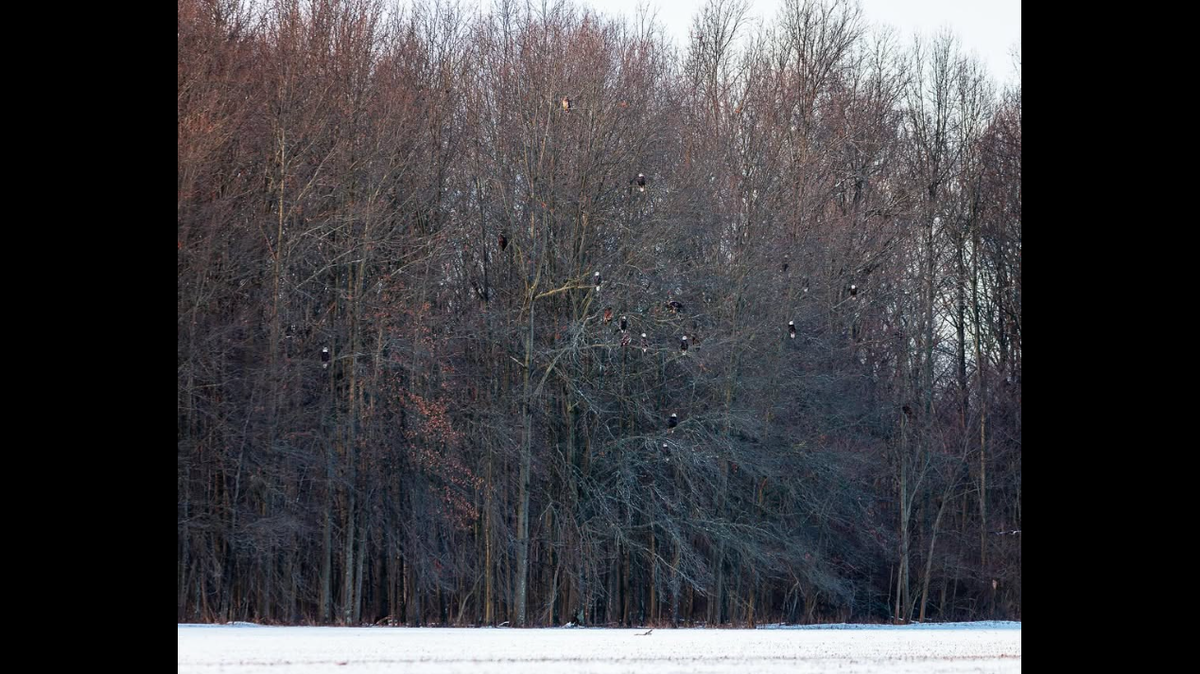
A photographer out running errands in northeast Ohio came upon dozens of bald eagles perched in the trees.
In a Jan. 26 Instagram post, Cleveland photographer Gabe Leidy said he was running errands over the weekend when he noticed a few bald eagles in a nearby field.
“Upon closer investigation, the treeline was absolutely brimming with bald eagles!” Leidy said. “Counted 51 total eagles that evening.”
Leidy shared a photo of the treeline dotted with the signature dark brown and white color.
“So cool!! I’ve never seen so many at one time,” one Instagram commenter said.
“Keep in mind that eagles don’t achieve their white head until 3rd/4th-year and young birds are browner overall,” Leidy said in his post.
While Leidy spotted these birds on private property, he said Old Woman Creek, about a 50-mile drive west from Cleveland, is a good location to see bald eagles throughout the winter.
According to the U.S. Fish and Wildlife Service, bald eagles often gather at communal roosts during the winter. These roosts are usually in living or dead trees that are sheltered from wind and near food sources, the bureau said.
“Many roost sites are used year after year and are thought to serve a social purpose for pair bonding and communication among eagles,” according to the bureau’s website. “Because of their importance to eagles, they are protected by the Bald and Golden Eagle Protection Act.”
This story was originally published January 28, 2025 at 11:55 AM with the headline "Tree line ‘brimming’ with eagles captured by photographer running errands. See photo."