Woman was found buried in remote desert in 1988, AZ cops say. Now, she’s identified
Bruce Anderson was studying as a graduate student at the University of Arizona, training to be an anthropologist, in June 1988 when he got a call from the sheriff’s office.
A water department worker found a shallow grave in the desert north of Florence after seeing a vulture circling overhead, Anderson told McClatchy News in an Oct. 25 phone interview.
The man Anderson was studying under was out of town, so he along with three fellow students drove up from Tucson at the request of the Pinal County Sheriff’s Office.
Shortly after arriving, they found a forearm bone sticking out of the sand, likely pulled from the ground by scavenging birds.
“Didn’t take long for the smell to hit us, because she was decomposing,” Anderson said.
The students “spent most of the afternoon getting the body out of the shallow grave,” he said.
Anderson said they worked to try to identify the woman but to no avail.
But now, 36 years later, a case once shrouded in mystery has some “resolution,” according to Anderson, now a long-time anthropologist with the Pima County Office of the Medical Examiner.
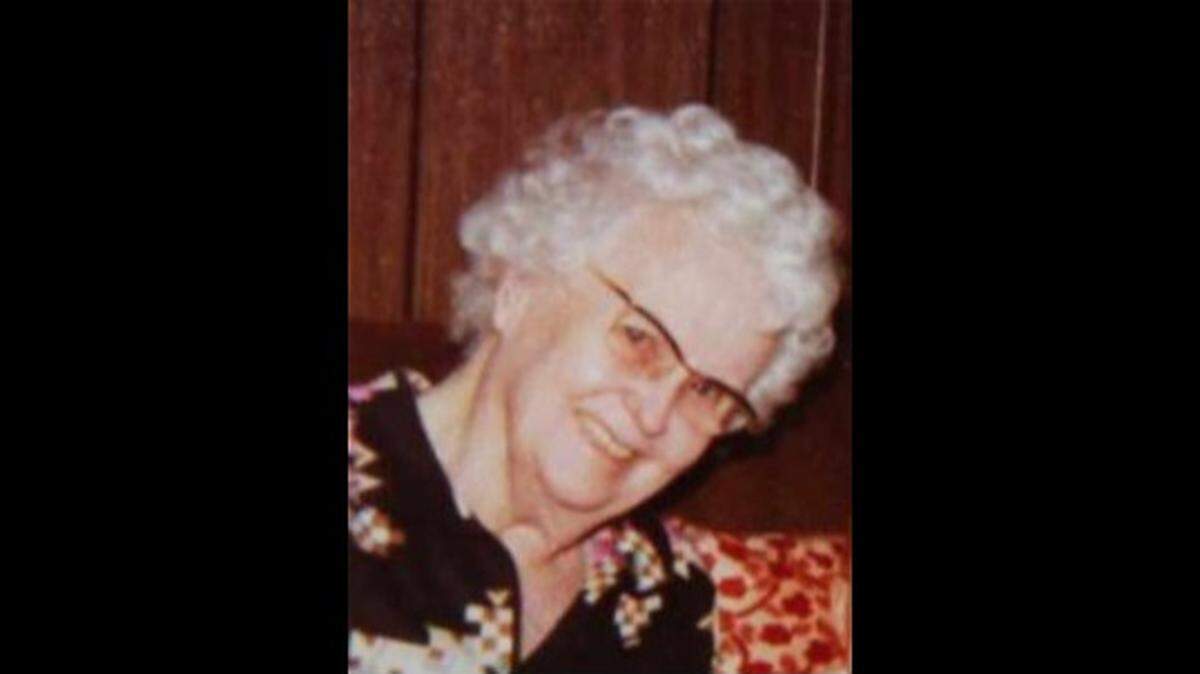
Using genetic genealogy, the woman has been identified as Evelyn “Dottie” Lees, who would have been 88 or 89 at the time of her death, the Pinal County Sheriff’s Office said in an Oct. 24 Facebook post.
“For an elderly grandmother to be the victim of a violent crime, and then to remain unidentified for 36 years is a tragedy,” Sheriff Mark Lamb said in the sheriff’s office Facebook post. “We are grateful to the DNA Doe Project, its donors, and Dr. Bruce Anderson with the Pima County Office of the Medical Examiner who all helped give this woman some peace in death.”
‘Puzzling’ burial
Anderson said the woman was found in a desolate area.
“Why she was out there was puzzling,” Anderson said.
She was buried in a shallow, unmarked grave, he said.
The grave itself, though, was atypical.
“Most of the time bodies are in a hole that is barely big enough to hide a body, because that’s what perpetrators of crimes are trying to do. Right?” he said. “They’re trying to hide a body.”
Usually, the holes are oval or somewhat round, Anderson said. The person is usually found face down or on their side.
However, “this (grave) was more like a proper grave,” he said.
“It was long, and she was laid out on her back, looking up,” Anderson said.
As it was early in his career, Anderson said he was unsure if he appreciated the grave’s intricacies.
At the time, officials believed she was over the age of 50 and stood at about 5 feet, 3 inches tall, DNA Doe project said in a news release.
She was wearing a “floral dress or housecoat with snaps up the front” and had “pink denture with porcelain teeth,” the nonprofit said.
Given signs of strangulation on her body, the woman’s death was ruled a homicide, according to deputies.
Officials believed she died within the last year before she was found, deputies said.
Anderson said they worked the case that year and the next, but it was eventually filed away as a cold case.
“We didn’t forget about it,” Anderson said.
Genetic genealogy to ID
Then, in 2023, Anderson said the DNA Doe Project asked the Pinal County sheriff’s office if it would submit a sample from the unknown woman.
DNA Doe Project is volunteer-run nonprofit dedicated to identifying “John and Jane Does using investigative genetic genealogy,” according to its website.
“They were going to try a genealogy approach, which is a great, great new tool for everybody,” Anderson said. “For people in my line of work that have been here for a long time that have cases this old that cannot be seemingly identified through traditional DNA or fingerprint analysis.”
Genetic genealogy uses DNA testing coupled with “traditional genealogical methods” to create “family history profiles,” according to the Library of Congress. With genealogical DNA testing, researchers can determine if and how people are biologically related.
Bone samples from the woman were processed to develop a DNA profile, which was then uploaded into two DNA databases, GEDmatch Pro and FamilyTreeDNA.com, according to DNA Doe Project.
From there, “it took a team of expert volunteer investigative genetic genealogists a matter of hours to find Dottie’s branch of the family tree,” the nonprofit said.
While a group of investigative genetic genealogists worked the case during a weekend retreat, it “started to heat up,” Lance Daly, the team’s co-leader, said in the release.
“We identified a married couple from the 19th century who shared DNA with the Doe,” Daly said.
The woman was estimated to have been born around 1900, meaning the married couple they found were possibly her grandparents, according to Daly.
Doe had British heritage and DNA matches “from all over the world,” Matthew Waterfield, the team’s other co-leader, said in the release.
“Although they were fairly distant relatives of hers, our team quickly found connections between them, and they led us to Dottie (Lees) within hours,” Waterfield said.
She was born in Salt Lake City, Utah, in 1898, according DNA Doe Project.
At the time of her death, Lees had been living in Scottsdale, the nonprofit said.
She was never reported missing, and there is no record of her death, deputies said.
Though deputies said they found investigative leads in her case, those involved are no longer living. They did, however, contact her remaining relatives.
Deputies said they believe her death may have been a case of pension fraud, with the possibility someone collected her benefits for years after her death.
For Anderson, the woman’s identity does not offer him “closure.”
“We don’t have closure in terms of who did this to her,” Anderson said. “She was a victim of homicide. Somebody killed her.”
Instead, Anderson said there is at least “resolution.”
“Very pleased about that,” Anderson said.
This story was originally published October 25, 2024 at 2:24 PM with the headline "Woman was found buried in remote desert in 1988, AZ cops say. Now, she’s identified."