Remains found on 1800s ‘poor farm’ returned to original resting place, NH officials say
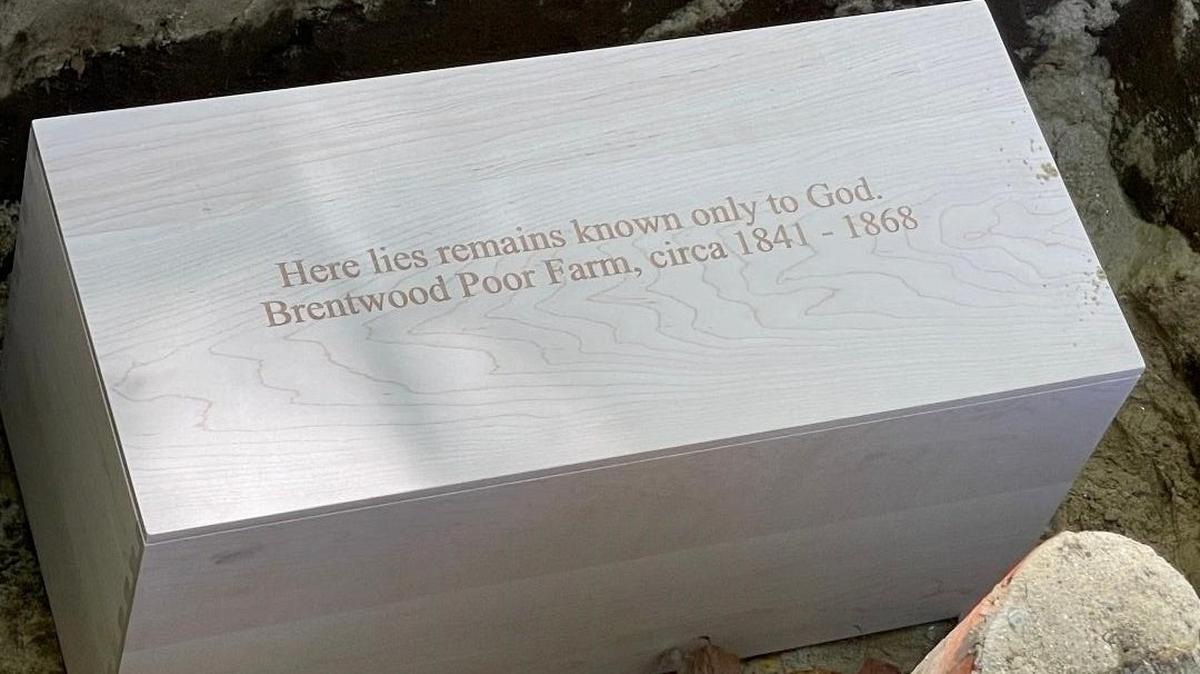
Skeletal remains — once buried in an unmarked grave — were returned to their original resting place at a former New Hampshire “poor farm” after a university worked to document them.
The remains of farm workers were placed in a marked wooden box labeled with the period of time that researchers believe they were buried, the University of New Hampshire announced in an Oct. 10 news release.
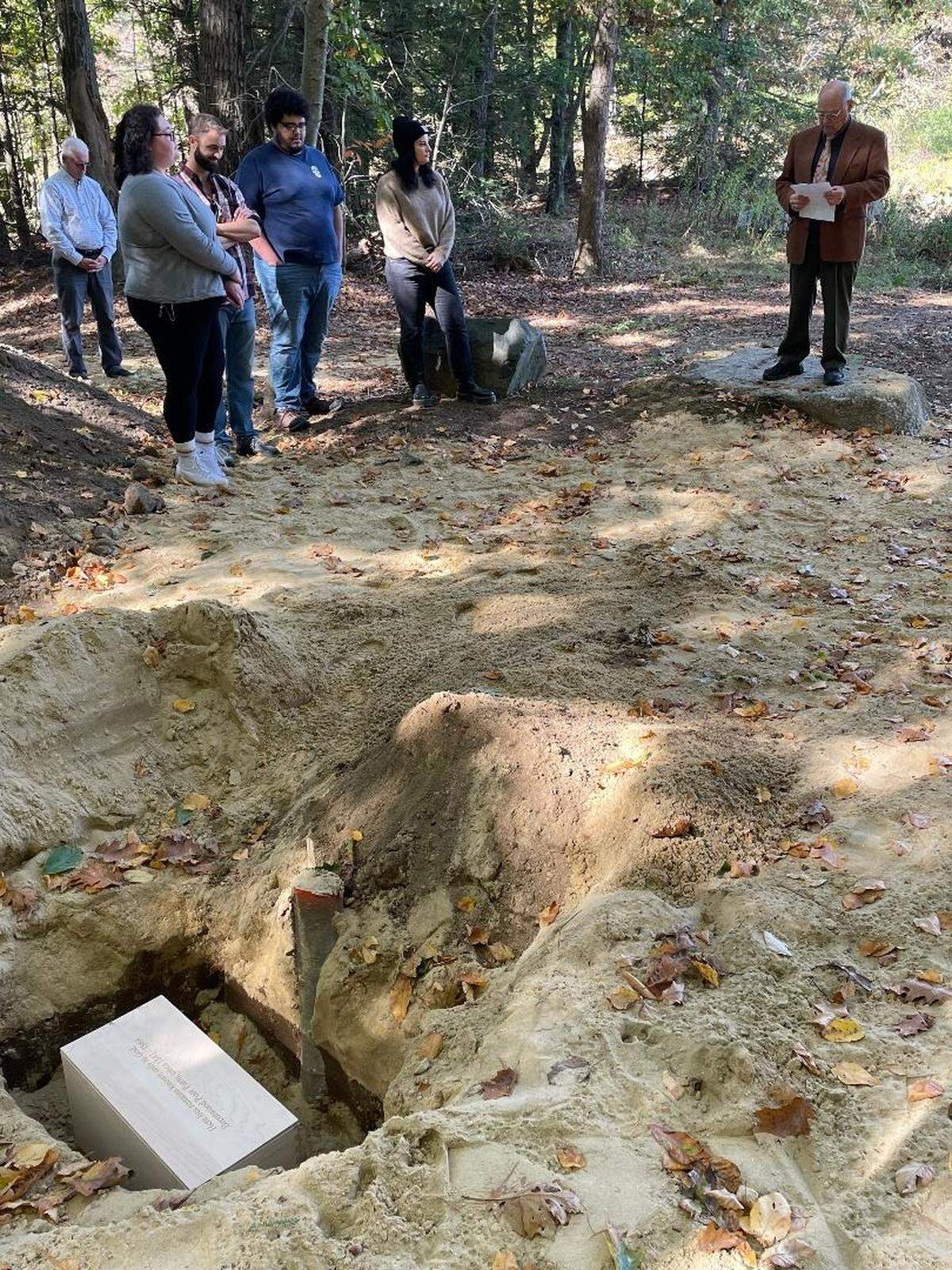
“All individuals deserve a respectful final burial,” Joyce Keegal, superintendent of cemeteries in Brentwood, said in the statement.
In 1999, construction workers “mistakenly” found the remains while working on the Brentwood property, which is now privately owned. At the time, New Hampshire archaeologists said the remains were “historic,” the university said, but they were held in the state’s medical examiner’s office for 23 years.
The remains were handed over to the University of New Hampshire in 2022, where researchers took a deeper look into the state of the remains and the history of the property they were found on.
Eight “partially complete” individuals and an additional 54 fragments encompassed what was uncovered in 1999, according to findings published by Cambridge University Press. A single fragment from the brain belonged to a ninth person believed to be under 17-years-old, the study said.
Researchers said the remains showed “signs of hardship,” demonstrating health issues such as “osteoarthritis, dental disease and other signs of physiological stress.”
The remains were believed to belong to paupers living on what was commonly known as a “poor farm” from 1841 to 1868, researchers said.
Workers on the farms were subject to “violent treatment and harsh punishments,” according to the findings.
“Poor farms” were a form of welfare in the 19th and 20th centuries that provided room and board in exchange for labor, the university said.
“It is said that poor farms were started to keep marginalized individuals—including a mix of poverty, race, ethnicity and mental or physical illness—out of view of the middle and upper classes,” according to the university.
These farms were largely dissolved in the 1930s and 1940s.
“The paupers at the farm were most likely buried in hasty unmarked graves and their final resting place was forgotten over time,” according to the release.
Researchers worked with the town so that the remains could be buried at their original location with a proper ceremony.
Brentwood is about a 40-mile drive southeast from Concord.
This story was originally published October 14, 2024 at 5:21 PM with the headline "Remains found on 1800s ‘poor farm’ returned to original resting place, NH officials say."